
Mini Excavator Buying Guide for Beginners in the USA
Buying a mini excavator can be a major step for a contractor, landscaper, farmer, rental business, or property owner. These compact machines are designed to perform serious digging and material-handling work while remaining easier to transport and operate than larger excavators.
However, mini excavators are not all the same. Machine weight, digging depth, engine power, hydraulic performance, track width, attachments, and operator features can vary significantly from one model to another.
A machine that works well for backyard landscaping may not be powerful enough for regular construction work. At the same time, purchasing a machine that is too large could make transportation more difficult and prevent access to narrow work areas.
This mini excavator buying guide explains the most important details beginners should evaluate before buying a mini excavator in the USA.
What Is a Mini Excavator?
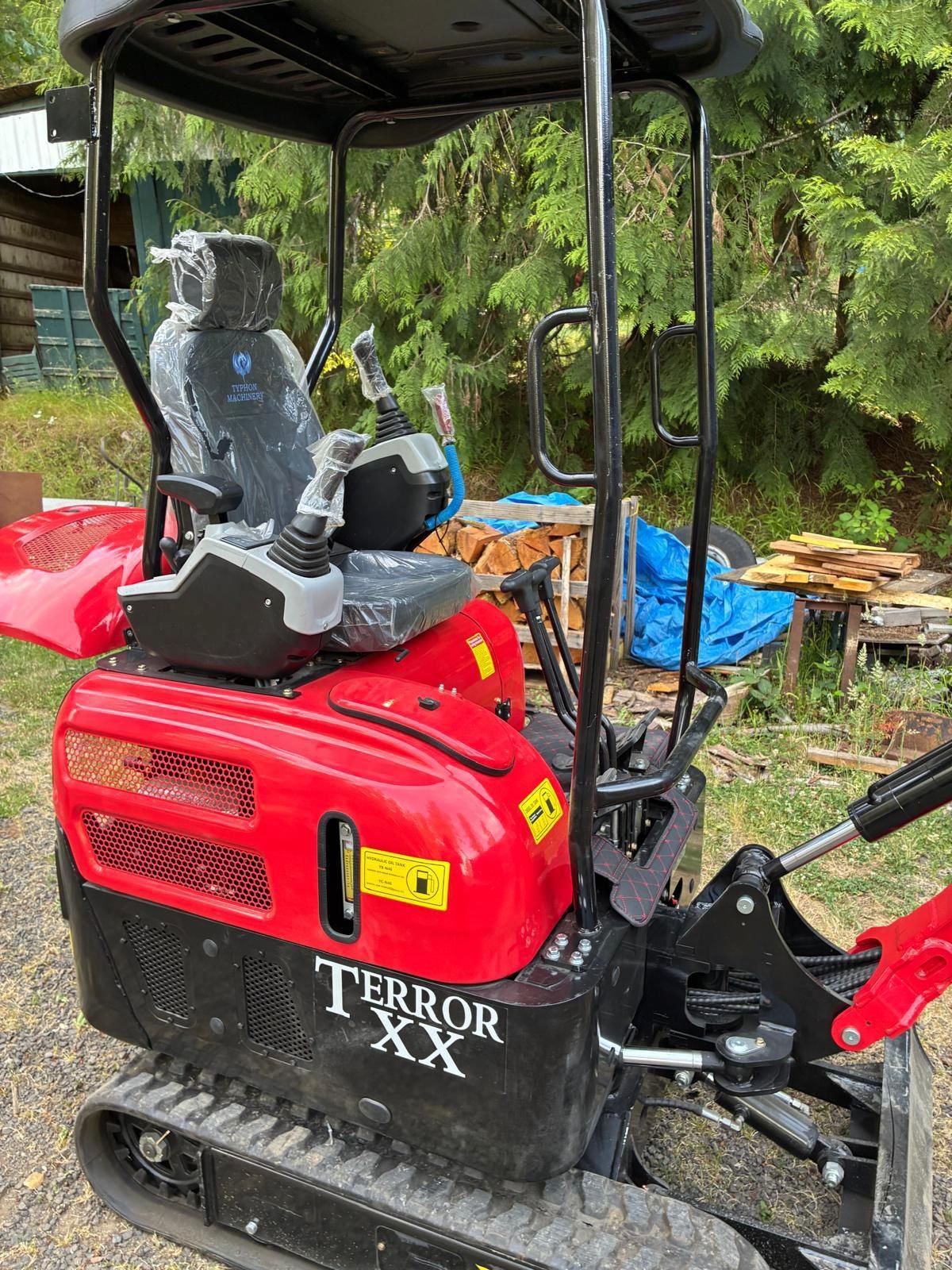
A mini excavator is a compact tracked machine designed for digging, trenching, grading, lifting, demolition, landscaping, and material handling. It normally includes an operator station, rotating upper structure, boom, arm, bucket, dozer blade, hydraulic system, and rubber or steel tracks.
Mini excavators are often called compact excavators because they provide many of the functions of a full-size excavator in a smaller package.
Their compact design makes them suitable for work in residential yards, farms, orchards, parks, narrow construction sites, utility areas, and other locations where larger equipment may not fit.
Depending on the model, a mini excavator may be used for:
- Digging drainage trenches
- Preparing foundations
- Landscaping and grading
- Removing tree roots
- Cleaning ditches
- Installing water or utility lines
- Digging fence-post holes
- Breaking concrete or rock
- Moving logs, stones, and debris
- Farm and orchard maintenance
- Small demolition projects
- Property improvement work
A mini excavator can also support different attachments, allowing one machine to perform several types of work.
Who Should Buy a Mini Excavator?
A mini excavator may be a practical investment when you regularly need digging or material-handling equipment.
Contractors can use mini excavators for foundations, drainage, utility installation, demolition, and site preparation. Landscapers can use them for pond construction, grading, tree removal, irrigation, and retaining-wall projects.
Farmers and orchard operators may use a mini excavator to clear land, maintain drainage channels, plant trees, remove roots, or manage materials around the property.
A mini excavator can also be useful for property owners who maintain large areas and regularly complete excavation projects.
Rental companies may purchase compact excavators because they are popular with homeowners, landscapers, and smaller contractors.
Before buying, compare the expected cost of ownership with the cost of renting. Purchasing may make more sense when the machine will be used frequently, while renting may remain more economical for a single short project.
Start With the Work You Need to Complete
The first step is identifying the main jobs the mini excavator must perform.
Ask yourself:
- What materials will the machine dig?
- How deep must it dig?
- How wide is the work area?
- Will it need to lift heavy objects?
- Will it operate on soft, uneven, or sloped ground?
- Which attachments will be required?
- How often will it be transported?
- Will it work near buildings, fences, or landscaping?
A machine used mainly for shallow landscaping trenches may have different requirements from one used to break hard ground or excavate foundations.
It is better to select a machine based on actual work requirements instead of choosing only by appearance, price, or engine horsepower.
Choose the Right Operating Weight
Operating weight is one of the most important specifications to consider.
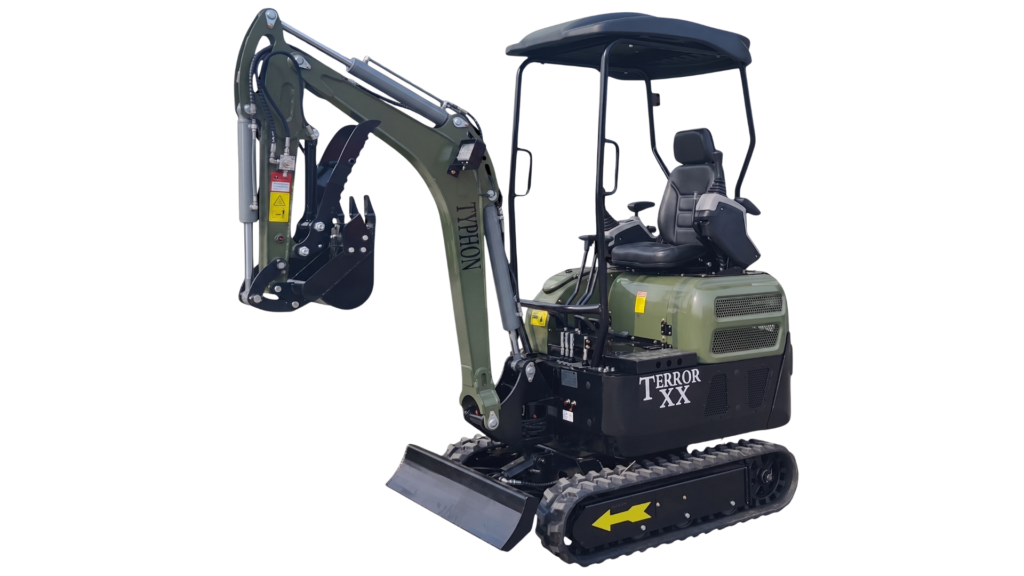
Mini excavators are available in several weight classes, from very small machines weighing around 2,000 pounds to larger compact excavators weighing more than 10,000 pounds.
Around 2,000 to 3,000 Pounds
Machines in this range are highly compact and may fit through narrow access points. They can be useful for small gardens, residential landscaping, shallow trenches, indoor work, and light property maintenance.
Their main advantages include easier transportation, lower ground pressure, and access to confined areas.
However, smaller machines generally provide less digging force, lifting capacity, stability, and digging depth.
Around 3,000 to 5,000 Pounds
This is a popular range for general landscaping, farming, property maintenance, drainage, trenching, and smaller construction projects.
Machines in this category can offer a useful balance between compact dimensions and practical digging performance. They may still be transported more easily than heavier models while providing greater stability and hydraulic capability than very small excavators.
Around 5,000 to 8,000 Pounds
These mini excavators are better suited for more demanding construction, foundation, utility, grading, and material-handling work.
They normally provide more digging depth, bucket force, lifting capacity, and stability. The tradeoff is increased transportation weight and a larger machine footprint.
Above 8,000 Pounds
Larger compact excavators can handle serious construction and excavation work while remaining smaller than full-size machines.
Before choosing one, confirm that your truck, trailer, and local transportation requirements can handle the complete towing weight.
Check the Machine Dimensions
Operating weight does not tell you whether the machine will fit through your work area.
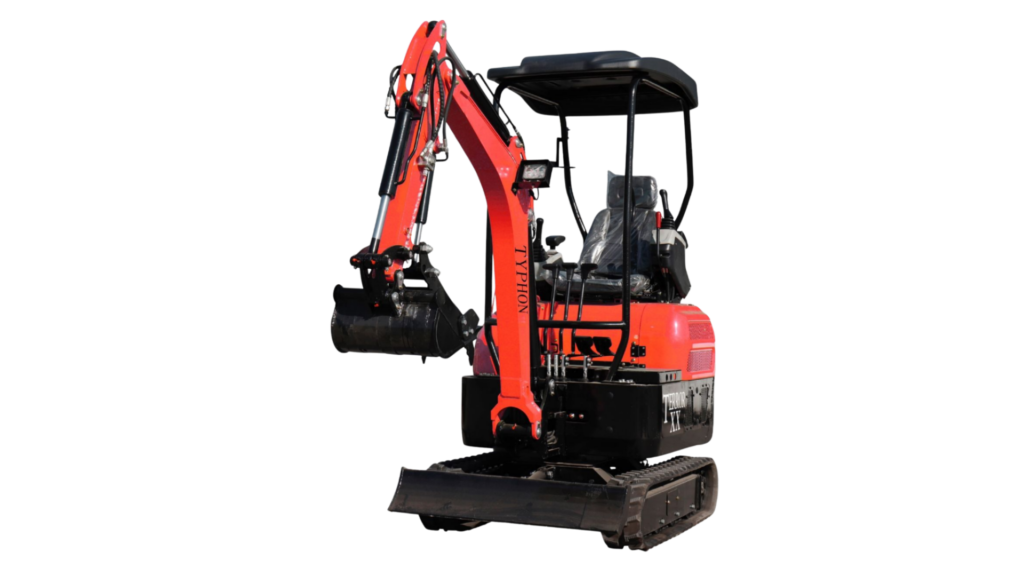
Review the machine’s:
- Overall width
- Overall height
- Overall length
- Track width
- Tail-swing radius
- Ground clearance
Measure gates, driveways, building entrances, side yards, and other narrow access points before selecting a machine.
Remember that the listed width may not include a wide attachment. A bucket, hydraulic thumb, blade, or extended track system may increase the machine’s working width.
Some mini excavators include retractable or telescoping tracks. These allow the machine to become narrower for access and wider for improved stability during operation.
Understand Digging Depth and Reach
Maximum digging depth shows how deep the bucket can excavate below ground level.
This specification is important for drainage, foundations, utility lines, irrigation, and trenching.
Do not choose a machine whose maximum digging depth barely matches your project. Real working conditions may reduce usable depth because of the machine position, ground slope, bucket angle, or safety requirements.
It is better to have some additional digging capacity.
Maximum digging reach is also important. Greater reach allows the operator to cover more ground without repositioning the machine as often.
Review these specifications together:
- Maximum digging depth
- Maximum digging reach
- Maximum dumping height
- Maximum digging height
- Vertical digging depth
A machine may offer good digging depth but limited dumping height, which can affect loading into a truck or trailer.
Evaluate the Engine
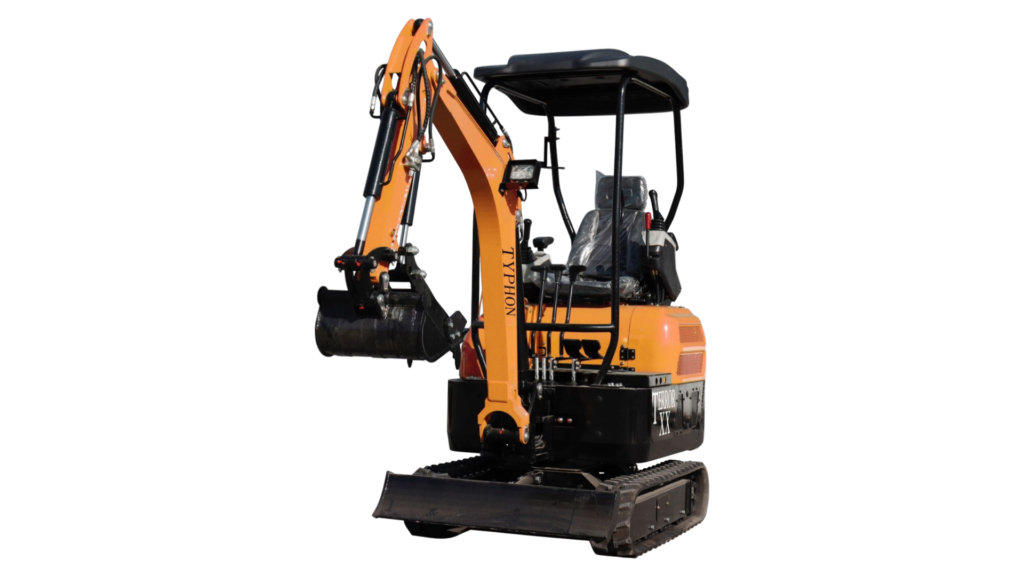
The engine affects power, reliability, fuel use, maintenance, and regulatory compliance.
When purchasing a mini excavator for use in the USA, confirm that the engine meets applicable emissions requirements.
Look for clear information about:
- Engine manufacturer
- Engine model
- Fuel type
- Number of cylinders
- Rated horsepower
- Cooling system
- EPA certification
- Service and maintenance requirements
Diesel engines are common because they provide useful torque and fuel efficiency for excavation work.
A recognized engine model may also make it easier to find filters, service parts, and technical support.
Horsepower is important, but it should not be considered alone. Hydraulic design, pump flow, machine weight, bucket force, and traction also affect real performance.
Compare Hydraulic Performance
The hydraulic system powers the boom, arm, bucket, blade, swing, travel motors, and hydraulic attachments.
Important hydraulic specifications include:
- Hydraulic operating pressure
- Main hydraulic flow
- Auxiliary hydraulic flow
- Pump type
- Number of auxiliary lines
- Attachment compatibility
- Hydraulic tank capacity
A machine with an auxiliary hydraulic circuit can operate attachments such as a hydraulic breaker, auger, grapple, flail mower, or hydraulic thumb.
Before purchasing an attachment, verify that its required hydraulic flow and pressure match the excavator.
Using an attachment that requires more flow than the machine provides can lead to weak performance. An attachment that is not compatible with the machine’s hydraulic pressure may also create safety or reliability concerns.
Ask whether the auxiliary circuit is one-way or two-way. A hydraulic breaker may use one-way flow, while a grapple or rotating attachment may require two-way hydraulic flow.
Examine Bucket Digging Force
Bucket digging force indicates how strongly the bucket can break into soil or material.
Greater digging force can be useful in compacted ground, clay, rocky soil, and demolition work.
Arm digging force is also important because it affects how effectively the machine can pull material toward itself.
Compare digging forces between machines in a similar weight class. A heavier machine is not automatically better if its hydraulic system and digging geometry are poorly matched.
For beginners, the most practical approach is to consider digging force together with machine weight, hydraulic pressure, bucket size, and intended work.
Choose the Correct Bucket
The standard bucket is only one part of the machine.
Bucket width and capacity affect digging speed, trench width, machine stability, and required hydraulic force.
A narrow bucket is useful for utility trenches, irrigation, electrical lines, and precise digging. A wider bucket moves more material and may be better for landscaping, cleaning, or general excavation.
Common bucket and attachment options include:
- Standard digging bucket
- Narrow trenching bucket
- Grading bucket
- Tilting bucket
- Screening bucket
- Rake
- Ripper
- Auger
- Grapple
- Hydraulic breaker
- Hydraulic thumb
- Quick coupler
A quick coupler can make attachment changes faster. Confirm that the coupler and attachments are designed for the machine’s pin size, arm width, and hydraulic configuration.
Consider a Hydraulic Thumb
A hydraulic thumb works with the bucket to grip materials.
It can make the excavator more useful for moving:
- Logs
- Rocks
- Concrete pieces
- Brush
- Scrap material
- Tree roots
- Demolition debris
A fixed mechanical thumb may be less expensive, but it normally requires manual adjustment.
A hydraulic thumb can be controlled from the operator station, providing greater convenience and flexibility.
When comparing machines, determine whether the thumb is included, optional, or unavailable. Also confirm whether the necessary hydraulic plumbing is already installed.
Review the Boom-Swing Feature
Boom swing allows the boom to move left or right without rotating the entire upper structure.
This is valuable when digging beside a wall, fence, foundation, road, or building.
It can also help the machine excavate an offset trench while keeping the tracks in a stable position.
For compact work areas, boom swing can significantly improve productivity and positioning.
Do not confuse boom swing with the machine’s upper-body swing. Most excavators rotate their upper structure, while boom swing is a separate side-to-side movement of the boom assembly.
Compare Tail-Swing Designs
Tail swing describes how far the rear of the excavator extends beyond the tracks while the machine rotates.
A conventional-tail-swing excavator may provide good balance and service access but requires more space to rotate safely.
A reduced-tail-swing or zero-tail-swing machine is better for work near walls, traffic, fences, and buildings.
However, compact tail designs may affect engine-compartment space, counterweight design, or lifting performance.
Choose based on your work environment rather than assuming zero tail swing is always better.
Inspect the Tracks and Undercarriage
Most mini excavators use rubber tracks because they reduce surface damage and operate well on pavement, lawns, and finished areas.
Steel tracks may provide greater durability and traction in demanding environments, but they can damage finished surfaces and may increase machine weight.
Inspect or review:
- Track width
- Track condition
- Tread depth
- Track-adjustment system
- Rollers
- Idlers
- Sprockets
- Final drives
- Undercarriage clearance
Wider tracks can improve flotation and stability on soft ground, while narrower tracks can improve access.
The undercarriage is expensive to repair, so it should receive careful attention when buying a used machine.
Check the Dozer Blade
The front dozer blade helps with grading, backfilling, leveling, and machine stability.
The operator can lower the blade while digging to help stabilize the excavator.
Review the blade width, height, lifting range, and whether it offers angle or tilt functions.
A basic straight blade may be sufficient for trenching and backfilling. More advanced blades can improve grading capability but may increase machine cost.
Evaluate Operator Comfort and Controls
Operator comfort affects productivity, especially when the machine will be used for several hours at a time.
Look for:
- Pilot controls
- Adjustable seat
- Clear instrument display
- Safety lock
- Easy-to-reach controls
- Good visibility
- LED work lights
- Cup holder and storage
- Canopy or enclosed cabin
- Air conditioning and heating
- Emergency stop or shutoff access
Pilot controls normally provide smoother and lighter operation than direct mechanical controls.
An open canopy may provide easier access and lower cost. An enclosed cabin offers better weather protection and may include air conditioning and heating.
For cold, hot, dusty, or wet environments, an enclosed cabin can significantly improve working conditions.
Confirm Safety Features
A mini excavator must be operated carefully, especially on slopes, soft ground, and near trenches.
Important safety features may include:
- ROPS or TOPS protective structure
- Seat belt
- Control safety lock
- Travel alarm
- Horn
- Work lights
- Emergency engine shutoff
- Protective guards
- Warning labels
- Operator manual
The machine’s lifting and slope limits should never be exceeded.
Beginners should receive proper instruction before operating the equipment. Even a compact excavator can tip, strike nearby objects, damage underground utilities, or cause serious injury when used incorrectly.
Always contact the appropriate utility-location service before digging.
Plan for Transportation
Transportation is one of the most important buying considerations.
Calculate the total transported weight, including:
- Excavator
- Bucket
- Hydraulic thumb
- Additional attachments
- Fuel
- Trailer
- Tools and accessories
Confirm the towing capacity, payload capacity, hitch rating, trailer axle rating, and braking requirements of the complete setup.
Do not assume that a truck can safely tow a machine because the excavator alone is below the truck’s advertised towing limit. The trailer and attachments add substantial weight.
Also review local and state requirements related to trailer brakes, load securement, permits, commercial operation, and driver licensing.
Use correctly rated chains, binders, or straps and follow applicable load-securement rules.
New vs. Used Mini Excavators
A new mini excavator normally offers a clean maintenance history, current features, warranty coverage, and lower initial wear.
The purchase price may be higher, but unexpected repair risk is generally lower.
A used mini excavator may cost less, but its condition must be evaluated carefully.
When inspecting a used machine, check:
- Engine starting condition
- Exhaust smoke
- Fluid leaks
- Hydraulic response
- Unusual pump noise
- Boom and bucket play
- Pins and bushings
- Track wear
- Sprocket wear
- Final-drive operation
- Swing-bearing movement
- Hour meter
- Maintenance records
- Weld repairs
- Electrical system
- Safety controls
A low-hour machine is not automatically in excellent condition. Poor maintenance, hard use, long periods of storage, and incorrect attachments can cause problems even with limited recorded hours.
Consider hiring an experienced technician to inspect a used excavator before purchase.
Understand Parts, Warranty, and Support
The initial purchase price is only part of the ownership cost.
Before buying, ask about:
- Warranty coverage
- Replacement parts
- Filters and service items
- Hydraulic hoses
- Track availability
- Attachment compatibility
- Technical support
- Shipping damage procedures
- Return or cancellation policies
- Service documentation
- Operator manual
A lower-priced machine may become expensive if parts are difficult to obtain or technical information is unavailable.
Choose a seller that provides clear product information and a reliable way to ask questions.
Estimate the Total Cost of Ownership
The total cost of owning a mini excavator includes more than the purchase price.
Budget for:
- Delivery or transportation
- Trailer
- Fuel
- Engine oil
- Hydraulic oil
- Filters
- Grease
- Tracks
- Pins and bushings
- Attachments
- Insurance
- Storage
- Repairs
- Operator training
Routine maintenance helps protect the engine, hydraulic system, undercarriage, and attachment points.
Greasing pivot points, checking track tension, monitoring fluid levels, cleaning the radiator, and replacing filters at the correct intervals can reduce long-term repair costs.
Common Buying Mistakes to Avoid
One common mistake is buying the smallest machine because it is easier to transport. A machine that lacks the required digging depth or force may take much longer to complete the job.
Another mistake is choosing only by horsepower. Hydraulic performance, machine weight, stability, and digging geometry are equally important.
Buyers may also forget to measure access points or calculate total trailer weight.
Other common mistakes include:
- Ignoring attachment compatibility
- Not checking EPA engine information
- Overlooking parts availability
- Buying without reviewing warranty terms
- Selecting an oversized bucket
- Forgetting auxiliary hydraulic requirements
- Ignoring operator comfort
- Purchasing a used machine without inspection
- Assuming every mini excavator can safely lift the same weight
Careful comparison before purchasing can prevent expensive problems later.
Mini Excavator Buying Checklist
Before ordering a mini excavator, confirm the following:
- The machine fits through all required access points.
- Its digging depth exceeds the project requirement.
- The operating weight matches your transportation setup.
- The engine is appropriate for use in the USA.
- Hydraulic flow and pressure support your attachments.
- The bucket size matches your work.
- The machine includes the required boom swing or tail-swing design.
- Tracks are suitable for the operating surface.
- Parts, manuals, and support are available.
- Warranty and delivery terms are clearly explained.
- Safety features are present and functional.
- The total ownership cost fits your budget.
Final Thoughts
The best mini excavator is not necessarily the largest, most powerful, or most expensive model. It is the machine that fits your work area, reaches the required digging depth, supports the correct attachments, can be transported safely, and provides dependable long-term operation.
Beginners should focus on practical specifications rather than marketing claims. Compare operating weight, dimensions, engine details, digging depth, hydraulic performance, bucket force, track design, operator controls, and support availability.
A properly selected mini excavator can improve productivity across construction, landscaping, farming, drainage, utility, and property-maintenance projects.
Before purchasing, write down your project requirements and compare several machines side by side. When a specification is unclear, ask the seller for confirmation before placing the order.
Explore Mini Excavators at Asia Machinery
Asia Machinery provides compact equipment for construction, landscaping, farming, material handling, and property work in the United States.
Explore available mini excavators, compare practical product details, and contact the Asia Machinery team for help choosing a machine for your project.
Browse Equipment: Visit the Asia Machinery Store
Email: support@asiamachinery.org
Call: +1 213-214-2203
WhatsApp: +1 323 532 5703
Frequently Asked Questions
What size mini excavator is best for beginners?
A mini excavator in the 3,000-to-5,000-pound range can provide a practical balance of compact dimensions, digging performance, and transportability for landscaping, farming, property maintenance, and smaller construction projects.
How deep can a mini excavator dig?
Digging depth depends on the machine. Small mini excavators may dig approximately 5 to 7 feet, while larger compact excavators may reach 10 feet or more. Always check the manufacturer’s specifications.
Can a mini excavator be transported with a pickup truck?
Some lightweight mini excavators can be transported using a properly rated pickup and trailer. The truck, hitch, trailer, brakes, and securement equipment must be rated for the total loaded weight.
Is a hydraulic thumb worth buying?
A hydraulic thumb is valuable when handling logs, rocks, brush, concrete, roots, and demolition debris. It allows the operator to grip materials using the bucket and thumb together.
What attachments can a mini excavator use?
Common attachments include digging buckets, trenching buckets, grading buckets, augers, rippers, rakes, grapples, hydraulic breakers, screening buckets, and hydraulic thumbs. Compatibility depends on the machine’s mounting system and hydraulic specifications.
Should I buy a new or used mini excavator?
A new machine may provide warranty coverage and lower repair risk. A used machine may cost less but should be inspected carefully for engine, hydraulic, undercarriage, structural, and maintenance issues.