
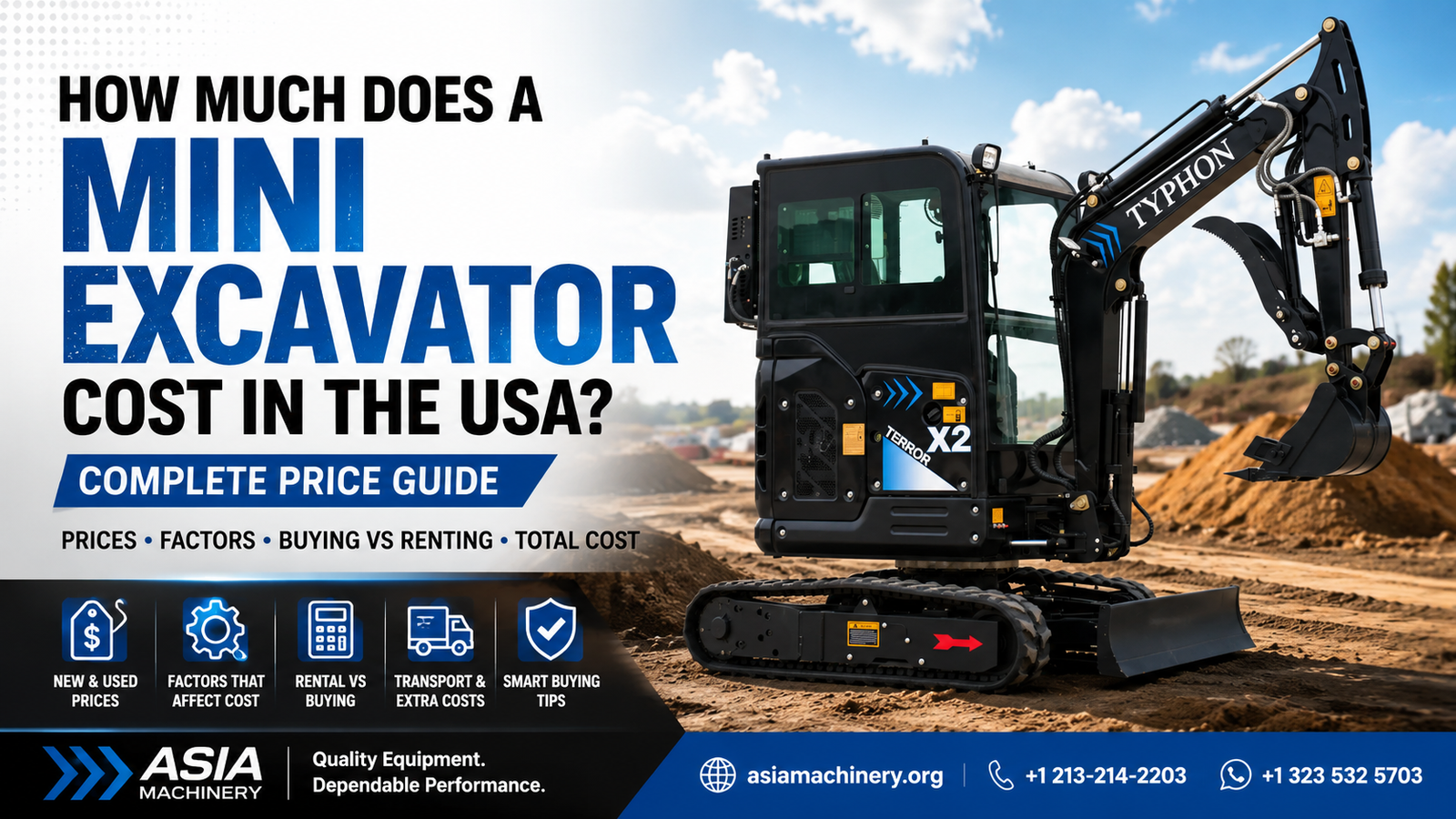
How Much Does a Mini Excavator Cost in the USA?
The cost of a mini excavator in the USA can vary significantly. A small entry-level machine may cost much less than a premium compact excavator equipped with an enclosed cabin, advanced hydraulics, multiple attachments, and a recognized diesel engine.
As a broad planning estimate, buyers may find mini excavators ranging from approximately $15,000 to more than $150,000. Machines in the popular two-to-four-ton category commonly fall around $35,000 to $60,000, although the final price depends on brand, model, equipment configuration, location, attachments, warranty, and dealer fees. Current marketplace data also shows that compact-excavator pricing varies widely across new and used inventory.
The advertised price is only one part of the buying decision. Transportation, sales tax, attachments, financing, insurance, fuel, maintenance, replacement tracks, and storage can all affect the total amount you will spend.
This guide explains how much a mini excavator may cost, why prices vary, whether buying or renting makes more sense, and how Asia Machinery can help buyers compare compact equipment for construction, landscaping, farming, orchard work, and property maintenance.
Average Mini Excavator Prices by Size
The following figures are broad budget estimates rather than guaranteed selling prices. Actual pricing changes with inventory, region, model year, engine, configuration, dealer programs, and attachment packages.
| Mini excavator category | Approximate operating class | General new-price estimate |
|---|---|---|
| Micro excavator | Under 2 tons | $15,000–$35,000 |
| Small mini excavator | 1.5–3 tons | $25,000–$55,000 |
| General-purpose mini excavator | 3–5 tons | $40,000–$80,000 |
| Larger compact excavator | 5–8 tons | $65,000–$120,000 |
| Upper compact class | 8–10 tons | $90,000–$150,000+ |
These ranges overlap because machine weight does not determine price by itself. A well-equipped two-ton excavator from a premium manufacturer may cost more than a basic three-ton machine.
A 2026 dealer guide places many two-to-four-ton machines around $35,000 to $60,000. Current marketplace examples also include new compact models around the $49,000 to $51,000 level, showing how equipment configuration and manufacturer can influence price.
Buyers should therefore compare complete specifications rather than assuming that every machine in the same weight category will have the same price or performance.
Why Do Mini Excavator Prices Vary So Much?
Two mini excavators may look similar but have very different prices. The difference can come from the engine, hydraulic system, operator station, attachment package, warranty, manufacturing quality, dealer network, or included support.
The following factors have the greatest influence.
1. Operating Weight and Machine Size
Larger excavators normally cost more because they require more steel, larger hydraulic components, stronger undercarriages, larger engines, and heavier counterweights.
A micro excavator intended for garden access and shallow trenches has different requirements from a six-ton compact excavator designed for construction, utility, and demolition work.
Larger machines may provide:
- Greater digging depth
- Higher bucket force
- More lifting capacity
- Larger bucket options
- Greater stability
- Higher auxiliary hydraulic flow
- Better performance with demanding attachments
However, bigger is not always better. A larger excavator also requires a heavier trailer, more towing capacity, additional fuel, and more working space.
The best value usually comes from purchasing the smallest machine that can comfortably complete your normal projects.
2. Engine Brand and Certification
The engine is a major part of an excavator’s cost.
Machines equipped with engines from established manufacturers may have a higher purchase price, but they can provide advantages related to parts availability, service knowledge, reliability, and long-term resale value.
Buyers in the United States should also confirm that the engine has the appropriate emissions certification for its intended market and application.
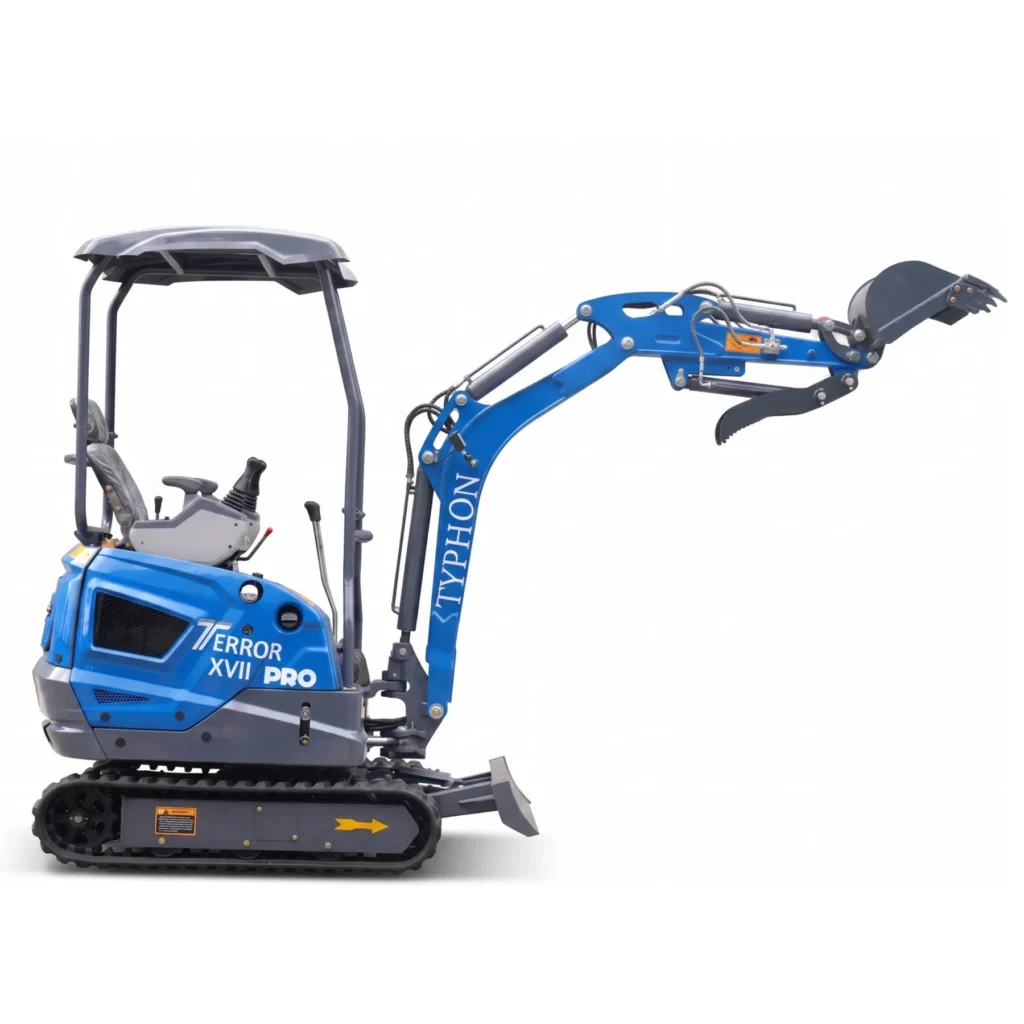
The Asia Machinery website, for example, presents the TYPHON TERROR XX as a 4,000 lb mini excavator equipped with an EPA-certified Kubota D902 diesel engine. The machine is positioned for landscaping, orchard work, trenching, excavation, and confined job sites.
An excavator with a recognized engine may cost more than an unbranded alternative, but the engine should be evaluated as part of the machine’s long-term ownership value.
3. Hydraulic Performance
The hydraulic system powers the boom, arm, bucket, swing, travel motors, dozer blade, thumb, and auxiliary attachments.
A machine with higher-quality pumps, control valves, hydraulic motors, hoses, cooling components, and auxiliary circuits may be more expensive.
Important hydraulic details include:
- Main pump flow
- Auxiliary hydraulic flow
- Working pressure
- One-way or two-way auxiliary operation
- Hydraulic tank capacity
- Oil cooling
- Number of hydraulic lines
- Attachment controls
Hydraulic performance matters when operating breakers, augers, grapples, mowers, compactors, tilting buckets, or hydraulic thumbs.
A lower purchase price provides little value if the excavator cannot properly power the attachments required for the work.
4. Open Canopy vs. Enclosed Cabin
An open-canopy mini excavator normally costs less than a comparable enclosed-cabin model.
A canopy provides protection from overhead hazards when properly designed, while maintaining an open operator environment. It can be a practical choice in warm climates or for buyers who prioritize a lower purchase price.
An enclosed cabin may add:
- Air conditioning
- Heating
- Wind protection
- Rain protection
- Reduced dust exposure
- Improved operator comfort
- Better year-round usability
- Additional glass and structural components
For contractors operating throughout the year, the additional cost of a cabin may be justified by better working conditions and reduced operator fatigue.
For occasional property work, an open canopy may provide better value.
5. Attachments Included in the Price
The lowest advertised price may only include the excavator and one standard bucket.
Another package may include several valuable attachments, making the higher-priced offer more economical overall.
Possible attachments include:
- Standard digging bucket
- Narrow trenching bucket
- Grading bucket
- Tilting bucket
- Hydraulic thumb
- Mechanical thumb
- Auger
- Ripper
- Rake
- Grapple
- Hydraulic breaker
- Screening bucket
- Quick coupler
Attachment prices vary according to size, design, hydraulic requirements, and manufacturing quality.
A hydraulic breaker or powered grapple normally costs more than a basic bucket. A quick coupler can also increase the initial price, but it may save time when changing attachments regularly.
Before comparing two excavator prices, confirm exactly what each package includes.
6. New vs. Used Condition
Used mini excavators can reduce the initial investment, but pricing depends heavily on model year, hours, maintenance history, wear, and brand.
EquipmentWatch data reported by Equipment World showed an average used mini-excavator listing price of approximately $47,528 during the third quarter of 2025, based on a large resale dataset. That average includes different brands, sizes, ages, and configurations, so it should not be treated as the price of every used machine.
Current used-equipment examples also show how much prices can vary. Cat’s used-equipment marketplace has included compact models such as a used Cat 302 at approximately $44,500 and a Cat 304 at approximately $60,000, depending on year, hours, condition, and location.
A less expensive used excavator may be a good investment when it has:
- Verified maintenance records
- Reasonable operating hours
- Healthy hydraulic performance
- Limited undercarriage wear
- No major structural repairs
- Available replacement parts
- A professional inspection
A cheap used excavator can become expensive when it immediately requires tracks, pumps, final drives, pins, bushings, hoses, or engine repairs.
How Much Does a Used Mini Excavator Cost?
Used mini excavator prices can range from under $20,000 for older, smaller, or high-hour machines to more than $80,000 for recent low-hour premium models.
A rough used-price guide may look like this:
- Older micro and small machines: $10,000–$30,000
- General-purpose used models: $25,000–$55,000
- Recent low-hour machines: $45,000–$80,000
- Larger premium compact excavators: $60,000–$100,000+
Marketplace listings are asking prices, not guaranteed final transaction values. Auction prices can also appear unusually low before bidding closes, transportation is added, and buyer fees are applied.
When buying used equipment, inspection is more important than finding the lowest price.
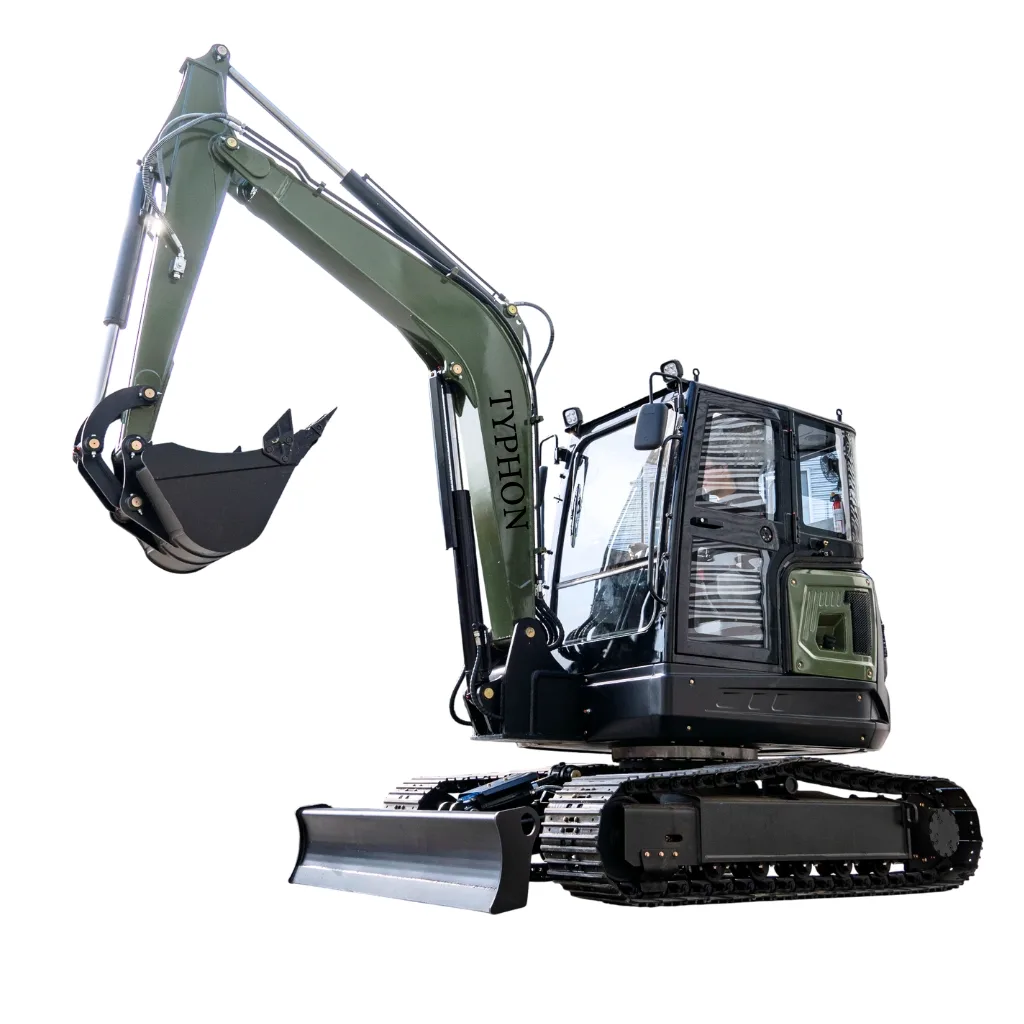
What Should You Inspect on a Used Excavator?
Check the machine carefully before purchasing.
Important inspection points include:
- Cold engine starting
- Exhaust smoke
- Engine noise
- Oil condition
- Coolant condition
- Hydraulic leaks
- Slow or weak hydraulic movement
- Hydraulic pump noise
- Boom and arm play
- Pin and bushing wear
- Bucket condition
- Track condition
- Sprocket wear
- Roller wear
- Final-drive operation
- Swing-bearing movement
- Dozer-blade operation
- Electrical controls
- Hour-meter accuracy
- Structural cracks
- Weld repairs
- Maintenance records
A machine with a lower price but a badly worn undercarriage may cost more in the long term than a better-maintained unit with a higher purchase price.
Hiring an experienced equipment mechanic to inspect the excavator can help reduce risk.
How Much Does It Cost to Rent a Mini Excavator?
Renting may be more practical for a short project.
National rental-market estimates in 2026 commonly place mini excavators around $150 to $400 per day, depending on machine size, region, availability, and rental provider. Local dealer examples can reach approximately $400 to $500 per day for larger compact models.
Typical rental expenses may include:
- Daily or weekly machine rate
- Delivery and pickup
- Damage waiver
- Taxes
- Fuel
- Cleaning
- Attachment rental
- Overage hours
- Deposit
- Environmental fees
A machine advertised at $300 per day may cost considerably more after delivery, attachments, taxes, and protection fees are included.
Weekly or monthly rental rates normally reduce the average daily cost. A 2026 rental-market guide notes that longer rental periods can offer significantly lower per-day pricing than repeated one-day rentals.
Should You Rent or Buy?
Renting may be better when:
- You only have one project
- The job will take a few days
- You do not have storage
- You do not own a suitable trailer
- You want to test different machine sizes
- You do not want maintenance responsibility
- Your equipment needs change between projects
Buying may be better when:
- You use the machine regularly
- Rental availability causes delays
- You have several upcoming projects
- You want permanent attachment access
- You operate a landscaping or construction business
- You maintain a large farm, orchard, or property
- You want to build equity in the machine
- You need equipment available without reservation
A simple comparison can help.
Suppose a rental costs $400 per day after the base rate but before all transportation and attachment charges. Twenty rental days would equal $8,000. Fifty days would equal $20,000. At that level of recurring use, ownership may become more attractive, especially when the machine retains resale value.
However, buyers must also include financing, maintenance, transportation, insurance, and depreciation in the calculation.
Additional Costs Beyond the Purchase Price
A mini excavator’s advertised price is not the complete ownership cost.
Sales Tax and Registration
Depending on the state, buyer, and transaction, sales or use tax may apply.
Commercial operators may also need business registrations, insurance, permits, or transportation compliance depending on how the equipment is used.
Ask for a written purchase total before making a payment.
Transportation and Delivery
Delivery cost depends on:
- Distance
- Machine weight
- Trailer requirements
- Fuel prices
- Loading access
- Residential or commercial destination
- Special permits
- Expedited delivery
A nearby warehouse can make pickup, inspection, and transportation more convenient.
Asia Machinery identifies its U.S. warehouse location as 2522 S Malt Ave, Commerce, California 90040, giving customers a physical U.S. location for equipment inquiries and availability checks.
Trailer and Tow Vehicle
Owning an excavator may also require purchasing or upgrading a trailer.
The complete transported load includes:
- Excavator
- Fuel
- Bucket
- Thumb
- Additional attachments
- Trailer
- Chains and binders
- Tools
Never compare the machine’s weight only with the truck’s maximum advertised towing capacity. The trailer and attachments can add thousands of pounds.
The truck, hitch, tires, trailer frame, coupler, axles, and brakes must all be rated for the complete load.
Financing Cost
Financing makes equipment easier to purchase, but interest increases the total amount paid.
For example, a $50,000 machine may have a manageable monthly payment, but the final cost will depend on:
- Down payment
- Interest rate
- Loan term
- Credit profile
- Origination fees
- Insurance requirements
- Early-payment rules
Compare the cash price with the total financed cost rather than focusing only on the monthly payment.
Insurance
Commercial equipment insurance may protect against theft, damage, fire, accidents, or transportation incidents.
Coverage and cost depend on:
- Equipment value
- Storage location
- Business type
- Operator experience
- Transportation frequency
- Coverage limits
- Deductible
- Claims history
Insurance can be particularly important for machines stored outdoors or transported between jobs.
Fuel and Routine Maintenance
Mini excavators require regular maintenance.
Common costs include:
- Diesel fuel
- Engine oil
- Hydraulic oil
- Coolant
- Fuel filters
- Engine-oil filters
- Hydraulic filters
- Air filters
- Grease
- Replacement hoses
- Battery
- Bucket teeth
- Pins and bushings
Maintenance costs are usually lower when inspections are performed regularly and small problems are repaired before they damage larger components.
Replacement Tracks and Undercarriage
Rubber tracks and undercarriage parts are normal wear items.
Track life depends on:
- Operating surface
- Track tension
- Turning technique
- Machine weight
- Debris
- Slope operation
- Travel distance
- Maintenance
Frequent sharp turns on abrasive surfaces can increase wear.
Undercarriage repairs can be expensive, which is why track condition should be considered when purchasing a used excavator.
How to Compare Mini Excavator Prices Correctly
Do not compare only the number shown in the advertisement.
Create a side-by-side comparison containing:
- Machine operating weight
- Engine manufacturer and model
- EPA certification information
- Maximum digging depth
- Bucket digging force
- Hydraulic pressure and flow
- Standard bucket size
- Hydraulic-thumb availability
- Auxiliary hydraulic lines
- Canopy or cabin configuration
- Included attachments
- Warranty
- Parts availability
- Delivery cost
- Final price after fees
A $35,000 machine without a thumb, quick coupler, warranty, local inventory, or support may not provide better value than a $40,000 package that includes those items.
Is a Low-Cost Mini Excavator Worth Buying?
An affordable mini excavator can be a smart purchase when it meets the project requirements and has dependable support.
Lower price does not automatically mean lower value. Some buyers do not need a large cabin excavator with advanced electronics and expensive options. A straightforward open-canopy machine may provide everything required for trenching, landscaping, drainage, orchard work, and property maintenance.
However, buyers should avoid choosing purely by price.
Confirm:
- The machine can reach the required digging depth
- The engine is suitable for U.S. operation
- Attachments are compatible
- Replacement parts are available
- Hydraulic specifications are clear
- Warranty terms are written
- Delivery terms are explained
- The seller provides contact information
- The total transport weight fits your equipment
A mini excavator is a working investment. The lowest upfront cost provides little benefit when the machine cannot complete the intended job.
Why Explore Mini Excavators at Asia Machinery?
Asia Machinery provides equipment for construction, landscaping, agriculture, property maintenance, warehouse work, and material handling.
The website allows buyers to explore categories such as:
- Mini excavators
- Mini skid steers
- Electric forklifts
- Wheel loaders
- Compactor rollers
- Scissor lifts
- Machinery attachments
Its featured TYPHON TERROR XX is presented as a 4,000 lb compact excavator with an EPA-certified Kubota D902 engine, a hydraulic thumb, a 17.7-inch bucket, and a compact design for landscaping, trenching, orchard work, and excavation.
The website also provides machine dimensions, product information, working applications, real footage, FAQs, and direct support options to help customers understand equipment before purchasing.
Because equipment availability and pricing can change, customers should contact the Asia Machinery team with the exact model, application, attachment requirements, delivery location, and budget.
Questions to Ask Before Requesting a Quote
Prepare the following information before contacting a seller:
- What work will the excavator perform?
- What maximum digging depth is required?
- How narrow is the access area?
- What material will be excavated?
- Which attachments are needed?
- Is a hydraulic thumb required?
- Is an open canopy acceptable?
- Is an enclosed cabin necessary?
- What is the delivery ZIP code?
- Will the machine be financed?
- Is a trailer already available?
- How frequently will the excavator be used?
Providing this information helps the equipment team recommend a more suitable model and prepare a more accurate quote.
Final Answer: How Much Does a Mini Excavator Cost?
A mini excavator in the USA may cost approximately $15,000 to more than $150,000, depending on machine size, brand, condition, engine, cabin, hydraulics, and attachments.
For many general-purpose machines:
- Small entry-level units may cost around $15,000 to $35,000.
- One-to-three-ton machines may cost around $25,000 to $55,000.
- Three-to-five-ton machines may cost around $40,000 to $80,000.
- Larger compact excavators may cost $65,000 to $150,000 or more.
- Used machines may range from under $20,000 to more than $80,000.
- Rental rates may range from roughly $150 to $500 per day, depending on size and location.
These are general estimates, not guaranteed prices.
The best buying decision is based on total value rather than purchase price alone. Compare engine quality, digging capacity, hydraulic performance, attachments, transportation, warranty, parts support, and long-term operating costs.
A properly selected mini excavator can reduce manual labor, improve productivity, and support landscaping, construction, farming, trenching, drainage, and property-maintenance projects for years.
Explore Equipment at Asia Machinery
Find compact machinery for real work at Asia Machinery.
Explore available mini excavators, compare equipment specifications, review machine footage, and contact the team for product availability, purchasing information, or help selecting the right model.
Frequently Asked Questions
How much is a small mini excavator?
A small new mini excavator may cost approximately $15,000 to $45,000. The final price depends on operating weight, engine, hydraulics, bucket, thumb, warranty, brand, and seller.
How much does a 3-ton mini excavator cost?
A new machine in the general two-to-four-ton class may cost roughly $35,000 to $60,000, although premium configurations can cost more.
Is it cheaper to buy a used mini excavator?
A used machine generally costs less upfront, but worn tracks, pumps, final drives, pins, bushings, or engines can increase the total ownership cost. Always inspect the machine and review its service history.
How much does it cost to rent a mini excavator for one day?
Typical daily rental estimates range from around $150 to $500, depending on machine size, location, availability, attachments, and delivery fees.
Is a mini excavator a good investment?
It can be a good investment when used regularly for landscaping, trenching, drainage, farming, construction, or property maintenance. Occasional users may save money by renting.
What costs should I add to the advertised price?
Include sales tax, delivery, financing, trailer equipment, attachments, fuel, insurance, maintenance, replacement tracks, storage, and repairs.
Where can I explore mini excavators in the USA?
Asia Machinery offers equipment information for U.S. buyers and identifies a warehouse in Commerce, California. Its website features the TYPHON mini excavator lineup and other machinery categories.
Cool