
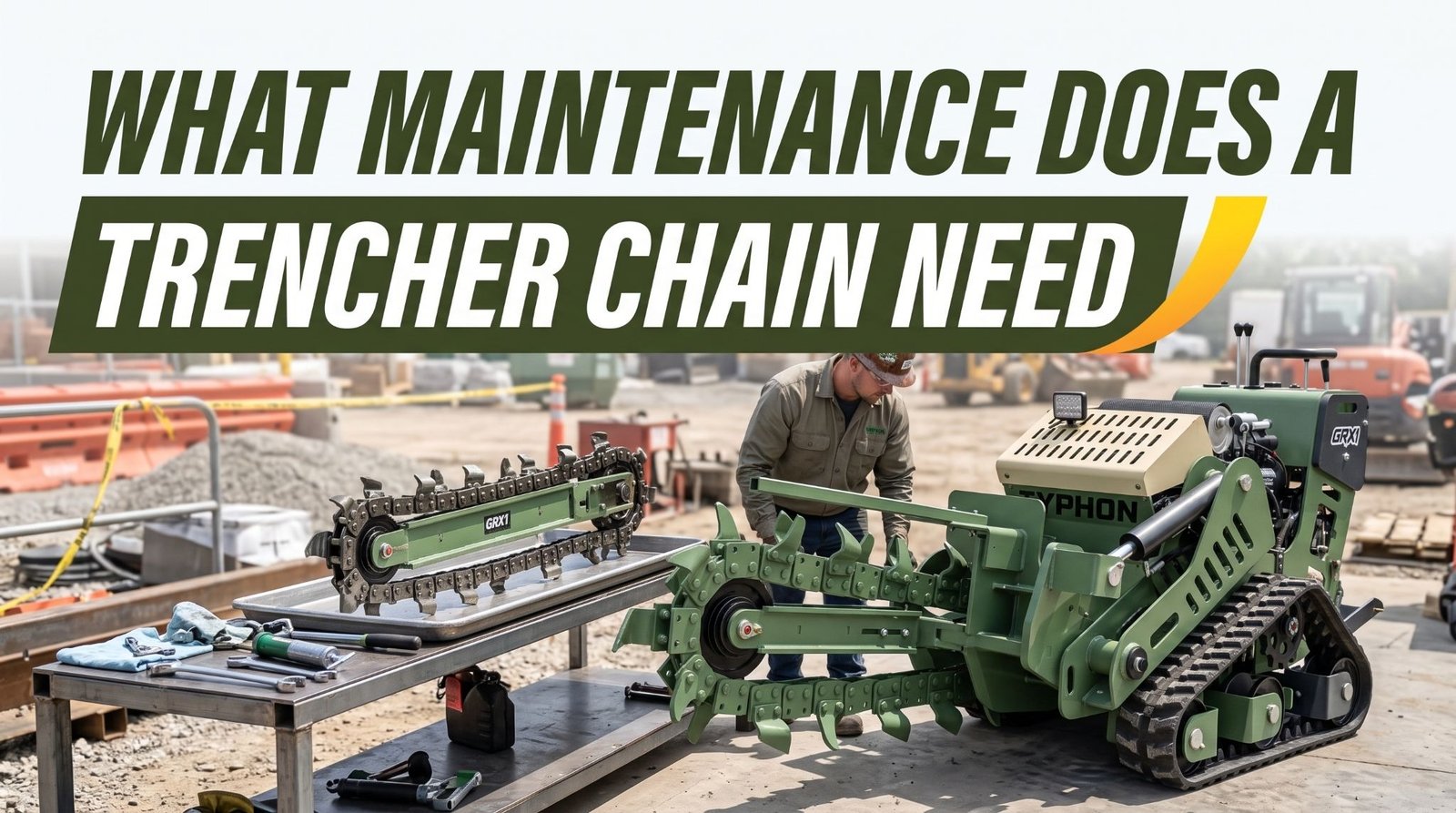
What Maintenance Does a Trencher Chain Need
After several hours of trenching, a chain that once cut cleanly can begin moving more slowly through the same ground. There may be no sudden breakdown or obvious failure, but the cutting system gradually loses effectiveness as the chain wears tooth by tooth against soil, rock, and roots. That gradual decline is why chain maintenance deserves regular attention.
Direct contact with the ground makes the trencher chain one of the machine’s most important wear components. Soil, rocks, roots, and other abrasive material gradually wear the chain, teeth, sprockets, and related parts during excavation. As wear increases, cutting performance can decline, the trench may become less consistent, and the machine may need more effort to complete the same work.
Regular inspection helps identify wear before it begins to affect daily productivity. Checking the chain, teeth, sprockets, and connections can reveal damaged or worn components that need attention. Replacing worn parts at the appropriate time and keeping the cutting system properly maintained helps the trencher maintain consistent performance across repeated jobs.
Inspect the Cutting Teeth
The cutting teeth do the hardest work on the whole machine. They make direct contact with the ground on every pass, and that constant abrasion means they wear down or take damage over time. Because they’re the point where the chain actually cuts, their condition sets the tone for how the entire trencher performs.
Make a habit of checking them regularly. Look for excessive wear, missing pieces, and any visible damage, since teeth that are rounded off, chipped, or gone no longer cut the way they should. Worn teeth directly affect how effectively the chain cuts, forcing the machine to work harder for a poorer result. Catching worn or missing teeth early, and replacing them per the manufacturer’s guidance, keeps the chain cutting cleanly.
Key takeaway: Cutting teeth make direct ground contact and wear or break over time, so inspect them regularly for excessive wear, missing pieces, or damage, since worn teeth reduce cutting effectiveness.
Check Chain Tension
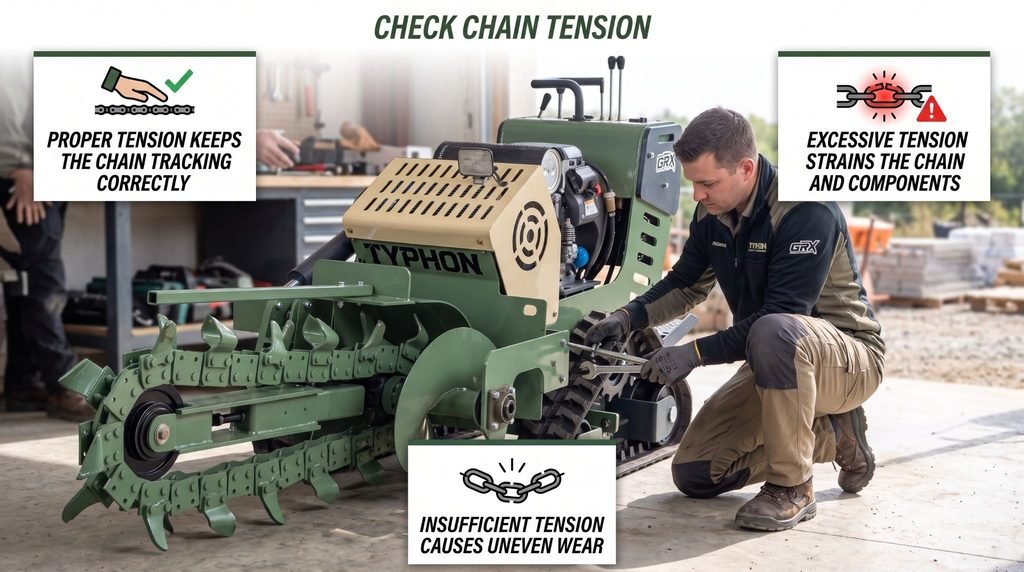
Correct chain tension helps the trencher’s cutting chain move smoothly and stay properly aligned during operation. If the tension is incorrect, the chain and related components can experience unnecessary wear, affecting both cutting performance and component life.
Both excessive and insufficient tension can create problems. A loose chain may move unevenly and wear irregularly, while an overly tight chain can place additional strain on the chain and other components. The correct tension should always follow the machine manufacturer’s specified maintenance requirements.
- Proper Tension: Keeps the cutting chain moving and tracking as designed.
- Excessive Tension: Can increase strain on the chain and related components.
- Insufficient Tension: May allow excessive movement and uneven wear during operation.
Key takeaway: A chain that’s too loose or too tight increases wear and affects operation, so check and adjust tension according to the manufacturer’s maintenance requirements.
Examine the Chain Links
The links carry the load that drives the whole cutting system. They move repeatedly under load throughout every job, and that continuous stress gradually takes its toll on the components and the connections between them. Because the links tie the chain together, their condition affects everything downstream.
Give them a careful look during inspection. Watch for visible damage, excessive wear, and any unusual movement between components, since loose or worn links signal a chain that’s beginning to fail. A link that moves in a way it shouldn’t, or shows clear wear, is a warning worth heeding. Addressing these problems before continued operation causes additional damage, because a small issue in one link can lead to failure that affects the rest of the chain. Catching it early keeps a minor fix from becoming a major one.
Key takeaway: Chain links move repeatedly under load, so look for visible damage, excessive wear, or unusual movement between components, and address problems before continued operation causes further damage.
Inspect the Sprocket
The sprocket is what drives the chain, and its condition shapes how well the whole system works. It transfers movement to the cutting chain, so the chain is only as effective as the sprocket driving it. A worn sprocket quietly undermines performance even when the chain itself looks sound.
Include it in your routine checks. Worn sprocket teeth can affect chain engagement and accelerate wear, because a sprocket that no longer grips the chain properly puts extra stress on both parts and disrupts smooth movement. Left unchecked, that poor engagement wears the chain faster and reduces cutting consistency. Regular inspection of the sprocket helps you catch this early, before it drags down the performance of the chain you’ve worked to maintain.
Key takeaway: The sprocket transfers movement to the chain, so inspect it regularly, since worn sprocket teeth affect chain engagement, accelerate wear, and reduce cutting consistency.
Remove Dirt and Debris
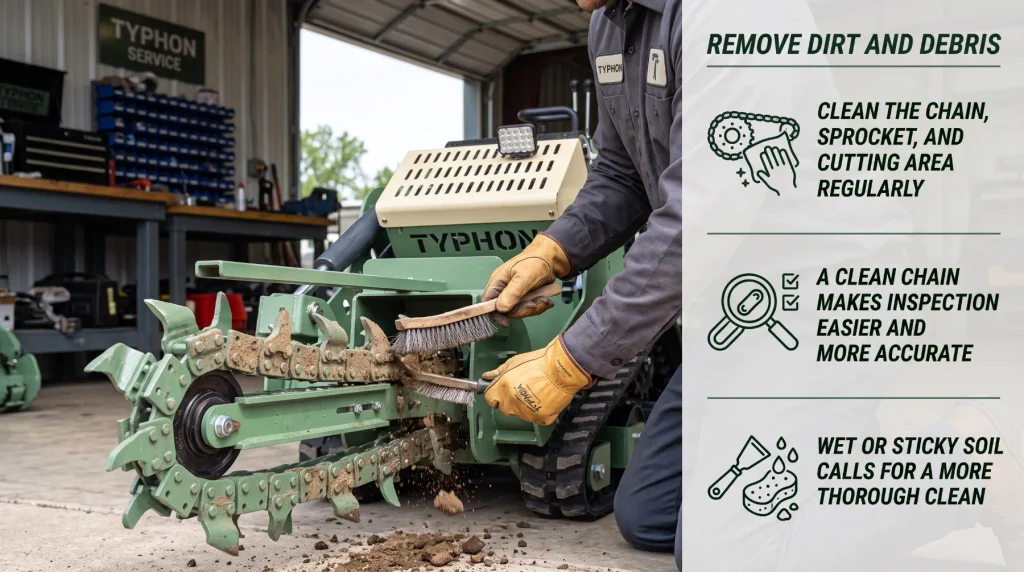
Trenching is dirty work, and the machine collects the proof of it. Soil and debris build up around the chain, the sprocket, and the cutting area over the course of a job, and that buildup gets in the way of both maintenance and operation. Keeping these areas clean is a simple step that supports everything else.
Cleaning pays off in two ways. It makes inspection easier, since you can actually see the teeth, links, and sprocket clearly rather than through a layer of packed soil. It also helps prevent material from interfering with normal movement, keeping the chain running as it should. Some conditions demand extra attention: after working in wet or sticky soil, more material tends to cling to the components, so a more thorough clean is worth the effort. A clean cutting system is one you can inspect properly and trust to run smoothly.
Key takeaway: Soil and debris build up around the chain, sprocket, and cutting area, so clean these components to make inspection easier and prevent interference with movement, with extra attention after wet or sticky soil.
Follow Lubrication Requirements
Some trencher chain systems rely on lubrication to run smoothly. Where it applies, lubrication reduces friction and wear between moving parts, helping the chain last longer and operate more efficiently. It’s a small task with a meaningful effect on component life.
The key is doing it correctly for your specific machine. The correct lubricant and the right service interval depend on the equipment design, so what suits one system may not suit another. Follow the manufacturer’s instructions rather than applying whatever product is on hand, since an unsuitable lubricant can do more harm than good. Using the right product at the recommended interval is what makes lubrication protect the chain instead of working against it.
Key takeaway: Some chain systems require lubrication to reduce friction and wear, and the correct lubricant and interval depend on the equipment design, so follow the manufacturer’s instructions rather than applying unsuitable products.
Conclusion
Starting a landscaping or utility job with a worn trencher chain can affect cutting performance from the beginning. Cutting teeth may already be worn, chain links can develop excessive movement, or improper tension can place extra stress on the cutting system. As the trencher works through soil, roots, gravel, and other materials, these small issues can worsen and make the machine less effective.
A regular chain inspection gives operators a chance to identify these problems before they affect the workday. Checking the cutting teeth, chain tension, links, sprocket, and related components can reveal excessive wear, damage, or poor engagement. Cleaning soil and debris from the cutting area also makes inspection easier, while following the manufacturer’s lubrication requirements helps support proper chain movement.
Taking a few minutes before each job can help maintain consistent trenching performance. Adjusting chain tension to the manufacturer’s specification, replacing damaged or worn components, and addressing problems before operation can reduce unnecessary wear. Whether the trencher is used for landscaping, irrigation, drainage, or utility installation, consistent chain maintenance helps keep the cutting system ready for the next job.
Frequently Asked Questions
How often should a trencher chain be inspected?
A trencher chain should be inspected regularly, with a pre-operation check as a standard practice. The chain is exposed to soil, rocks, roots, and other abrasive material, so wear can build over time. Check for worn teeth, incorrect tension, damaged links, and sprocket wear. Rocky or abrasive ground may require more frequent inspections. Cleaning the cutting system also helps reveal damage hidden by packed soil.
Why is chain tension important?
Chain tension affects how smoothly the chain moves and how quickly components wear. A loose chain can move unevenly and wear improperly, while excessive tension adds strain to the chain and related parts. Follow the manufacturer’s specifications when checking or adjusting tension. Proper tension supports consistent cutting and helps reduce unnecessary wear.
What causes trencher teeth to wear?
Trencher teeth wear through continuous contact with the ground. Soil, rocks, roots, and other materials gradually abrade the teeth, with rocky or root-filled ground generally causing faster wear. Rocks can also chip teeth, while roots increase cutting resistance. Inspect teeth for excessive wear, missing pieces, or damage, and replace them according to the manufacturer’s guidance to maintain cutting performance.
Should the sprocket be inspected too?
Yes, the sprocket should be inspected along with the chain because it drives the chain through the cutting system. Worn sprocket teeth can affect chain engagement and accelerate wear on both components. Checking the sprocket and chain together helps identify problems early and supports smooth operation, consistent cutting, and longer component life.