
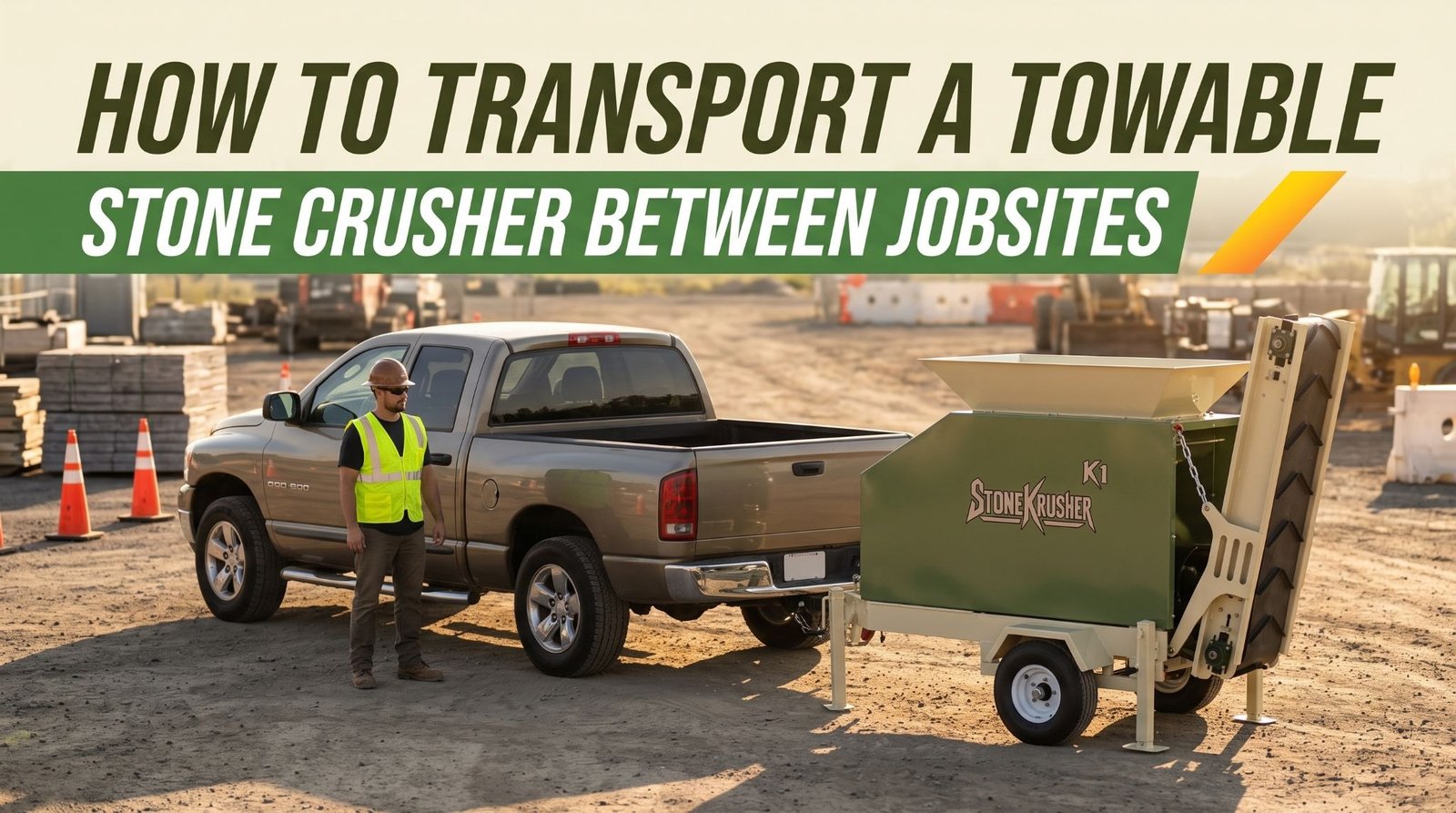
How to Transport a Towable Stone Crusher Between Jobsites
After a crusher finishes its work on one project, the next site may already be waiting a few towns away. The temptation is to hitch it up and go, but a stone crusher isn’t a trailer you can simply connect. Its weight, size, and moving parts shape travel, and skipping prep can turn a routine move into a breakdown.
Safe transportation of a stone crusher starts before the machine reaches the road. Moving crushing equipment requires attention to machine dimensions, total weight, towing capacity, road conditions, and the equipment used to secure the load. Each factor affects how the equipment can be moved and what preparations are needed before departure.
Before leaving one project for the next, checking the machine and towing setup helps reduce problems during transit. Additionally, confirming connections and securing moving components helps. Moreover, the planned route ensures the towing vehicle is properly matched to the load, and good preparation reduces delays.
Check the Machine Before Moving
Every safe move starts with a thorough look at the machine. A prep-transport inspection should cover the frame, wheels, tires, hitch, support components, and any other visible parts, since these are what keep the crusher stable and connected while it travels. Small problems left unchecked have a way of becoming serious ones at highway speed.
Address anything you find before the machine leaves the site. A loose or damaged component that seems minor in the yard can fail under the stress of transport, so it’s far better to fix it while the crusher is stationary and accessible. A worn tire, a loose hitch fitting, or a damaged support all deserve attention before the trip, not after.
Don’t overlook the material side of the inspection. Clear the crusher of loose material that could shift during transportation, since debris left in or on the machine can move as the load travels, upsetting balance or falling onto the road. A clean, sound machine is one that’s genuinely ready to move.
Key takeaway: Inspect the frame, wheels, tires, hitch, and support components before moving, address any loose or damaged parts, and clear loose material that could shift during transport.
Verify Towing Requirements
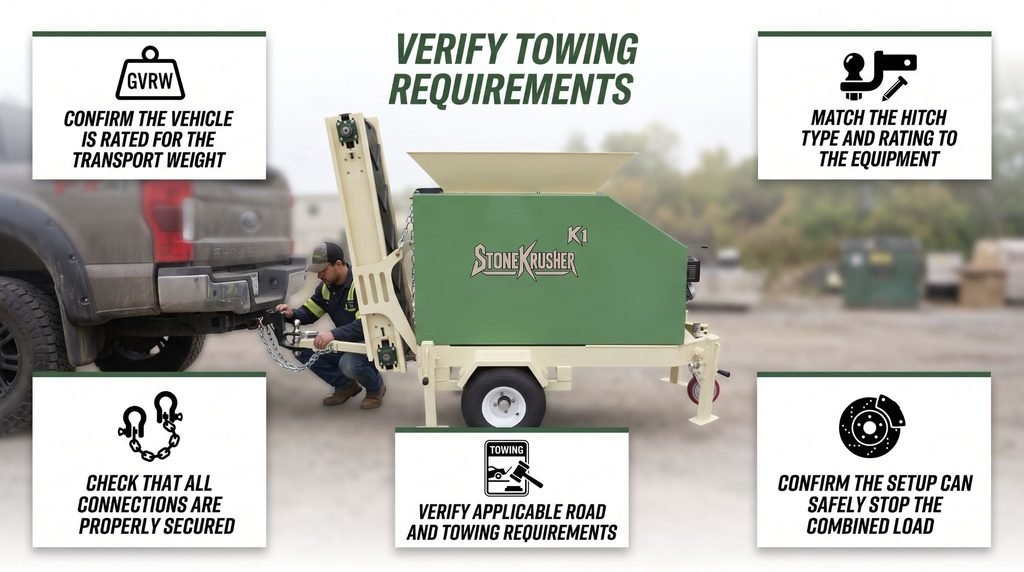
The towing vehicle must be properly matched to the crusher’s transport requirements before moving it on the road. The vehicle’s rated towing capacity should be sufficient for the crusher’s transport weight, while the hitch, connections, and braking system must also be suitable for the combined load.
Checking these requirements in advance helps ensure the towing setup is properly matched and compliant with applicable transportation requirements. Rather than assuming the vehicle is capable, confirm each part of the setup before starting the trip.
- Towing Capacity: Confirm the vehicle is rated to safely tow the crusher’s transport weight.
- Hitch Compatibility: Make sure the hitch type and rating match the towing equipment.
- Connection Points: Check that the vehicle and crusher connections are properly matched and secured.
- Braking Requirements: Ensure the towing setup can safely control and stop the combined weight.
- Transportation Rules: Verify applicable road, towing, and equipment requirements before moving the crusher.
Key takeaway: Confirm the towing vehicle’s capacity suits the crusher’s transport weight, and check hitch compatibility, connection points, braking requirements, and applicable transportation rules before the trip.
Secure the Crusher Properly
Once the machine is sound and the towing setup confirmed, everything has to be locked down for travel. All transport connections should be secured according to the manufacturer’s requirements, since those requirements reflect how the specific machine is designed to be moved safely. This isn’t the place to improvise; the manufacturer’s guidance is the standard to follow.
Movable parts need particular attention. Support legs, pins, guards, and other components that shift or fold should be placed in their proper transport positions before the machine travels. A support leg left down or a guard left loose can catch, drag, or come free on the road, so setting each one correctly is part of preparing the crusher to move.
A properly secured setup does its job quietly. By holding every connection and component where it belongs, it reduces the chance of movement or damage while traveling, protecting both the machine and the road around it. Taking the time to secure the crusher fully is what keeps the trip uneventful.
Key takeaway: Secure all transport connections per the manufacturer’s requirements and place support legs, pins, guards, and other movable components in their proper transport positions to reduce movement or damage in transit.
Plan the Travel Route
The road between two sites can make or break a move. Route conditions affect how easily a towable crusher reaches its destination, and the size and weight of the machine mean that not every road is suitable. Planning the route in advance is far better than discovering an obstacle mid-trip with nowhere to turn around.
Look for the conditions that give larger equipment trouble. Narrow roads may leave too little room to travel safely, low clearances can block a tall load, steep sections place extra demand on the towing setup, and construction zones or restricted entrances can create tight or impassable points. Any one of these can stall a move if you meet it unprepared.
Reviewing the route ahead of time is what surfaces these problems while you can still plan around them. Trace the full path from the current site to the new one, note anywhere the machine’s dimensions or weight could be an issue, and adjust the route accordingly. A little planning here keeps the trip smooth from start to finish.
Key takeaway: Route conditions affect how easily the crusher reaches its destination, so review the path in advance for narrow roads, low clearances, steep sections, construction zones, and restricted entrances. Spotting the problem early gives you time to plan around potential obstacles.
Prepare for Jobsite Positioning
Reaching the new site is only part of the job; the crusher still has to be unloaded and set up to work. Arriving is not the same as being ready, so it pays to plan for what happens once the machine is on-site. A crusher that arrives at a spot with nowhere suitable to work creates a problem right at the finish line.
The machine needs room for several things at once. There has to be enough space for unloading, for positioning the crusher where it will operate, for feeding material into it, and for material discharge as it works. Each of these requires clearance, and a spot that suits one may not suit them all, so the operating area has to accommodate the full working setup.
Identify that area before bringing the equipment onto the site. Confirming in advance that there’s a suitable, accessible spot with room to unload, position, feed, and discharge means the crusher can go straight from transport to setup without scrambling for space. Planning the destination is as much a part of transport as planning the road.
Key takeaway: Arriving is only part of the move, so identify a suitable operating area with enough space for unloading, positioning, feeding, and material discharge before bringing the crusher onto the site.
Complete a Final Inspection
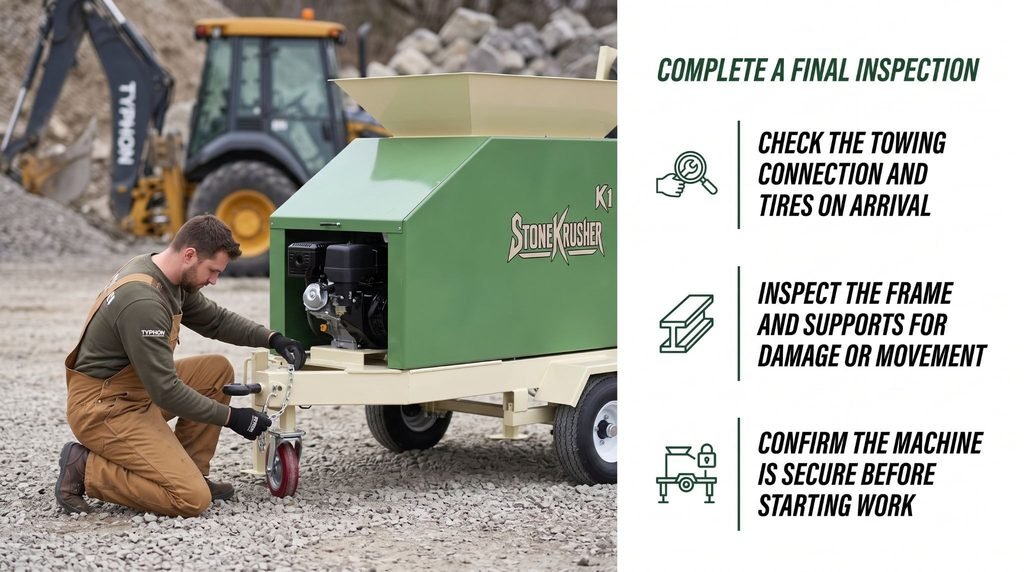
Transport puts stress on a machine, so a check on arrival is essential before any work begins. Once the crusher reaches the new location, inspect it again to confirm nothing has loosened, shifted, or sustained damage along the way. What was sound when it left the last site should be verified sound now that it’s arrived.
Cover the key points methodically. Check the towing connection, the tires, the frame, the supports, and the working components for any signs of damage or movement during the trip. The road can work connections loose or reveal a weakness that the prep-transport inspection didn’t, which is exactly why this second look matters before the machine goes to work.
Only once everything checks out and the crusher is positioned securely should you move on. With the inspection complete and the machine set firmly in its operating area, it can be prepared for crushing work with confidence. That final check is the bridge between a safe move and productive operation.
Key takeaway: After arrival, inspect the towing connection, tires, frame, supports, and working components for damage or movement, and only prepare the machine for crushing once it’s confirmed sound and positioned securely.
Conclusion
Transporting a towable stone crusher between jobsites requires careful preparation, suitable towing equipment, route planning, and inspection before and after each move. The crusher should be cleared of loose material and checked for damage around the frame, wheels, tires, hitch, supports, and other transport components before departure, while the towing vehicle must have sufficient rated capacity and compatible hitch and braking systems. Movable components should be secured in their required transport positions according to the manufacturer’s procedures, and the route should be reviewed for narrow roads, low clearances, steep sections, restricted entrances, and other access limitations. At the destination, adequate space should be available for unloading, positioning, feeding, discharge, and stabilizing the crusher before operation. Rechecking the connections, tires, frame, supports, and working components after arrival helps identify transport-related issues before crushing begins. Following a consistent preparation, towing, positioning, and inspection process supports controlled equipment relocation and reliable setup between jobsites.
Frequently Asked Questions
Can a towable stone crusher be moved between different jobsites?
Yes, a towable stone crusher can be moved between jobsites when its transport weight, dimensions, and towing requirements match the planned move. Its transportable frame allows contractors to relocate the machine instead of keeping it at one site. Before moving, check the crusher’s transport weight, towing setup, route clearance, and access at the destination. Confirming these factors helps ensure the machine can be relocated safely and efficiently.
What should be checked before towing?
Before towing, inspect the hitch, tires, frame, support components, pins, guards, and support legs. Make sure the hitch and connections are compatible and secure, the tires are in good condition, and all movable parts are locked into their proper transport positions. Check for loose or damaged components and remove loose material that could shift during travel. A complete prep-transport inspection helps confirm the crusher is ready to move safely.
Does the towing vehicle need a specific capacity?
Yes, the towing vehicle needs a rated capacity that matches the crusher’s transport weight and towing setup. Check the crusher’s weight against the vehicle’s rated towing capacity, then confirm the hitch and connection points are properly rated and compatible. Braking requirements for the combined weight must also be met, along with applicable transportation rules. Matching the complete towing setup to the crusher helps maintain control, braking, and stability during travel.
Should the route be planned before transportation?
Yes, route planning is important because a stone crusher’s size and weight can limit which roads and access points are suitable. Check for narrow roads, low bridges or overpasses, steep sections, construction zones, and restricted entrances before starting the trip. Also confirm there is enough space to enter and position the machine at the destination. Reviewing road width, clearances, slopes, and jobsite access in advance helps make transportation smoother and more predictable.