
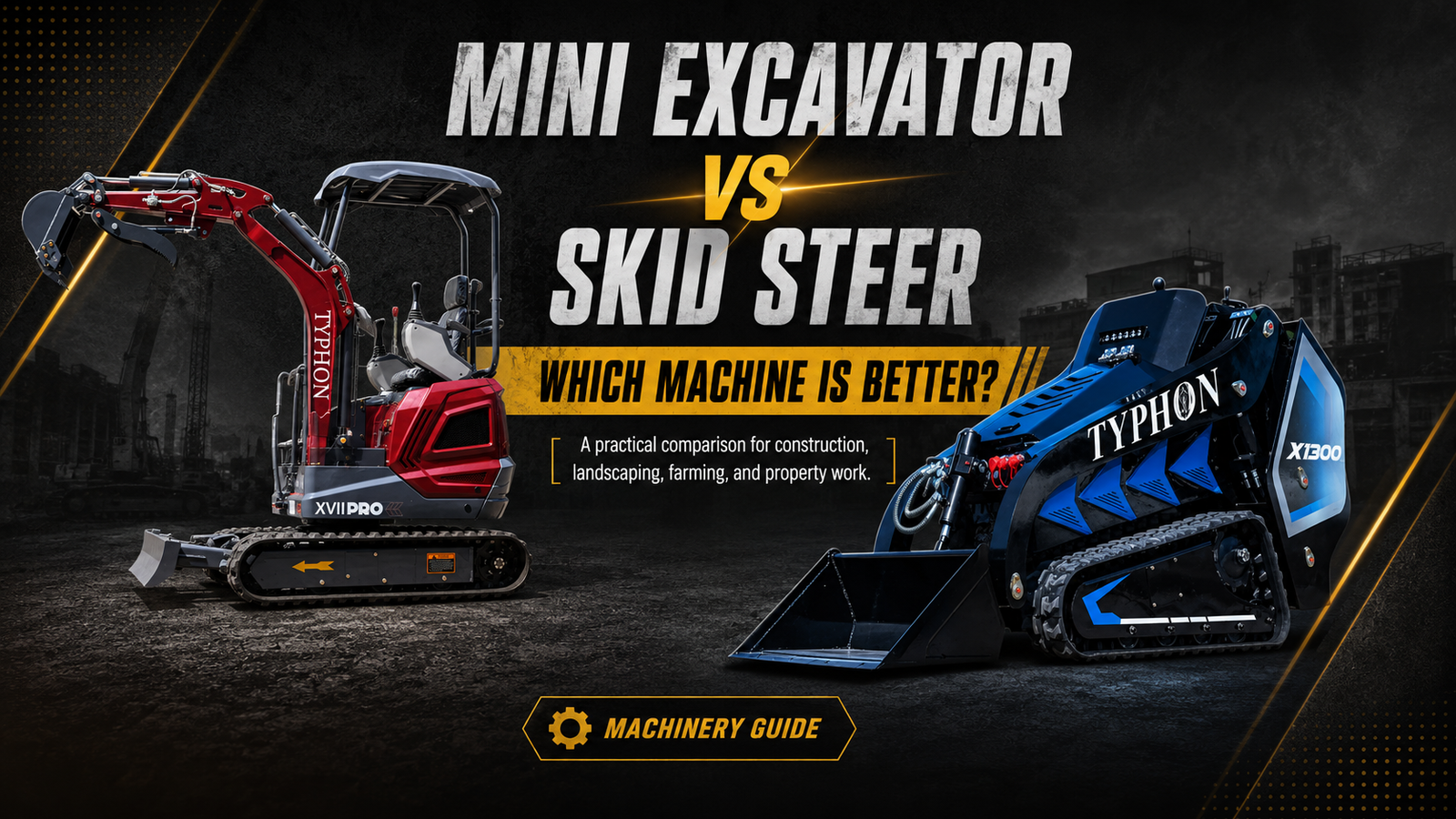
Mini Excavator vs Skid Steer: Which Machine Is Better?
Choosing between a mini excavator and a skid steer can be difficult, especially for first-time equipment buyers. Both machines are compact, versatile, and widely used in construction, landscaping, farming, property maintenance, and material handling.
However, they are designed for different types of work.
A mini excavator is generally better for digging, trenching, demolition, and working below ground level. A skid steer is usually better for lifting, loading, grading, carrying materials, and quickly moving around a job site.
The better machine depends on your work, property conditions, attachments, transportation setup, and budget.
This guide compares mini excavators and skid steers in detail so you can decide which machine is the better choice for your projects.
What Is a Mini Excavator?
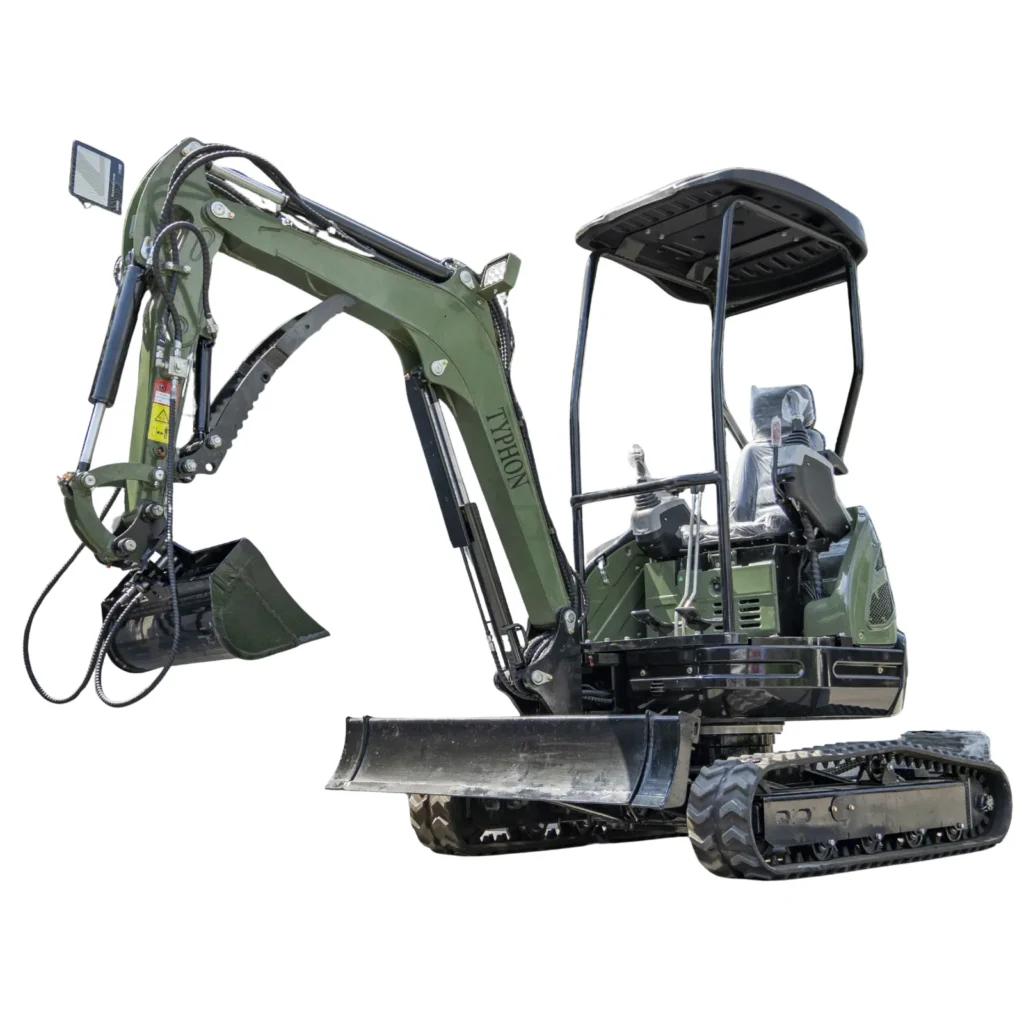
A mini excavator is a compact tracked machine designed mainly for excavation work.
It normally includes:
- A rotating upper body
- Boom
- Dipper arm
- Bucket
- Dozer blade
- Rubber or steel tracks
- Hydraulic system
- Open canopy or enclosed cabin
The upper structure can usually rotate 360 degrees, allowing the operator to dig, swing, and place material without repositioning the tracks after every movement.
Mini excavators are commonly used for:
- Digging trenches
- Installing drainage
- Preparing foundations
- Removing tree roots
- Digging ponds
- Cleaning ditches
- Breaking concrete
- Utility installation
- Landscaping
- Small demolition
- Farm and orchard maintenance
Their long boom and arm allow them to reach below ground level and work around obstacles more effectively than most skid steers.
What Is a Skid Steer?
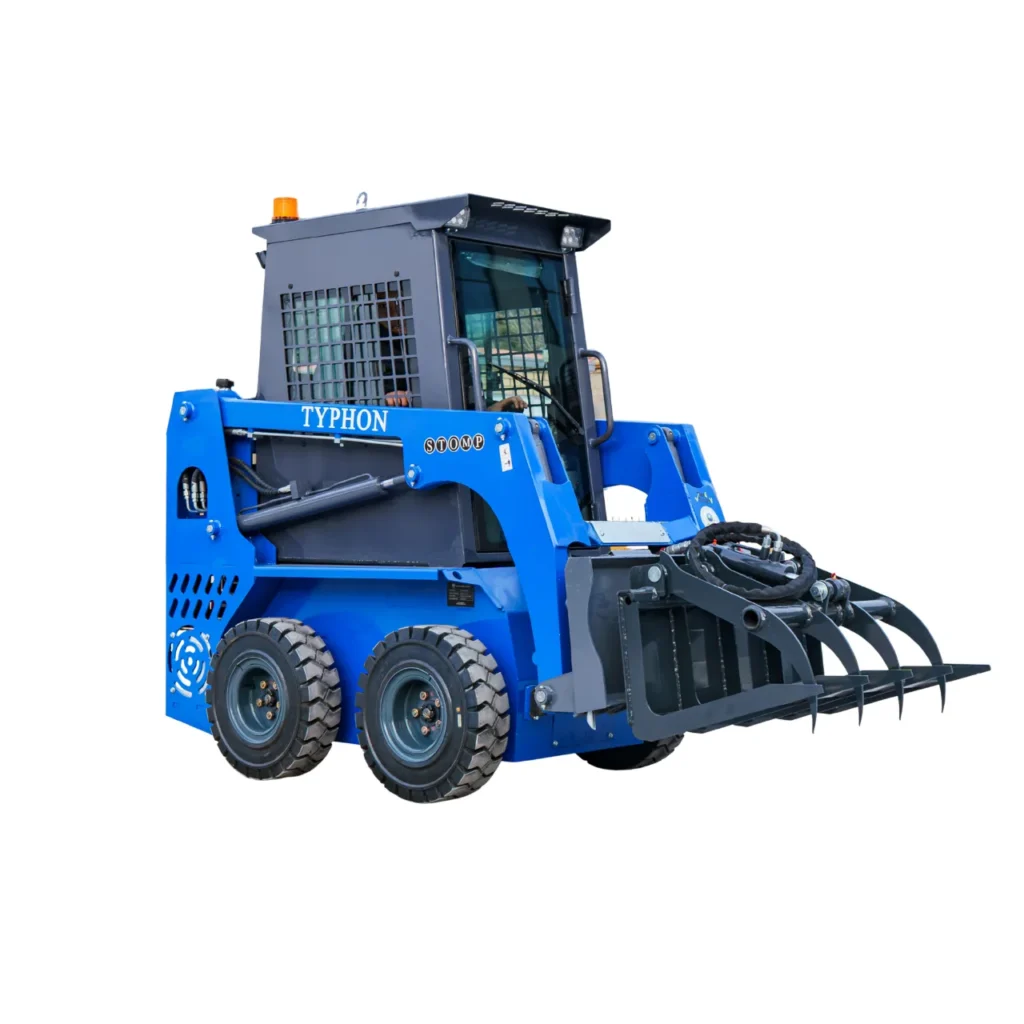
A skid steer is a compact loader designed mainly for lifting, loading, carrying, grading, and operating front-mounted attachments.
It normally includes:
- Compact body
- Four wheels or rubber tracks
- Loader arms
- Front attachment plate
- Hydraulic system
- Operator cab or protective structure
The name “skid steer” comes from the way the machine turns. The wheels on each side operate together, allowing the machine to skid or pivot within a small area.
Skid steers are commonly used for:
- Loading soil or gravel
- Moving pallets
- Grading land
- Cleaning job sites
- Snow removal
- Material handling
- Brush clearing
- Demolition cleanup
- Farm work
- Landscaping
- Road and property maintenance
A skid steer can use many different attachments, which makes it one of the most versatile compact machines available.
The Main Difference Between a Mini Excavator and a Skid Steer
The biggest difference is how each machine performs work.
A mini excavator uses a boom and arm to dig, reach, lift, and place material. It is designed to work around the machine and below ground level.
A skid steer uses front loader arms. It is designed to push, carry, scoop, lift, and move material across the surface.
In simple terms:
- Choose a mini excavator for digging.
- Choose a skid steer for loading and moving material.
There is some overlap because both machines support attachments, but each machine remains stronger in its main area.
Which Machine Is Better for Digging?
A mini excavator is generally the better machine for digging.
Its boom, arm, bucket, and rotating upper structure allow the operator to dig deep trenches, foundations, drainage channels, ponds, and utility lines with better control.
A mini excavator can usually dig deeper than a skid steer equipped with a backhoe attachment. It also allows the operator to place excavated material beside the trench without constantly moving the machine.
Mini excavators are especially useful when digging:
- Close to walls
- Beside fences
- Around landscaping
- Near buildings
- In narrow yards
- Below ground level
- On sloped or uneven terrain
A boom-swing feature can also help the excavator dig offset from the machine’s centerline.
A skid steer can perform some digging with a bucket, trencher, or backhoe attachment, but it is not as efficient for deep or precise excavation.
For regular trenching or foundation work, the mini excavator is the stronger choice.
Which Machine Is Better for Loading?
A skid steer is usually better for loading and moving loose material.
Its front bucket can scoop dirt, gravel, sand, mulch, snow, or debris and quickly carry it across a work site.
Skid steers are commonly used to load:
- Dump trailers
- Trucks
- Material bins
- Hoppers
- Landscaping beds
- Storage areas
They can travel back and forth quickly and are designed for repetitive loading cycles.
A mini excavator can load material into a truck or trailer, but it generally moves more slowly across the ground. Its bucket may also be smaller than a skid steer bucket.
For moving large amounts of loose material over short distances, the skid steer normally offers higher productivity.
Which Machine Is Better for Grading?
A skid steer is often better for general grading.
With a bucket, grading attachment, land plane, or box blade, a skid steer can spread and level soil efficiently.
It can be used for:
- Driveway preparation
- Yard leveling
- Gravel spreading
- Building pad preparation
- Landscape grading
- Road maintenance
The machine’s compact size and strong pushing ability make it useful for surface preparation.
A mini excavator can also perform grading using the dozer blade and bucket. It is especially useful for shaping slopes, drainage channels, and smaller areas where precision matters.
However, a mini excavator may take longer to grade a large flat surface.
For broad surface grading, the skid steer is usually better. For detailed shaping and drainage work, the mini excavator may provide better control.
Which Machine Is Better for Lifting?
The answer depends on what you need to lift.
A skid steer is usually better for lifting pallets, bags, building supplies, hay, and materials that can be handled with pallet forks.
It is commonly used in:
- Warehouses
- Farms
- Construction sites
- Landscaping yards
- Material storage areas
A mini excavator is useful for lifting rocks, pipes, logs, concrete pieces, and irregular materials. It can use a hydraulic thumb or grapple to pick up objects and place them accurately.
The mini excavator’s rotating upper body allows the operator to lift and swing materials to the side without turning the entire machine.
However, lifting capacity varies by machine size, boom position, working radius, and ground conditions.
Never assume that either machine can safely lift an object based only on engine horsepower. Always review the manufacturer’s rated operating capacity or lifting information.
Which Machine Is Better in Tight Spaces?
Both machines are compact, but they move differently.
A mini excavator may be better in narrow spaces where the tracks can remain stationary while the upper body rotates. This is useful between buildings, beside fences, and near landscaping.
A reduced-tail-swing or zero-tail-swing excavator can work close to obstacles with less risk of the rear counterweight striking something.
A skid steer can turn within a very small area, but its tires or tracks skid across the surface during turning. This can damage lawns, finished ground, pavement, or soft landscaping.
For confined excavation with minimal machine repositioning, the mini excavator is usually better.
For fast movement and turning on durable surfaces, the skid steer may be more practical.
Ground Damage and Surface Protection
A mini excavator with rubber tracks normally creates less surface disturbance when moving carefully in straight lines.
Its tracks spread the machine’s weight across a larger area, reducing ground pressure.
However, sharp turns can still disturb soil or grass.
A wheeled skid steer may cause more damage because it turns by dragging or skidding its tires. This can tear grass and leave marks on soft ground.
A compact track loader, which is similar to a skid steer but uses tracks, generally performs better on soft soil and provides lower ground pressure than a wheeled skid steer.
For finished yards and sensitive landscaping, a mini excavator may be easier on the ground.
Attachment Versatility
Both machines can use attachments, but skid steers are often considered more versatile for general job-site work.
Common skid steer attachments include:
- General-purpose bucket
- Grapple bucket
- Pallet forks
- Auger
- Trencher
- Hydraulic breaker
- Brush cutter
- Sweeper
- Snow blade
- Stump grinder
- Landscape rake
- Soil conditioner
Common mini excavator attachments include:
- Digging bucket
- Narrow trenching bucket
- Grading bucket
- Tilting bucket
- Hydraulic thumb
- Grapple
- Auger
- Ripper
- Rake
- Hydraulic breaker
- Screening bucket
- Compaction wheel
The skid steer attachment system is often designed for fast changes between many front-mounted tools.
A mini excavator is more specialized for digging, breaking, lifting, and precision material handling.
Before buying attachments, confirm hydraulic flow, pressure, connection type, pin size, coupler type, and machine capacity.
Speed and Job-Site Movement
A skid steer is generally faster when traveling around a job site.
It can quickly carry materials from one area to another and perform repeated loading cycles.
A mini excavator normally travels more slowly because it is designed primarily for excavation, not transportation.
If your work requires frequent movement across a large area, the skid steer may save time.
If most of the work happens within one excavation zone, travel speed may not be as important.
Stability
Mini excavators are designed to remain stable while digging, especially when the tracks and blade are positioned correctly.
The long tracked undercarriage provides a stable platform, but the machine can still tip if it is overloaded, operated incorrectly, or used on a steep slope.
Skid steers have a low, compact design and can be stable on firm ground. However, lifting a heavy load too high can move the center of gravity and increase the risk of tipping.
Both machines require careful operation.
Important factors include:
- Ground slope
- Load weight
- Attachment weight
- Machine position
- Travel direction
- Surface condition
- Rated capacity
Operators should always follow the machine’s safety instructions.
Visibility and Operator Experience
A mini excavator provides good visibility around the boom, bucket, and digging area. The operator can often see the trench and attachment clearly.
However, visibility behind the machine may be limited, especially with an enclosed cabin.
A skid steer provides good forward visibility, but loader arms and attachments can reduce the view. Rear visibility can also be limited.
Operator comfort depends on the model.
Useful features include:
- Pilot controls
- Adjustable seat
- Air conditioning
- Heating
- LED work lights
- Backup camera
- Safety lock
- Easy-to-read display
- Enclosed cabin
- Low-noise operation
Beginners should test the controls before purchasing when possible.
Transportation
Transportation requirements can influence which machine is better.
Small mini excavators and compact skid steers may be transported using a properly rated truck and trailer.
However, total transport weight includes:
- Machine
- Fuel
- Attachment
- Bucket
- Trailer
- Tools
- Additional accessories
A skid steer may weigh more than expected, especially when using heavy attachments or tracks.
A mini excavator may be long and require careful trailer positioning.
Before purchasing either machine, verify:
- Truck towing capacity
- Trailer gross vehicle weight rating
- Hitch rating
- Axle capacity
- Trailer brake requirements
- Load securement equipment
- Local transportation regulations
Never calculate transport requirements using machine weight alone.
Fuel Use and Maintenance
Fuel consumption depends on machine size, engine, workload, and operating technique.
A mini excavator may use less fuel during light digging and precision work because it can remain in one position while rotating.
A skid steer may use more fuel during repeated travel, loading, and high-flow attachment work.
Maintenance needs also differ.
Mini excavator maintenance includes:
- Track tension
- Rollers and sprockets
- Boom pins
- Bucket bushings
- Swing system
- Hydraulic hoses
- Final drives
Skid steer maintenance includes:
- Tires or tracks
- Lift arms
- Hydraulic couplers
- Wheel hubs
- Drive chains or motors
- Attachment plate
- Cooling system
Both machines require regular grease, fluid checks, filter replacement, and inspection.
Purchase Price
Purchase price varies greatly by brand, model, engine, machine weight, attachments, and condition.
A small mini excavator may cost less than a medium skid steer, but a larger excavator can cost significantly more.
Skid steer attachments can also increase the total investment.
Instead of comparing only the base machine price, calculate the complete package:
- Machine
- Required attachments
- Delivery
- Trailer
- Maintenance
- Insurance
- Fuel
- Replacement parts
- Storage
The cheapest machine is not always the most economical if it completes work slowly or lacks the correct attachments.
Which Machine Is Better for Landscaping?
Both machines are valuable for landscaping.
Choose a mini excavator when the work includes:
- Digging ponds
- Removing roots
- Installing drainage
- Digging retaining-wall footings
- Planting trees
- Excavating irrigation lines
- Shaping slopes
Choose a skid steer when the work includes:
- Moving mulch
- Carrying soil
- Grading yards
- Loading debris
- Spreading gravel
- Installing pallets of materials
- Brush cutting
Many professional landscaping companies use both machines because they complement each other.
Which Machine Is Better for Farming?
A mini excavator is useful for:
- Cleaning drainage ditches
- Digging irrigation lines
- Removing stumps
- Planting trees
- Maintaining orchards
- Repairing ponds
- Handling logs and rocks
A skid steer is useful for:
- Moving hay
- Handling feed
- Cleaning barns
- Loading manure
- Moving pallets
- Grading farm roads
- Operating brush cutters
- Carrying materials
For digging and land improvement, choose the mini excavator.
For daily material handling and farm loading, choose the skid steer.
Which Machine Is Better for Construction?
A mini excavator is often better for:
- Foundations
- Utility trenches
- Drainage
- Demolition
- Concrete breaking
- Excavating near structures
A skid steer is often better for:
- Moving material
- Loading trucks
- Site cleanup
- Grading
- Carrying pallets
- Operating sweepers and breakers
On many construction sites, the mini excavator performs the excavation while the skid steer removes and spreads the material.
Mini Excavator Advantages
The main advantages of a mini excavator include:
- Better digging depth
- Better trenching control
- 360-degree upper-body rotation
- Precise material placement
- Lower ground disturbance
- Better work below ground level
- Useful boom-swing capability
- Strong performance near walls and obstacles
- Good hydraulic attachment options
Mini Excavator Disadvantages
Possible disadvantages include:
- Slower travel speed
- Smaller loading bucket
- Lower material-carrying productivity
- Less effective for broad surface grading
- Limited pallet handling
- More specialized work focus
Skid Steer Advantages
The main advantages of a skid steer include:
- Fast job-site movement
- Strong loading performance
- Excellent attachment versatility
- Effective grading
- Good material handling
- Compact turning radius
- Useful pallet-fork capability
- High productivity for repetitive loading
Skid Steer Disadvantages
Possible disadvantages include:
- Limited digging depth
- Greater surface damage when turning
- Less precise trenching
- Reduced reach compared with an excavator
- Limited work below ground level
- Visibility restrictions around loader arms
Should You Buy a Mini Excavator or Skid Steer?
Buy a mini excavator when most of your work involves:
- Digging
- Trenching
- Foundations
- Drainage
- Utility installation
- Root removal
- Demolition
- Working close to structures
Buy a skid steer when most of your work involves:
- Loading
- Carrying
- Grading
- Material handling
- Property cleanup
- Pallet work
- Snow removal
- Brush cutting
When your business regularly needs both digging and material handling, owning both machines may provide the highest productivity.
Final Verdict
Neither machine is better for every job.
The mini excavator is the better excavation machine. It provides deeper digging, longer reach, better trenching control, and precise material placement.
The skid steer is the better loading and material-handling machine. It moves quickly, supports a wide range of attachments, and performs grading and cleanup efficiently.
The correct choice depends on the work you complete most often.
Before buying, compare:
- Operating weight
- Dimensions
- Digging depth
- Lifting capacity
- Hydraulic flow
- Attachment compatibility
- Transportation needs
- Surface conditions
- Maintenance support
- Total ownership cost
Choosing the machine that matches your daily work will produce better results than purchasing based only on price or horsepower.
Explore Equipment at Asia Machinery
Asia Machinery offers equipment for construction, landscaping, farming, property maintenance, and material handling in the United States.
Browse mini excavators, skid steers, and other heavy equipment, or contact our team for help selecting the right machine.
Browse Equipment: Visit the Asia Machinery Store
Email: support@asiamachinery.org
Call: +1 213-214-2203
WhatsApp: +1 323 532 5703
Frequently Asked Questions
Can a skid steer replace a mini excavator?
A skid steer can perform light digging with a bucket, trencher, or backhoe attachment, but it normally cannot match a mini excavator’s digging depth, reach, or precision.
Can a mini excavator replace a skid steer?
A mini excavator can lift and move material, but it is slower for loading, carrying, and grading. It usually cannot replace a skid steer for high-volume material handling.
Which machine is easier for beginners?
Both require training. A mini excavator may feel more precise for digging, while a skid steer may feel faster and more responsive. The easier machine depends on the operator and the task.
Which machine causes less lawn damage?
A rubber-track mini excavator usually causes less damage when moving carefully. A wheeled skid steer can tear grass when turning because it skids its tires.
Which machine has more attachments?
Skid steers generally support a broader range of general-purpose attachments. Mini excavators offer strong attachment options focused on digging, demolition, drilling, and material gripping.
Is a mini excavator or skid steer better for a small farm?
Choose a mini excavator for drainage, trenching, stump removal, and orchard work. Choose a skid steer for moving hay, feed, pallets, manure, gravel, and other materials.