
How Dump Height Affects Site Dumper Material Handling
Loading excavated material into a skip can look straightforward until the receiving container sits higher than the dumper’s discharge point. During one cycle, the body rises and the spoil clears the rim with room to spare. On another machine, the same task may leave material hanging over the edge, forcing the operator to find another way to finish the load. The difference often comes down to one measurement: dump height.
Dump height determines how high the material can be discharged when the body reaches its tipping position. That measurement becomes particularly important when a dumper needs to load skips, hoppers, trucks, stockpiles, or other elevated receiving areas. A machine with insufficient height may still carry the material effectively but struggle to place it where the job requires.
Considering the receiving point before selecting a dumper helps avoid these problems. The container height, required discharge position, ground conditions, and available working space should all be considered alongside the machine’s maximum dump height. Matching these dimensions to the actual loading task makes material transfer smoother and reduces the need for extra handling.
Understand What Dump Height Means
Dump height refers to the height available when the dump body is positioned for discharge. In plain terms, it’s how high the machine can release its load, which determines what it can tip material over or into. Knowing this measurement is the foundation for matching a dumper to the task.
It shouldn’t be viewed in isolation, though. Dump height works alongside the body design and the dumping angle, since these together determine how and where the material actually leaves the machine. A body that tips to a steeper angle discharges differently from one that doesn’t, and the design of the body shapes how the load clears as it goes.
The practical step is to work backward from the job. Know the required receiving height before selecting equipment, so you can confirm the machine can discharge where you need it to. Choosing a dumper without that figure in hand risks ending up with one that can’t quite reach the receiving area.
Key takeaway: Dump height is the available discharge height when the body is raised, and it should be considered alongside body design and dumping angle, so know the required receiving height before selecting equipment.
Match the Receiving Area
Not every job discharges at the same level, and that’s exactly why dump height matters. Different projects require material to be placed at different heights, so the right machine depends on where the material has to go once it leaves the body.
The range is wide. A low stockpile may need very little height, letting almost any dumper handle it comfortably. A container, a skip, or a raised receiving area is another matter, since the machine has to lift and tip its load high enough to clear the edge and drop the material inside. The dumper has to provide enough clearance for the specific unloading task in front of it.
Getting this match right is what prevents the extra work of a poorly suited machine. When the dump height clears the receiving area cleanly, the load discharges where it should in a single motion. When it falls short, you’re left rehandling material by hand, which slows the whole operation.
Key takeaway: Projects discharge material at different levels, from low stockpiles to raised containers, so the dumper must provide enough clearance for the intended unloading task.
Consider the Material Type
The type of material being hauled has a direct effect on how smoothly it discharges from a dumper. Soil, gravel, rock, and construction debris can behave differently during tipping, with some materials flowing easily while others may stick, hang up, or require more attention during unloading.
https://img.miniexcavator.org/ebay/Blog/class6/3rdOct/Dumper-02.webp
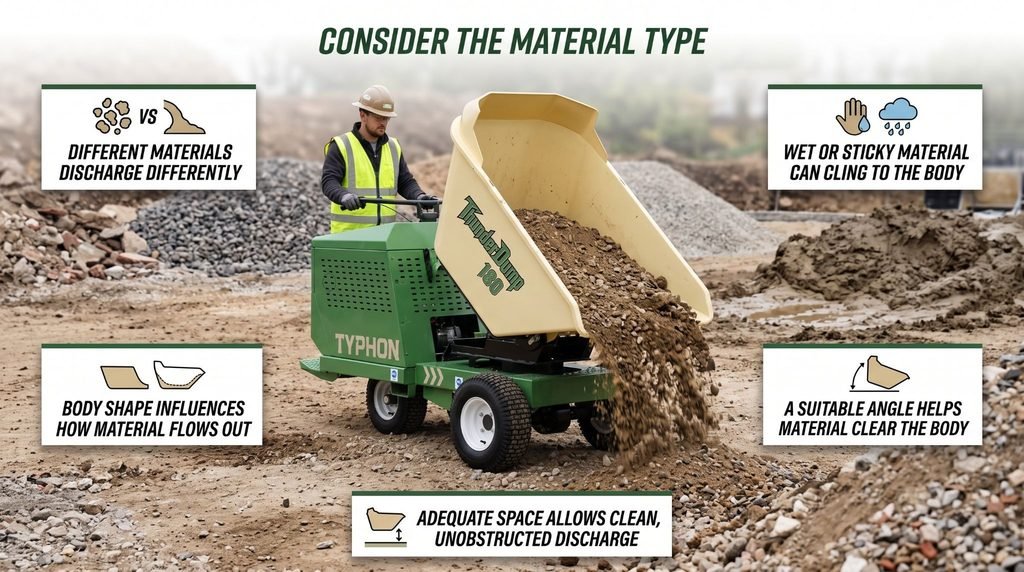
Dumping performance also depends on the relationship between the material and the machine’s body design, dumping angle, and available clearance. Wet or sticky soil may cling to the body, while bulky or irregular debris can resist flowing out cleanly. Understanding the material before the job helps operators plan the dumping setup more effectively.
- Material Behavior: Soil, gravel, rock, and debris can each respond differently during dumping.
- Moisture Content: Wet or sticky material may cling to the body and resist clean discharge.
- Body Design: The shape and dimensions of the dump body influence how material flows out.
- Dumping Angle: A suitable tipping angle helps material clear the body more effectively.
- Clearance: Adequate space around the dumping area allows material to discharge without obstruction.
Key takeaway: Soil, gravel, rock, and debris discharge differently, with some flowing freely and others clinging, so body design, dumping angle, and available clearance all contribute to unloading performance.
Space Around the Dumper Matters
Discharging a load takes room, not just height. Dumping requires enough space for the machine to position itself safely and raise its body without obstruction, so the area around the discharge point is as important as the height above it.
Several things can limit where a dumper can safely unload. Uneven ground, nearby structures, open trenches, and other equipment all restrict how and where the machine can position for the dump. A spot that offers the height but not the room to maneuver into it isn’t a workable discharge point.
The habit that prevents trouble is a simple one. Operators should check the entire unloading area before raising the body, confirming there’s room to position, clearance overhead and around the machine, and nothing in the way of a safe discharge. A quick look before tipping is far better than discovering an obstruction with the body already raised.
Key takeaway: Dumping needs room to position safely, and uneven ground, structures, trenches, and equipment can all limit discharge, so check the entire unloading area before raising the body.
Payload Affects Stability
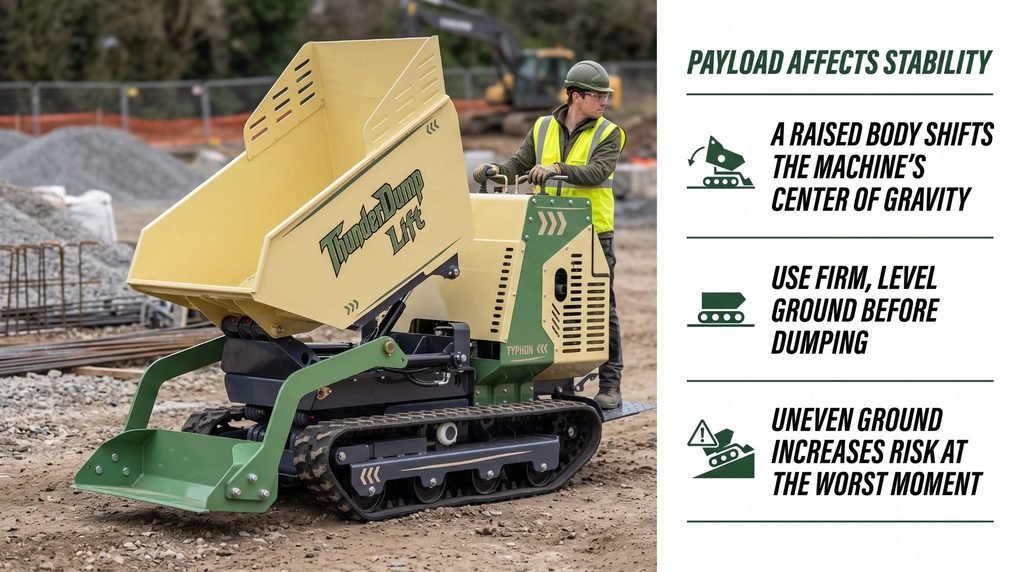
Raising a loaded body changes how the machine behaves, and that’s a safety matter worth respecting. A loaded dumper carries significant weight, and lifting the dump body raises the machine’s center of gravity, which affects its stability during the discharge.
Ground conditions are central here. Operators should use stable ground when dumping and follow the manufacturer’s operating instructions, since these reflect how the specific machine is designed to discharge safely. Firm, level ground supports the machine as the body rises and the load shifts.
The risk grows on poor surfaces. Uneven or unsuitable ground can increase the chance of instability precisely when the center of gravity is highest, so a spot that seems fine for travel may not be suitable for raising a loaded body. Confirming solid, level footing before tipping is a straightforward way to keep the discharge safe.
Key takeaway: A loaded body raises the machine’s center of gravity, so use stable, level ground and follow the manufacturer’s operating instructions, since uneven or unsuitable surfaces increase the risk of instability.
Plan the Material Flow
Dump height is one piece of a larger picture, and efficient material handling depends on how the whole cycle fits together. The loading point, the travel route, the unloading location, and the return path should all work in concert, since a bottleneck at any stage slows the entire operation.
Dump height contributes directly to that flow. A suitable dump height helps prevent extra handling steps when material needs to reach a specific destination, letting the dumper discharge exactly where it’s needed rather than dropping the load short and forcing a second move. That single clean discharge keeps the cycle tight.
The reliable approach is to plan the full loop before work begins. Position the loading point, the route, the discharge area, and the return path so they connect efficiently, and confirm the dump height suits the destination. When each stage supports the next, material moves through the cycle without wasted effort.
Key takeaway: Efficient handling depends on the loading point, travel route, unloading location, and return path working together, and a suitable dump height helps prevent extra handling steps when material must reach a specific destination.
Conclusion
Dump height determines how effectively a site dumper can discharge material into its intended receiving area, so the machine’s available discharge height must match destinations ranging from low stockpiles to raised containers. Body design, dumping angle, material type, and clearance also affect how cleanly soil, gravel, rock, or debris leaves the load body, while the unloading area must provide enough space for safe positioning around structures, trenches, equipment, and uneven ground. Raising a loaded body shifts the center of gravity, making stable, level ground essential during dumping and requiring operators to follow the manufacturer’s operating instructions. Dump height also needs to fit into the complete material flow, connecting loading, travel, discharge, and return without unnecessary repositioning or handling. Evaluating receiving height, material behavior, unloading space, stability, and the full work cycle together helps match a site dumper to the job and supports efficient, controlled material handling.
Frequently Asked Questions
What is dump height on a site dumper?
Dump height is the discharge height available when the dump body is raised. It determines how high the dumper can release material into or over a container, skip, stockpile, or trench. Dump height should be considered alongside the body design and dumping angle, since these also affect how material leaves the machine. Before selecting a dumper, identify the required receiving height and confirm that the machine’s dump height and body configuration suit the task.
Why does dump height matter?
Dump height determines whether a site dumper can discharge material effectively into the required receiving area. Ground-level stockpiles need less height, while containers, skips, and other raised areas require enough clearance to pass over the edge. If the dumper cannot reach the required height, the material may need to be rehandled, adding time and labor. Matching dump height to the receiving area helps the load discharge directly where it is needed.
Can dump height affect jobsite productivity?
Yes. When dump height matches the receiving area, the dumper can discharge material directly in one movement, keeping the hauling cycle efficient. If the height is insufficient, workers may need to move the material again using manual labor or other equipment. These extra steps add time and labor across repeated loads. Matching dump height to the unloading location helps maintain a smoother material-handling cycle.
Is it safe to dump on uneven ground?
Dumping on uneven or unstable ground can increase safety risks because raising the loaded body raises the machine’s center of gravity. Soft soil, slopes, or uneven surfaces can make the dumper less stable during discharge. Operators should position the machine on firm, level ground and follow the manufacturer’s dumping procedures. If suitable footing is not available, the safer approach is to find a stable dumping area rather than raise the body on unsuitable ground.