
Skid Steer Cooling Systems for Heavy-Duty Operation
Working a skid steer for long hours in hot weather can place heavy demands on the engine and hydraulic systems. High temperatures, continuous attachment use, dust, grass clippings, and other debris can restrict airflow through the radiator and hydraulic oil cooler. When cooling surfaces become blocked, operating temperatures can rise quickly and may lead to warning lights, sluggish hydraulic performance, or an unexpected shutdown.
The cooling system helps remove heat generated during digging, grading, loading, and hydraulic attachment work. Radiators, hydraulic oil coolers, fans, and airflow passages all need to remain clean so heat can move away from the engine and hydraulic system effectively. A buildup of dust and debris can reduce airflow and make it harder for the machine to maintain normal operating temperatures, especially during demanding work in hot conditions.
Regular cleaning and inspection can help prevent overheating. Checking the radiator, hydraulic cooler, fan area, and surrounding passages before each shift can reveal debris buildup before it restricts airflow. Keeping these components clean, monitoring temperature warnings, and following the manufacturer’s maintenance schedule can help a skid steer maintain reliable performance throughout demanding work.
Engine Cooling Components
A skid steer engine converts fuel into power, and much of that energy produces heat that must be removed to keep the engine within its designed temperature range. The cooling system works as a complete circuit, with each component performing a specific role. Coolant absorbs heat as it moves through the engine block and cylinder head, then carries it to the radiator, where the heat transfers to the surrounding air. The water pump keeps coolant moving through the passages and hoses, while the fan moves air across the radiator and other cooling surfaces. The thermostat controls coolant flow so the engine warms up properly and maintains a stable operating temperature.
Because these components depend on one another, a problem in one part can quickly reduce overall cooling performance. Low coolant, a worn fan belt, a sticking thermostat, damaged hoses, or a clogged or damaged radiator can cause the engine to run too hot. Excessive heat can reduce performance, accelerate wear on internal components, and in severe cases lead to warped parts or head gasket failure. Regular maintenance helps prevent these problems. Use the coolant type and mixture specified by the manufacturer, check coolant levels regularly, keep the radiator and cooling surfaces clean, and inspect belts and hoses for wear or damage. Replacing worn components before they fail helps maintain reliable cooling during demanding skid steer work.
Key takeaway: The radiator, coolant, fan, and related passages work together to control engine temperature, and keeping them in good condition prevents excess heat from hurting engine performance.
Hydraulic System Heat
The engine is not the only source of heat on a skid steer. The hydraulic system can generate significant heat as pressurized fluid moves through pumps, valves, hoses, and motors, particularly when attachments operate continuously or under heavy loads. High-demand attachments such as cold planers, mulchers, trenchers, augers, and brush cutters can increase the heat load because they often require high hydraulic flow for extended periods. Heavy digging and repeated loader cycles add to the demand. As hydraulic fluid temperature rises, the fluid becomes thinner, which can reduce hydraulic performance, make controls feel less responsive, and accelerate wear on seals and other components.
Good hydraulic heat management depends on maintaining the fluid, cooling system, and overall hydraulic circuit. Keep the fluid at the correct level so it can circulate properly and help carry heat away, use the hydraulic fluid specified by the manufacturer, and keep the hydraulic cooler clean so debris does not restrict airflow or reduce heat transfer. Monitor the hydraulic temperature indicator where equipped, especially during demanding attachment work. If hydraulic functions become slower or less responsive as the machine heats up, stop and check the fluid level and cooler before continuing. Regular attention to these areas helps maintain hydraulic performance and reduces heat-related wear.
Key takeaway: Hydraulic work can produce a lot of heat, especially during continuous or high-load attachment use, so proper fluid levels, clean cooling components, and an efficient hydraulic cooler are essential.
Radiator and Cooler Cleaning
Radiators and hydraulic coolers can collect dust, grass, leaves, seeds, and fine debris during construction work. When buildup blocks the cooling fins, airflow is reduced and heat can remain trapped in the coolant and hydraulic system. Regular cleaning helps maintain airflow and supports consistent machine cooling, especially in dusty or debris-heavy conditions.
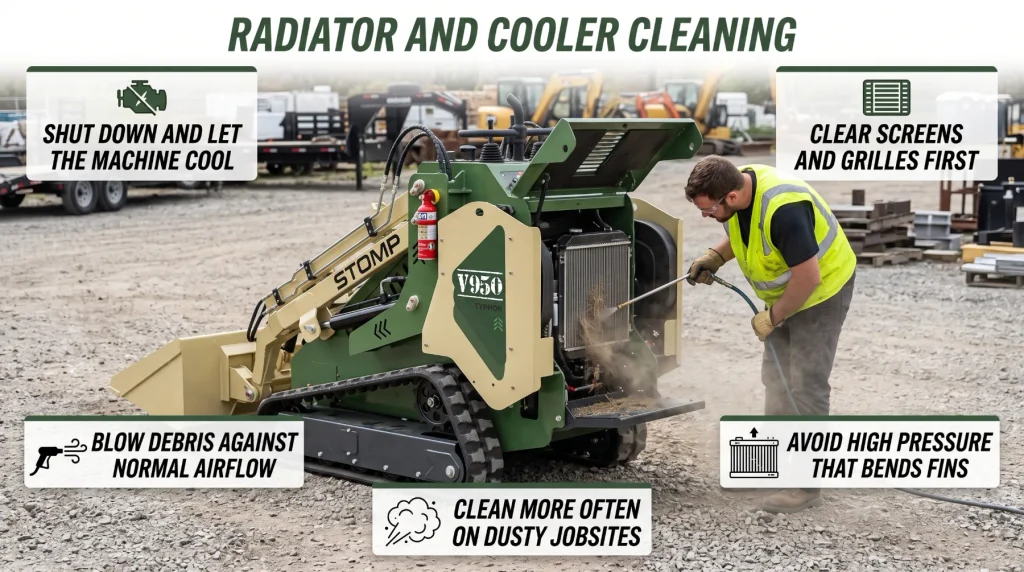
- Debris Removal: Clear dust, grass, leaves, and other material from screens, grilles, and cooling surfaces.
- Proper Cleaning Method: Use compressed air or low-pressure water in the recommended direction to remove packed debris.
- Fin Protection: Avoid excessive water pressure that can bend cooling fins and reduce airflow.
- Cooling Airflow: Keep radiator and cooler passages open so air can move freely through the cooling package.
- Frequent Inspection: Check cooling surfaces regularly and clean more often when working in dusty, grassy, or debris-heavy conditions.
Key takeaway: Regular cleaning of the radiator and hydraulic cooler removes dust, dirt, grass, and debris that restrict airflow, helping heat move away from engine and hydraulic components.
Airflow Around the Machine
Cooling depends on air. Every bit of heat the radiator and hydraulic cooler release has to be carried away by the air moving through and around the machine. When that airflow is restricted, the whole system loses efficiency.
Keep cooling openings clear at all times. Check the rear grille, side vents, and intake screens for packed debris, mud, or material that has built up during work. Look inside the engine compartment for leaves, chaff, and dust collecting around the fan shroud and cooling package. Make sure the fan shroud is in place and undamaged, since it directs air through the cooler cores.
Machine positioning matters as well. Avoid parking or idling with the rear grille pressed against a stockpile, wall, or brush pile, where hot air can’t escape. On jobs that produce heavy airborne debris, such as mulching or clearing, check the intake screens at breaks and clean them before buildup gets heavy.
Small airflow restrictions add up quickly. A partly blocked screen combined with a dusty radiator and a hot day can push a machine to its limit. Clear airflow keeps the cooling system working the way it was designed to.
Key takeaway: Keep cooling openings clear and stop material buildup from restricting airflow so heat can transfer away from major systems during daily operation.
Heavy-Duty Operating Conditions
https://img.miniexcavator.org/ebay/Blog/class6/10thOct/SkidSteer-03.webp
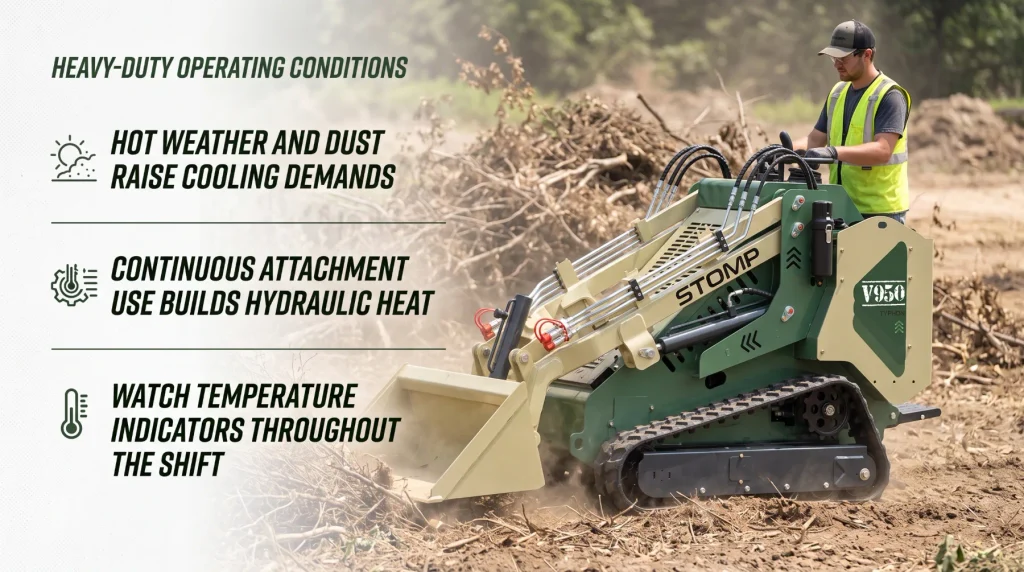
Some working conditions place much more demand on a skid steer’s cooling system than normal operation. Hot weather reduces the system’s ability to release heat, while dust and debris can quickly restrict airflow through cooling surfaces. Continuous use of high-flow attachments such as breakers and other hydraulic tools keeps hydraulic temperatures elevated, while heavy digging, pushing, and steep grades increase engine load. These conditions can also occur at the same time, such as a summer demolition job where high temperatures, dusty air, and continuous attachment use all increase the machine’s heat load.
Temperature gauges and warning lights provide an early indication that the engine or hydraulic system may be running too hot. Monitor coolant and hydraulic temperatures throughout demanding work, especially when operating in hot, dusty conditions or using attachments continuously. If temperatures begin to rise, reduce the workload, allow the machine to idle when appropriate so the cooling system can bring temperatures down, and check for blocked airflow or debris around the cooling components. Follow the manufacturer’s shutdown and cool-down procedures, and never remove a radiator cap while the system is hot because pressurized coolant can cause serious burns.
Key takeaway: Hot weather, dusty jobsites, continuous attachment use, and high engine loads raise cooling demands, so watch temperature indicators to catch overheating early.
Cooling System Maintenance
A dependable cooling system starts with regular inspections that catch small problems before they cause overheating or downtime. With the engine cool, check the coolant level and look for contamination or signs of leakage. Inspect hoses and clamps for cracks, swelling, soft spots, loose connections, or leaks, and check the radiator for bent fins, corrosion, damage, and debris buildup. Inspect fan blades for damage and check belt condition and tension where applicable. The hydraulic cooler and lines should also be checked for leaks, damage, and restricted cooling surfaces. Keeping these areas clean and in good condition helps the cooling system maintain proper airflow and heat transfer during demanding work.
Scheduled service should follow the intervals specified by the manufacturer and may include coolant testing or replacement, thermostat and hose inspection, belt replacement, and hydraulic fluid and filter service. Coolant gradually loses its ability to protect against corrosion, overheating, and freezing, so testing and replacing it on schedule is important. Record inspections, fluid service, repairs, and replacements in the maintenance log. These records can help identify gradual problems, such as recurring coolant loss or a cooler that becomes clogged more quickly than expected, allowing repairs to be planned before they result in unexpected downtime.
Key takeaway: Inspect coolant levels, hoses, radiator condition, fan components, and cooling surfaces regularly, and follow the manufacturer’s service recommendations to keep the cooling system ready for demanding work.
Conclusion
A skid steer’s cooling system manages heat from the engine and hydraulic system during demanding work. The radiator, coolant, fan, hydraulic cooler, and airflow passages work together to control temperature, while clean cooling surfaces and clear grilles help release heat efficiently. Hot weather, dust, continuous attachment use, and high engine loads can increase cooling demand, so temperature gauges and warning indicators should be monitored during operation. Before each shift, operators should check coolant and hydraulic fluid levels, inspect radiators, coolers, hoses, clamps, fan components, belts, and screens, and remove dust, grass, and debris from airflow areas. Following the manufacturer’s cleaning and service intervals helps maintain reliable engine and hydraulic performance under heavy workloads.
Frequently Asked Questions
Why is cooling important on a skid steer?
The cooling system controls heat produced by the engine and hydraulic system during operation. Proper cooling protects the engine, hydraulic components, and other heat-sensitive parts from excessive temperatures. It also helps maintain stable performance during long shifts, heavy workloads, and demanding operating conditions.
What can cause a skid steer to overheat?
Restricted airflow, dirty radiators or hydraulic coolers, low coolant levels, damaged cooling components, and heavy workloads can contribute to overheating. Clogged cooling surfaces are especially common on dusty, grassy, or debris-filled jobsites. Regular inspection and cleaning help maintain airflow and reduce heat buildup.
How often should a skid steer radiator be cleaned?
The radiator and cooling surfaces should be inspected daily and cleaned whenever dirt, dust, grass, or debris begins restricting airflow. On dusty or grassy jobsites, cleaning may be needed several times during a shift. Following the manufacturer’s cleaning procedure helps prevent damage to cooling fins and other components.
Does hydraulic work create heat?
Yes. Hydraulic work naturally generates heat as fluid moves through pumps, valves, hoses, and attachments under pressure. Continuous or demanding hydraulic operation can raise temperatures, especially when using high-flow attachments. Keeping the hydraulic cooler clean and maintaining the system properly helps control heat and support consistent performance.