
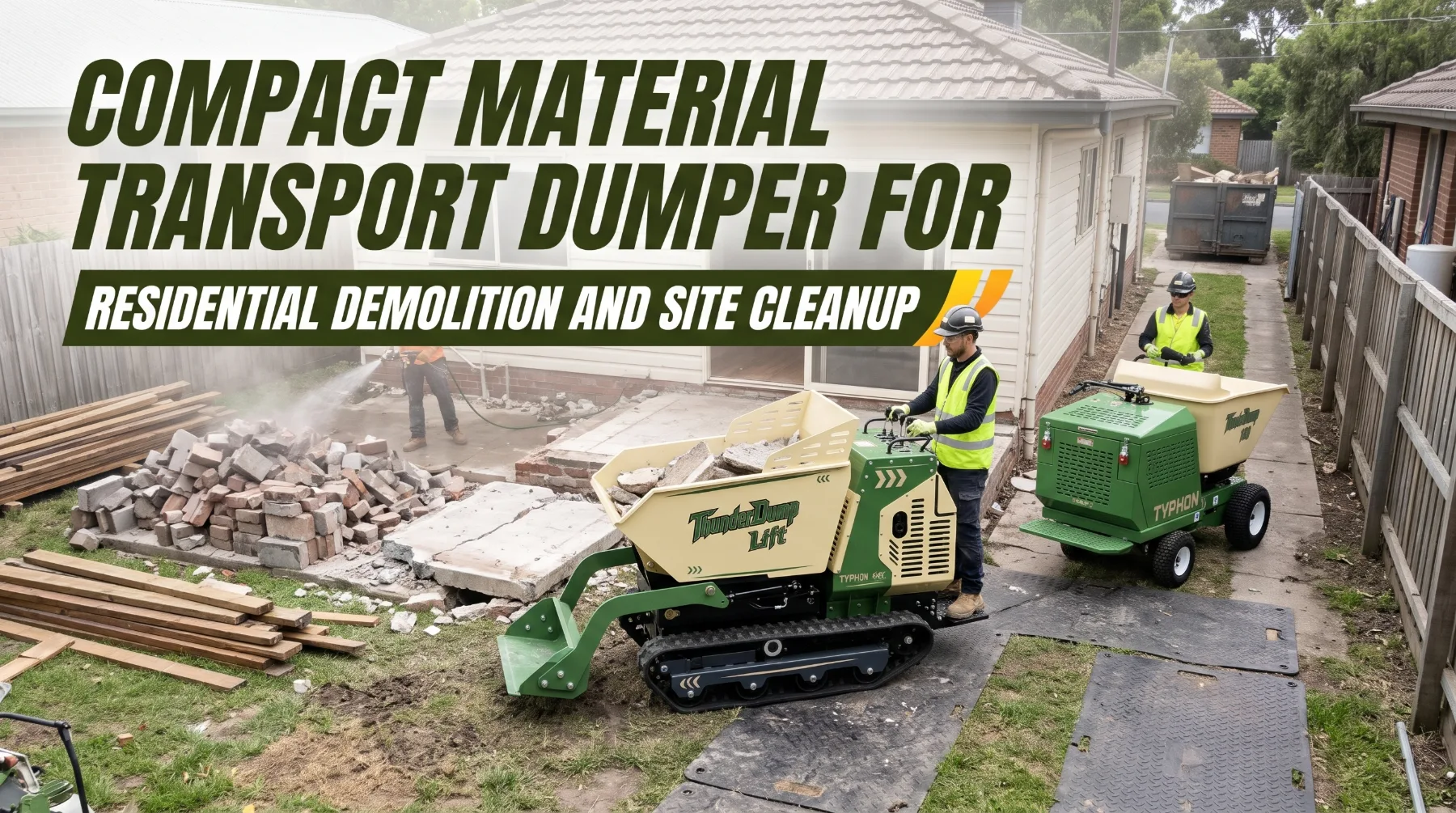
A renovation crew starts tearing out a 1960s kitchen and an attached rear patio. By lunch, the backyard holds broken concrete slab, chunks of brick, splintered cabinet timber, drywall, and a heap of excavated soil where the new footing will go. The roll-off container sits at the curb, 90 feet away, past a narrow side passage and a set of garden steps. With wheelbarrows, the crew could spend the rest of the week hauling debris instead of building. With the right compact material transport dumper, the same debris moves in a fraction of the time and with far less strain on the people doing the work.
Residential demolition and renovation projects produce mixed, heavy, and often awkward material that has to travel through tight spaces. A compact dumper carries suitable loads between the work area and a collection or disposal point, and many models discharge those loads hydraulically. How useful it is depends on payload, dimensions, ground conditions, and the type of material being moved.
Working in Restricted Residential Areas
Residential sites rarely offer the open space of a commercial project. Fences, gates, landscaping, neighboring homes, and finished surfaces all limit how material can leave the property. A compact dumper fills the gap between hand carrying and full-size hauling equipment, provided it fits the route. Compact dumpers are well suited to interior strip-outs where debris exits through a rear door or garage, patio and slab removal in backyards, garden and retaining wall demolition, foundation excavation on additions, and post-demolition cleanup before new construction begins. In each case, the dumper shortens the distance crews carry material by hand and keeps debris moving toward the container at a steady pace.
The most common access mistake is measuring only the front gate. A dumper must fit through every point on the route. Before the machine arrives, walk from the work area to the disposal point and measure gate, doorway, and side passage widths, overhead clearances including eaves and gutters, ramp gradients and steps, and turning space at corners and at the loading and discharge points. Compare those measurements with the dumper’s overall width, length, and height, and allow a sensible clearance margin.
Homeowners notice tire marks on a new driveway and ruts across a lawn long after the demolition is forgotten. Lay ground protection mats or boards across lawns, pavers, and decorative surfaces, and cover thresholds and door frames where the dumper passes close by. Tracked models spread weight across a larger area on soft turf, while wheeled models often travel well on firm, paved routes.
Key takeaway: Measure every gate, passage, ramp, overhead restriction, and turning area along the full route before delivery, and protect finished surfaces so the dumper speeds up the job without damaging the property.
Dust, Debris, and Worker Safety
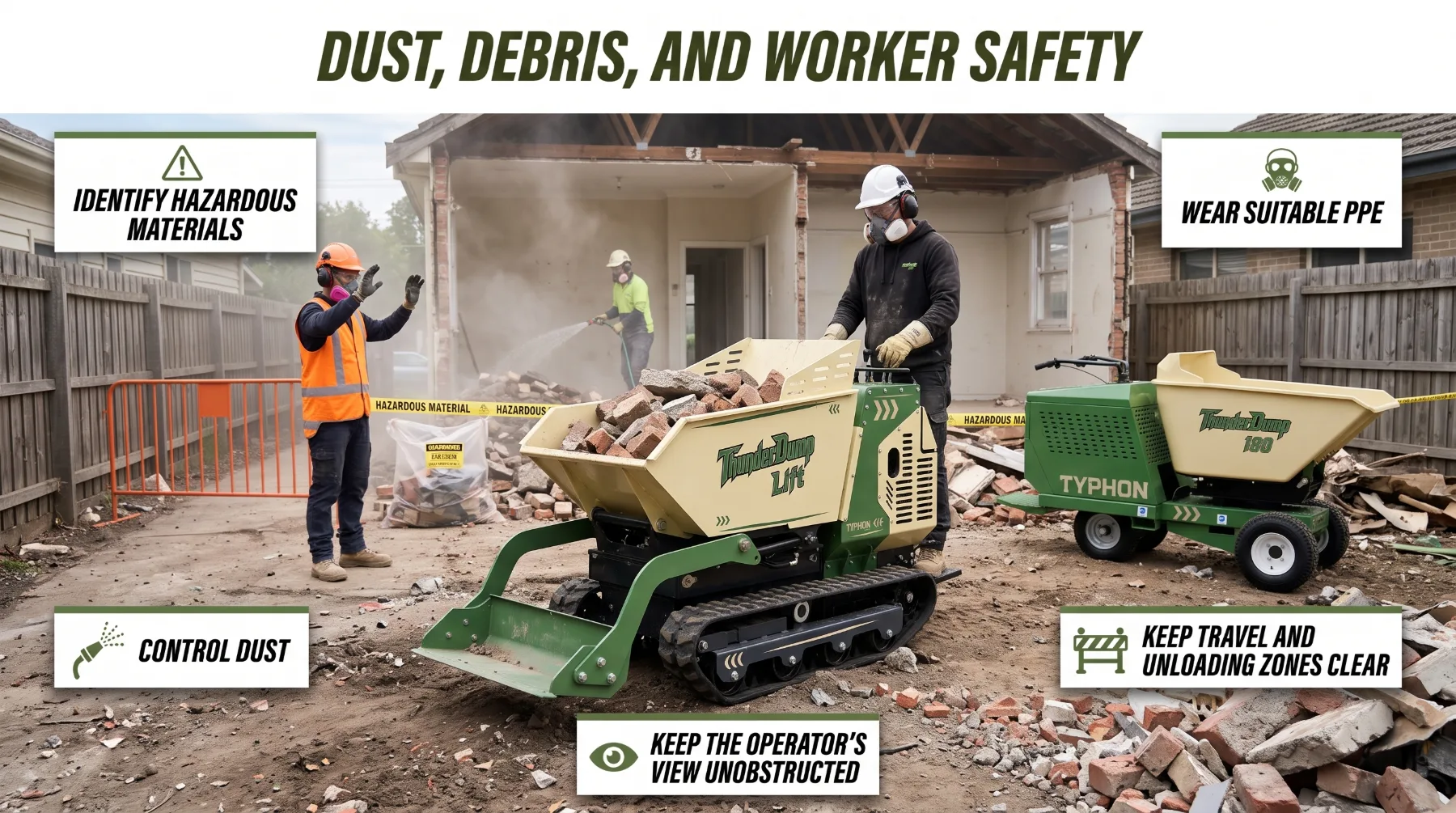
Residential demolition exposes workers to hazards that routine material transport does not. Sharp edges, protruding nails, broken glass, and airborne dust are constant. Older homes may also contain hazardous materials that require special handling. Build every cleanup around these five practices.
Hazardous Material Identification: Check for asbestos, lead paint, and other regulated materials before demolition, and follow applicable procedures for testing, removal, and disposal.
Personal Protective Equipment: Provide gloves, eye protection, hard hats, sturdy footwear, hearing protection, and respiratory protection where required.
Dust Control: Dampen debris and travel routes where appropriate, and reduce drop heights during loading and discharge.
Clear Travel and Unloading Zones: Keep people out of the travel path and discharge area, and use a spotter where visibility is limited.
Unobstructed Operator View: Never carry loads that block the operator’s line of sight to the route ahead.
Homes built before modern regulations may contain asbestos in flooring, insulation, roofing, or textured coatings, and lead-based paint on trim, doors, and siding. Disturbing these materials can release harmful fibers or dust. Follow the testing, removal, and disposal requirements that apply in your location, and keep hazardous waste separate from general debris rather than mixing it into dumper loads.
Breaking and handling concrete, brick, and some stone can release dust containing respirable crystalline silica, which poses serious health risks with prolonged exposure. Light water spraying on debris piles and travel routes can reduce airborne dust, and tipping loads gradually rather than dumping in a single drop also helps. Nails, screws, rebar, glass, and splintered timber can injure hands and puncture tires, so remove or bend protruding fasteners where practical and inspect tires or tracks for embedded nails at the end of each shift. Residential sites often have homeowners, children, pets, and neighbors nearby, so barricade the work area, keep unauthorized people out, and pause operations if anyone enters the travel route or discharge zone.
Key takeaway: Identify hazardous materials before demolition, provide suitable PPE, control dust, keep people out of travel and unloading zones, and never carry loads that block the operator’s view.
Loading and Unloading Efficiency
A compact dumper reduces repeated manual carrying and supports more consistent cleanup cycles. The time savings come from how well the loading point, travel route, and discharge area work together. Position the loading point as close to the demolition work as practical while keeping it clear of falling debris and active demolition. When loading with machinery, agree on clear signals between the loading operator and the dumper operator, keep the dumper operator off the machine or in a protected position while material is loaded, place material gently rather than dropping heavy pieces from height, and distribute the load evenly across the hopper.
Keep travel routes short, direct, and on firm ground, separating the dumper route from pedestrian paths and work areas wherever possible. Mark the route with cones or barriers if the site is busy, and keep it free of tools, offcuts, and hoses that could cause the machine to lurch or snag.
Where hydraulic tipping is fitted, the operator raises the hopper and gravity discharges the load, which removes the need to shovel by hand. Hoppers may tip forward, swivel to the side, or raise high to discharge into a skip or container depending on the model. Confirm the dumper’s discharge height and direction match your disposal setup, since a high-tip model can save significant time when loading directly into a roll-off container. Plan the discharge area so the dumper doesn’t block other workers, equipment, or the container itself, and keep people out of the discharge zone during tipping.
Key takeaway: Efficient cleanup depends on a safe loading point, a short and clear travel route, and a discharge area matched to the dumper’s tipping height and direction, with workers kept clear throughout each cycle.
Matching Payload to Demolition Materials
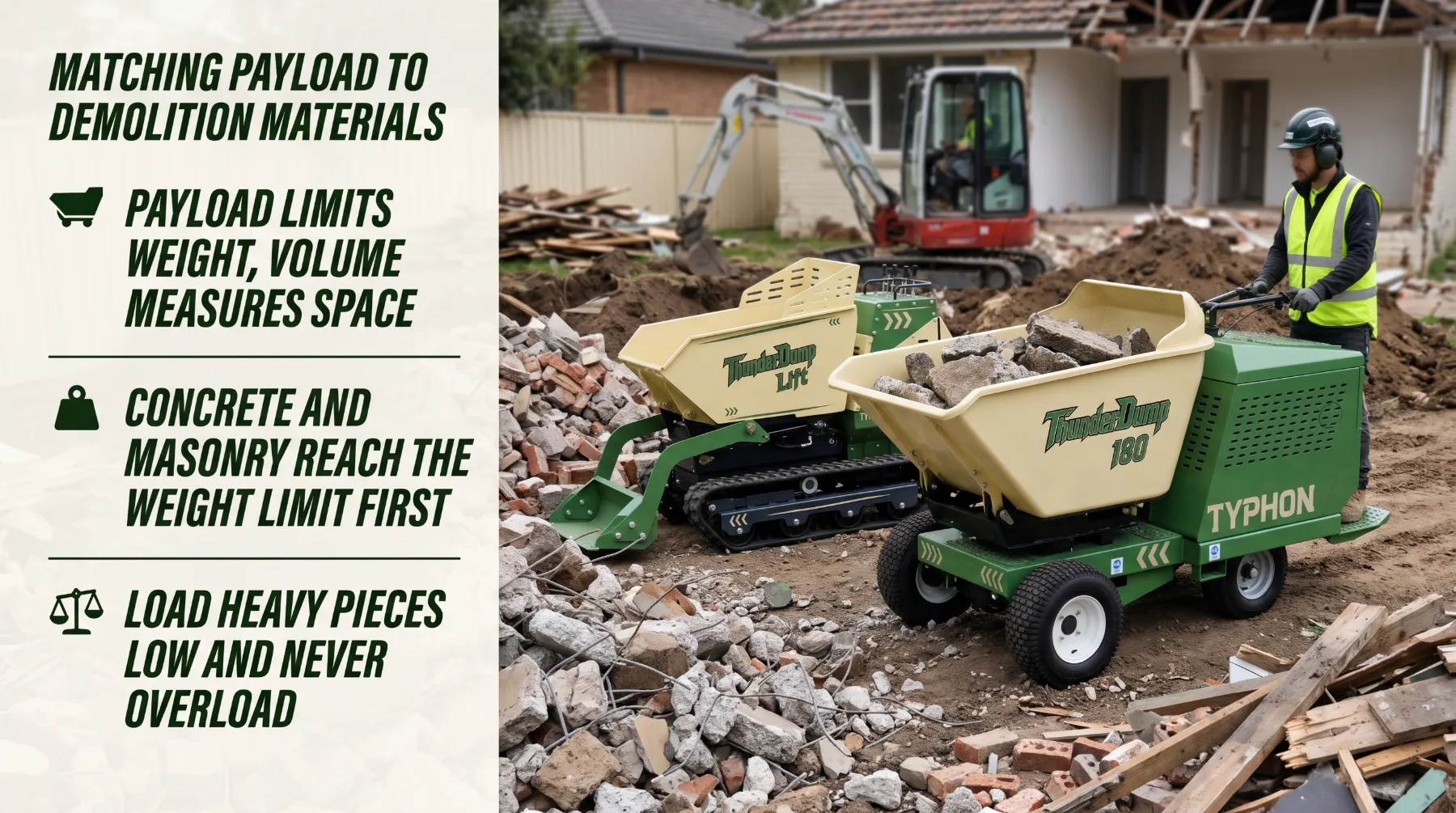
Demolition debris varies more than almost any other material a dumper carries. A load of broken concrete and a load of cabinet timber can fill the same hopper while differing greatly in weight. Understanding that difference is central to safe, efficient operation. Rated payload is the maximum load weight the manufacturer permits, while hopper volume describes the space available inside the hopper. The dumper must stay within its rated payload regardless of how much room remains in the hopper.
Material density decides which limit you reach first. Broken concrete, brick, block, and stone are dense and can reach the payload limit while the hopper is only partly full. Wet soil and clay are also heavy, especially after rain. Timber, drywall, insulation, and light debris take up space at a lower weight and often fill the hopper first. Mixed debris can be unpredictable, with heavy pieces hidden beneath lighter material. A common mistake is heaping broken concrete to the top of the hopper because it looks like a normal load. A better approach is to set clear fill guidance for each material type and brief everyone who loads the machine.
Demolition material is rarely uniform. Long timbers, chunks of slab with protruding rebar, and loose rubble can shift during travel, especially on slopes or uneven ground. Load heavy pieces low and centrally, and place lighter material on top. Never let long items overhang the hopper where they could strike people, structures, or the operator’s line of sight. Cut or break oversized pieces before loading rather than balancing them on the hopper edge. Overloading raises the center of gravity, reduces braking and steering performance, and strains the hydraulic cylinder, pivots, axles, and tires or tracks. Respect the rated payload on every trip, even when it means making an extra run.
Key takeaway: Rated payload limits weight while hopper volume measures space, so set fill levels for each type of demolition debris, load heavy pieces low and centrally, and never overload with dense or irregular material.
Maneuverability and Ground Conditions
Residential sites often combine several surfaces in a single route: paved driveways, gravel paths, lawns, soft garden beds, and freshly excavated soil. Each one affects traction, stability, and how the dumper should be driven. Check the manufacturer’s approved operating gradients, ground requirements, and travel guidance before use, since these limits often differ for uphill, downhill, and cross-slope travel, and may differ again between loaded and empty operation.
Watch for common hazards such as soft soil and recent fill that can let a track or wheel sink, gravel and loose material that reduce traction and braking, slopes that shift weight toward the low side, steps and curbs that can jolt the machine or the load, and wet surfaces after rain or dust suppression. Where steps or steep transitions sit along the route, use approved ramps or choose another route. Travel at speeds suited to the surface and load, avoid sharp turns particularly on slopes or loose ground, brake and accelerate gradually, never turn across a slope with a loaded hopper, and keep the hopper lowered during travel.
Raising a loaded hopper moves the center of gravity upward. Unload only on firm, level ground within the machine’s specified limits, well back from trench edges, excavations, and soft fill. Check overhead clearance before raising the hopper, and never work beneath a raised hopper unless it is secured with the manufacturer’s specified support device.
Key takeaway: Follow the manufacturer’s gradient and ground limits, drive smoothly with the hopper lowered, avoid sharp turns on slopes or loose ground, and unload only on firm, level surfaces with adequate clearance.
Maintenance and Transport Planning
Demolition work is hard on equipment. Abrasive dust, sharp debris, heavy loads, and frequent cycles all wear components faster than lighter material handling. Consistent maintenance and careful transport planning keep the dumper reliable from one job to the next.
Before each shift, check tires or tracks for cuts, embedded nails, pressure, or tension, brakes and steering for smooth and reliable response, controls, warning devices, lights, and safety features, hopper hinges, pivots, and locks where fitted, and hydraulic hoses, fittings, and the tipping cylinder for leaks or damage. Stop work immediately if the hopper rises unevenly, moves slowly, or drifts down.
Dust, mortar, and debris can build up around pivots, cylinders, radiators, and hopper edges. Left in place, buildup can restrict hopper movement, trap moisture, and cause overheating. Clean the machine regularly, paying close attention to cooling areas and moving parts, and remove debris only after the machine is shut down, the hopper is lowered or properly secured, and required isolation steps are complete. Follow the manufacturer’s service intervals for engine oil, hydraulic fluid, filters, and lubrication, check the air filter more frequently in dusty conditions, use approved fluids and parts, and keep maintenance records so recurring problems are caught early.
Before moving the dumper between sites, confirm its transport weight and dimensions including any attachments, then check trailer payload and axle ratings, tow vehicle towing limits, ramp ratings and safe loading areas, and approved tie-down points with rated securement equipment. Empty and clean the hopper before transport so loose debris doesn’t fall onto roads.
Key takeaway: Inspect tires or tracks, brakes, steering, controls, hopper components, and hydraulics daily, clean away demolition buildup safely, follow service intervals, and confirm trailer, tow vehicle, and securement ratings before every move.
Conclusion
A compact material transport dumper can improve debris removal efficiency on residential demolition sites by moving concrete, masonry, and mixed waste through areas where larger equipment may have limited access. Measuring the travel route and protecting sensitive surfaces helps prevent damage to driveways, lawns, and finished areas. Payload selection is equally important because dense demolition materials can reach the machine’s rated capacity before the dumper appears full. Establishing an organized loading point, keeping the travel path clear, and positioning the discharge area close to the disposal or collection point can reduce unnecessary travel and shorten operating cycles. Operators must also follow the machine’s rated gradient limits, assess ground stability, and avoid uneven or unsuitable surfaces that could affect balance. Hazardous material identification, dust suppression, and clearly marked exclusion zones help protect workers, nearby residents, and surrounding property. Efficient operation also depends on routine maintenance, suitable loading practices, and proper transport arrangements between jobsites. Project planning should include measuring the complete route, checking turning space and overhead clearance, identifying debris types, and arranging appropriate handling for any hazardous materials. Set load limits according to material density and the dumper’s rated payload, then organize loading and discharge points to minimize travel distance. Brief the crew on pedestrian separation, dust control, safe operating gradients, and discharge procedures. Complete a pre-shift inspection of the tracks or tires, brakes, steering, controls, dump body, hydraulic system, and safety devices, and address defects before operation. These measures help maintain stable handling, protect the work area, and keep demolition debris moving efficiently throughout the project.
Frequently Asked Questions
Can a compact dumper transport concrete debris?
Yes, if the material and total load remain within the machine’s rated payload. Broken concrete is dense and can reach the weight limit well before the hopper is full. Break oversized pieces before loading, keep heavy chunks low and centered, and never overload the hopper.
Why is payload more important than hopper volume alone?
Dense debris such as concrete, brick, and wet soil can exceed the rated weight before the hopper is full. Payload sets the safe weight limit, while volume only measures available space. Fill levels should always reflect the density of the material.
Can a compact dumper operate on slopes?
Only within the manufacturer’s permitted limits and under suitable ground conditions. Limits often differ for uphill, downhill, and cross-slope travel, and for loaded and empty operation. Never turn across a slope with a loaded hopper, and unload only on firm, level ground.
What should be checked before residential site cleanup?
Check access widths, overhead clearances, payload limits, ground conditions, travel routes, and unloading space. Identify any hazardous demolition materials, such as asbestos or lead paint, before work begins. Complete a pre-shift inspection of the dumper and brief the crew on exclusion zones.
asiamachinery.org Featured Equipment
Looking for top-performing heavy equipment, authentic attachments, and dependable jobsite power? Explore verified models backed by manufacturer warranty and nationwide delivery.