
What Common Mistakes Do First-Time Wheel Loader Operators Make?
A new operator climbs into a wheel loader on his second day, eager to prove he can move a gravel pile fast. He crowds the bucket full past the brim, guns the machine into the stockpile at a steep angle, and spins the tires against the ground until the front end nearly lifts. Spillage trails behind him the whole way to the truck, the transmission strains on every pass, and by lunch he’s burned twice the fuel his foreman expected for half the work. Nobody got hurt, but the machine took a beating it didn’t need to, and the day’s production came up short. That rough start is exactly why understanding the common first-timer mistakes matters before anyone drops it into gear.
Learning to run a wheel loader well takes more than knowing which pedal moves the machine forward. New operators tend to repeat a handful of predictable errors that waste fuel, wear the equipment early, and put the crew at risk, and nearly all of them are avoidable with a little awareness. This guide walks through why first-timers struggle at the controls, the loading and bucket mistakes that cost the most, the tire and approach habits that quietly damage a machine, the visibility and overworking errors that create hazards, and the pre-operation and maintenance steps too many beginners skip. Here’s what every new operator should know before the first bucket load.
Why the Learning Curve Trips Up Beginners
Wheel loaders look simple to run, and that first impression is exactly what fools new operators. Behind the straightforward controls sits a heavy, powerful machine that rewards finesse and punishes force, so a beginner who muscles through every task fights the equipment instead of working with it. Skill, not strength, separates a smooth operator from a rough one.
Confidence tends to outrun competence in the early hours, which is where trouble starts. A new driver who moves a few loads without incident often speeds up, loads heavier, and takes bigger risks before the fundamentals become second nature. Rushing that progression is precisely what leads to spilled loads, strained components, and near-misses that a more patient approach would avoid.
Experience fills the gap eventually, though the smartest beginners shorten that gap on purpose. Studying the machine’s limits, watching seasoned operators work, and treating the first weeks as deliberate practice all build good habits before bad ones set in. Approach the learning curve with respect for the machine, and you sidestep most of the mistakes that follow.
Overloading the Bucket and Rushing the Load
Cramming the bucket past its rated fill is the classic first-timer mistake, and it backfires in every direction. An overloaded bucket spills material across the site, forces the front axle and tires to carry more than they should, and shifts the machine’s balance forward in a way that lifts the rear and hurts steering. More load per scoop feels productive, yet the spillage and strain usually mean less real work gets done.
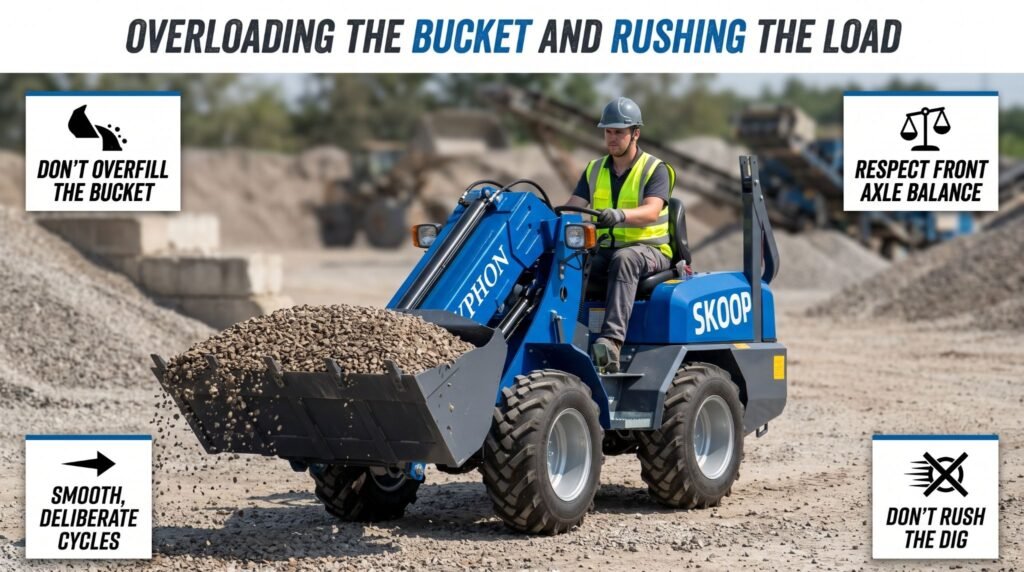
Speed compounds the problem when a beginner rushes the whole cycle. Slamming into a pile at full throttle, jerking the bucket up mid-dig, and racing between the stockpile and the truck all stress the drivetrain and scatter material along the way. Smooth, deliberate cycles move more product with less wear than fast, sloppy ones, even though the fast approach feels quicker in the seat.
Balance is the habit that ties good loading together. Fill the bucket to its rated capacity rather than heaping it, ease into the pile and let the machine’s power do the digging, and carry the load low for stability as you travel. Matching your pace to the machine keeps material in the bucket, weight off the tires, and the whole cycle running clean.
Ignoring Tire Pressure and Ground Awareness
Tires carry the entire machine and its load, yet new operators rarely give them a second thought. Underinflated tires flex and overheat under a loaded bucket, wearing out fast and cutting into fuel economy, while overinflated ones lose traction and ride harshly over rough ground. Checking pressure against the manufacturer’s spec before a shift is a two-minute habit that protects an expensive set of tires for years.
Ground conditions demand the same attention that beginners often skip. Loose gravel, mud, slopes, and hidden obstacles all change how a loaded machine handles, and a new operator who treats every surface the same invites wheel spin, sliding, and tip risk. Reading the terrain before you commit the machine to it keeps the tires gripping and the load steady.
Traction habits round out the awareness a beginner needs to build. Spinning the tires against a pile or a slick surface wears the rubber quickly and accomplishes nothing, so ease off the throttle when the wheels start to slip and let the tread find grip instead. Respecting both the tires and the ground beneath them turns a machine that struggles for footing into one that works confidently across the site.
Approaching the Pile and Turning at Bad Angles
Approach angle decides how cleanly a loader digs, and beginners get it wrong more often than any other technique. Hitting a stockpile at an angle rather than straight on loads the bucket unevenly, twists the front end, and strains the lift arms as the material resists from one side. Squaring up to the pile and driving in perpendicularly lets the bucket fill evenly and spares the machine the sideways stress a crooked approach creates.
Sharp turns with a raised, loaded bucket are the second angle mistake worth naming. Swinging hard while carrying a heavy load high shifts the machine’s weight dangerously and raises the tip risk, especially on a slope or uneven ground. Keeping the load low through every turn and slowing before you steer holds the loader planted and stable when a fast, high turn would upset it.
A common mistake worth naming: treating the loader like a car that can turn and travel at speed with the bucket wherever it lands. It can’t. A wheel loader carries its weight high and shifts balance fast, so plan your approach square, carry loads low, and slow down before every turn. Handling the geometry deliberately keeps both the machine and the operator out of trouble.
Poor Visibility Habits and Overworking the Machine
Visibility protects everyone on a site, and new operators underestimate how much a loaded bucket blocks their view. Raising the bucket high while traveling forward hides the ground and anyone standing ahead, so a beginner who drives blind risks striking obstacles, structures, or people he simply can’t see. Carrying the bucket low for a clear line of sight, using mirrors and cameras, and posting a spotter in tight areas all keep the operator aware of what’s around the machine.
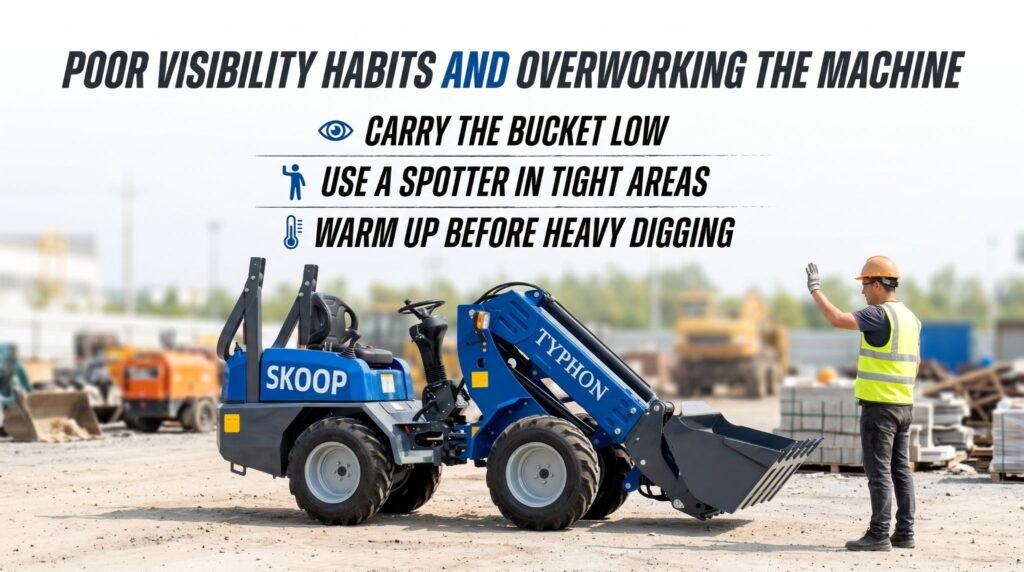
Overworking the loader is the quieter mistake, and it wears the equipment in ways a beginner rarely notices until something fails. Running the machine at full throttle constantly, pushing it into loads that stall the engine, and skipping the warm-up that lets fluids reach operating temperature all strain the drivetrain and hydraulics. Letting the machine work within its limits, warming it up before heavy digging, and easing off when it labors extend its life considerably.
Communication ties safe operations together on a busy site. Making eye contact before you move, keeping people clear of the machine’s path and pinch points, and signaling your intentions to the crew prevent the accidents that catch new operators off guard. Treating visibility and restraint as core skills, not afterthoughts, marks the difference between a beginner who’s dangerous and one who’s dependable.
Skipping Pre-Operation Checks and Neglecting Upkeep
Pre-operation inspections take minutes and prevent hours of downtime, yet they’re the first thing a rushed beginner skips. Walking around the machine before startup catches low tires, fluid leaks, loose bolts, and worn hoses before they turn into a breakdown or a hazard mid-shift. Building that walkaround into your daily routine spots small problems while they’re still cheap and easy to fix.
Fluid and system checks deserve the same attention that pre-op walkarounds do. Confirming engine oil, hydraulic fluid,hydraulic cylinders, and coolant levels, testing the brakes and steering, and checking that lights and alarms work all take moments and protect against failures that strand the machine when you need it most. A new operator who runs through these checks builds a habit that pays off across the machine’s entire life.
Ongoing maintenance is where neglect does its slowest, costliest damage. Greasing the pins and joints on schedule, following the service intervals for filters and fluids, and reporting problems promptly instead of running the machine into the ground all keep a loader dependable for years. Following a steady maintenance routine protects the investment, and running the machine safely protects the crew, so treat both as part of the job rather than an inconvenience to skip.
Conclusion
First-time wheel loader operators tend to repeat the same avoidable mistakes: overloading the bucket, rushing the cycle, ignoring tire pressure and ground conditions, approaching piles and turning at bad angles, driving with the bucket blocking their view, overworking the machine, and skipping the pre-operation checks and maintenance that keep it healthy. Nearly every one of those errors traces back to treating a powerful, top-heavy machine like something simpler than it is. Fill the bucket to its rated capacity, run smooth deliberate cycles, square up to the pile, carry loads low, keep your sightlines clear, and respect the machine’s limits, and you sidestep the trouble that catches most beginners. Add a daily walkaround and a steady service routine, and the loader rewards you with clean production and years of dependable work. Above all, treat the first weeks as deliberate practice rather than a race to prove yourself. When you’re ready to put a dependable wheel loader to work with operators trained to run it right, reach out to a trusted equipment specialist who can pair a reliable machine with the results your projects depend on.
Frequently Asked Questions
What is the most common mistake new wheel loader operators make?
Overloading the bucket tops the list. Cramming material past the rated fill spills product across the site, overloads the front tires and axle, and shifts the machine’s balance forward in a way that hurts steering and stability. Filling the bucket to its rated capacity and running smooth, deliberate cycles moves more material with far less strain and waste.
How can a beginner avoid damaging a wheel loader?
Respect the machine’s limits and build good habits early. Warm the machine up before heavy digging, approach piles squarely, carry loads low, ease off when the tires spin or the engine labors, and never rush the cycle. Add a daily pre-operation walkaround and follow the service schedule, since consistent checks and maintenance prevent most of the damage beginners cause.
Why do first-time operators struggle with wheel loaders?
Wheel loaders look simple but demand finesse, not force, so beginners who muscle through every task fight the machine instead of working with it. Confidence also tends to outrun skill in the early hours, leading new operators to load heavier and move faster before the fundamentals set in. Patient, deliberate practice shortens that learning curve and prevents bad habits.