
How to Transport a Mini Excavator Safely on a Trailer
An excavation contractor wraps up a foundation job at midday and needs the mini excavator across town for an afternoon trenching project, so the crew backs a trailer up to the machine and starts the move. On paper the transport looks simple, just drive the excavator up two ramps and strap it down, but the details are where things go wrong. A ramp set too steep, a machine parked off-center, or a single chain left loose can turn a routine haul into a rollover, a shifted load, or a citation on the highway. The contractor who knows better takes a few extra minutes to match the trailer to the weight, load the machine straight and low, and chain every corner tight before pulling onto the road. That short investment of care is what delivers the excavator to the next site undamaged and on time, and learning the same routine is what keeps every haul safe from start to finish.
Moving a mini excavator well takes more than muscle and a trailer, because the machine’s weight and shape punish any shortcut you take. Doing the job right protects the equipment, the people around it, and everyone sharing the road with you.
Choosing a Trailer That Carries the Weight
Capacity comes first in any transport plan, because a trailer too light for the machine is a hazard before you even load it. Check the weight of your mini excavator, including any attachment mounted on it, then match that figure against the trailer’s rated capacity with a comfortable margin to spare rather than pushing the limit. A trailer stressed to its edge flexes, wears its axles and tires, and leaves no room for the shifting forces that come with braking and cornering on the road.
Deck size matters just as much as the weight rating, since the machine needs to sit fully on the trailer with room around it. Confirm the deck is long and wide enough to hold the excavator’s tracks and its extended dipper without any part hanging over an edge, and look for a low deck height that keeps the loaded machine’s center of gravity down. A wider, lower trailer stays more stable through turns and gusts than a narrow, tall one carrying the same load.
Ramps and hitching hardware round out the trailer choice, because they decide how the machine gets aboard and how the rig connects to your truck. Sturdy ramps rated for the excavator’s weight give you a safe path up, while a properly sized hitch, ball or pintle, and working trailer brakes and lights keep the whole combination legal and controllable. Key takeaway: pick a trailer rated well above the machine’s weight, sized to hold it fully, and fitted with strong ramps and sound hitching gear, so the foundation of the haul is solid before you load a thing.
Getting the Excavator Ready to Roll
Inspection sets the stage for a safe load, so walk around the machine before it moves an inch toward the ramps. Clear mud, rocks, and debris off the tracks and undercarriage, since caked material reduces traction on the ramps and can drop onto the road once you are driving. Check the fuel level and confirm nothing is leaking, then look over the tracks themselves for the grip they will need to climb a sloped ramp without slipping sideways.
Positioning the attachment and the arm comes next, because how you carry them affects the machine’s balance on the deck. Retract the boom and dipper and lower the bucket or attachment close to the machine so the excavator sits compact rather than sprawling across the trailer, which keeps the weight centered and the center of gravity low. Removing a heavy or awkward attachment entirely and hauling it separately sometimes makes the load safer and easier to secure.
Planning the loading itself finishes your preparation and prevents a scramble at the ramps. Park the trailer on firm, level ground, chock its wheels, and confirm the tow vehicle is in park with its brake set so the whole rig stays put under the machine’s weight. Clear people away from the loading path and know exactly where the excavator will sit before you start climbing. What this means: cleaning the machine, tucking in the arm and attachment, and setting up a firm, level loading area prepare the excavator to go aboard safely and sit balanced on the deck.
Loading the Machine onto the Trailer
Alignment is everything as the excavator approaches the ramps, because a machine started crooked only drifts further off as it climbs. Line the tracks up squarely with the ramps and the center of the deck before you begin, then drive slowly and straight up the incline with the heavy end of the machine leading the way for the best stability. Keeping the excavator centered from the first moment saves you from correcting a dangerous lean halfway up the slope.
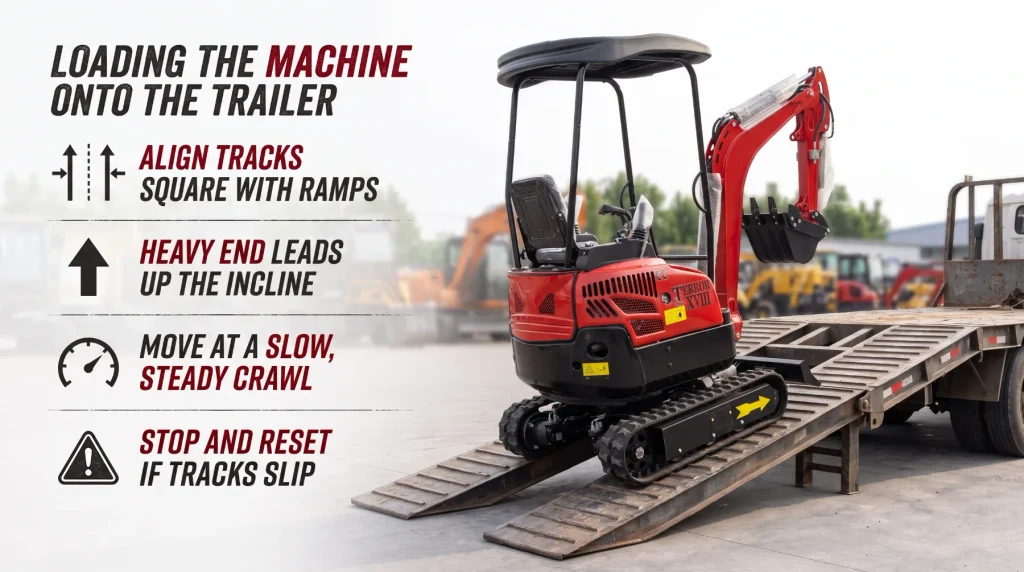
Speed and control decide whether the climb stays safe or turns sudden, so treat the ramps with patience rather than momentum. Move at a slow, steady crawl using smooth control inputs, avoid jerky movements that could rock the machine or spin a track, and never rush the transition where the ramps meet the deck. If a track starts to slip or the machine feels unstable, stop, back down carefully, and reset rather than trying to power through.
Final placement on the deck locks in the balance the whole haul depends on. Position the excavator so its weight sits centered over the trailer’s axles, not too far forward or back, then lower the arm and attachment fully onto the deck, set any travel lock the machine provides, and shut the engine down. Key takeaway: load the excavator squarely and slowly up the ramps, keep it centered over the axles, and rest the arm down before shutting off, so the machine sits stable and ready to be secured.
Securing and Chaining the Machine Down
Anchoring the excavator is the step that keeps it from becoming a battering ram if you brake hard or swerve, so give it the attention its weight demands. Use heavy-duty chains and binders rated for the machine, never light straps meant for smaller loads, and attach them to the excavator’s designated tie-down points rather than hooking onto hydraulic lines or fragile parts. Those anchor points exist precisely for this job and hold the forces of transport without damaging the machine.
Direction and tension turn a few chains into a genuine restraint that holds the load from every angle. Run at least four chains, one to each corner, pulling forward, backward, and to both sides so the machine cannot slide in any direction under braking, acceleration, or a turn. Tighten each binder until the chain is taut and the machine is drawn down firmly against the deck, then double-check that every hook is seated and every binder is locked.
The attachment and moving parts need their own securing, because a loose bucket or arm can shift even when the tracks stay put. Lower the boom and attachment fully onto the deck and chain them down separately if they could move, then confirm the travel lock is engaged so nothing swings during the drive. What this means: chain all four corners to rated tie-down points with taut binders pulling in every direction, and secure the arm and attachment too, so the excavator stays locked to the trailer no matter what the road does.
Driving with the Load Under Control
Awareness changes the moment a loaded trailer rides behind you, since the added weight and height reshape how the whole rig handles. Accept that stopping takes longer, turns need more room, and the machine up top raises your center of gravity, so leave extra following distance and slow down well before you would with an empty trailer. A driver who adjusts early stays in command, while one who drives as though nothing changed gets caught out fast.
Smoothness keeps the load settled through every mile of the trip. Accelerate gently, brake gradually, and take corners and ramps at a reduced speed so the excavator’s weight never lurches against the chains, and watch for crosswinds and passing trucks that can push a tall load around. Sudden inputs are what shift a machine or stress a binder, so treating the controls with a light, steady hand protects both the load and everyone near you.
Checking the load along the way guards against the slack that vibration works into any tie-down over distance. Pull over a short time after starting and inspect the chains and binders, since the machine often settles slightly on the first miles and loosens its restraints, then check again during longer hauls and re-tighten anything that has gone loose. Key takeaway: drive with extra distance and smooth inputs to suit the taller, heavier rig, and stop to recheck the chains early and often, so the load stays secure and controllable the whole way there.
Unloading the Machine at the Destination
Arrival calls for the same care you gave the loading, so resist the urge to rush the machine off after a long drive. Park the rig on firm, level ground, set the tow vehicle’s brake, and chock the trailer wheels before you release anything, then clear people well away from the ramps and the path the excavator will travel. A stable, secured trailer is just as important coming off as it was going on.
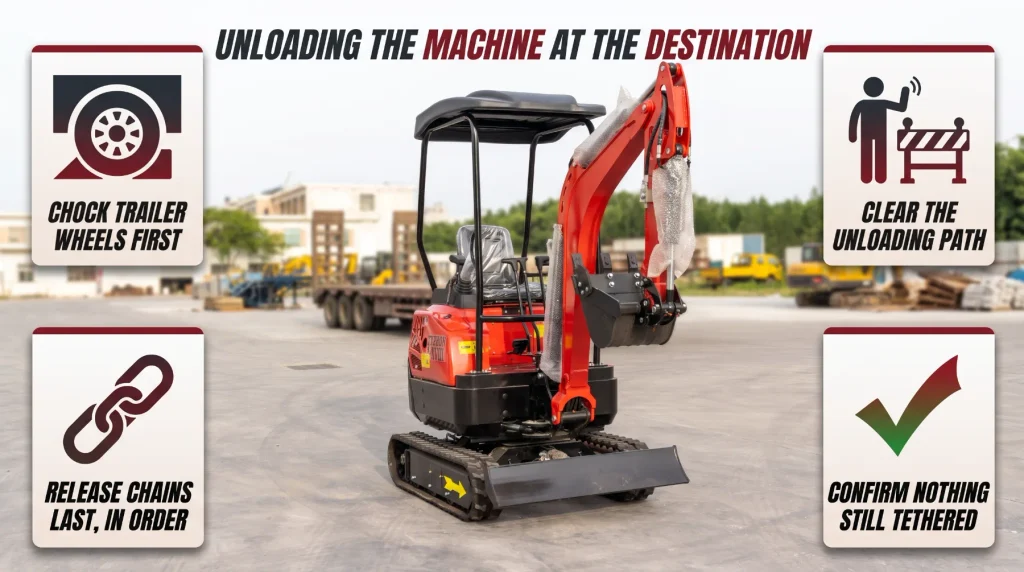
Releasing the restraints follows a deliberate order that keeps the machine controlled until you are ready to move it. Remove the chains and binders only after the trailer is chocked and stable, start the excavator, and disengage the travel lock, then confirm nothing still tethers the machine to the deck before it rolls. Checking that every chain is clear prevents the machine from lurching against a forgotten binder as it starts down.
Backing or driving down the ramps demands the same slow, straight discipline that carried the machine up. Line the tracks squarely with the ramps, move at a gentle crawl with the heavy end oriented for stability, and keep the machine centered as it descends onto solid ground. Once the excavator is clear, inspect it briefly and stow your chains and ramps before heading to the work. What this means: unload on firm ground with the trailer chocked, free the chains in order, and drive the machine down slowly and straight, so the haul ends as safely as it began.
Choosing the Right Mini Excavator Size
Choosing the right mini excavator size is the step that makes sure the machine fits both the job and the jobsite, so give the project requirements the attention they deserve. Consider the digging depth, working space, lifting needs, and attachment requirements before choosing a machine. A smaller excavator is ideal for tight areas and light-duty work, while a larger model provides greater digging power and reach for demanding construction tasks. Choosing a machine that matches the job helps you work efficiently without bringing more machine than you actually need.
Size and job requirements work together to determine the right excavator for the task. Check the available working space, required digging depth, and machine capacity to make sure the excavator can handle the work comfortably. A good size match gives you enough power to complete the job while keeping the machine easy to maneuver, transport, and operate.
Conclusion
Transporting a mini excavator safely on a trailer comes down to a routine that flows naturally once you follow it in order, from picking the right trailer to driving the machine off at the far end. Start by choosing a trailer rated well above the machine’s weight and fitted with strong ramps, then prepare the excavator by cleaning it, tucking in the arm, and setting up a firm, level loading area. Load the machine squarely and slowly up the ramps until it sits centered over the axles, and chain all four corners to rated tie-down points with taut binders pulling in every direction. Drive with extra distance and smooth inputs to suit the heavier rig, stopping to recheck the chains early and often, then unload on firm ground with the trailer chocked and the machine driven down slowly and straight. Follow that sequence, and you protect the equipment, yourself, and everyone sharing the road while the excavator arrives ready to work. Before your next move, confirm your trailer’s rating against the machine’s weight, inspect your chains and binders, and plan a level spot to load and unload so the haul goes smoothly from start to finish. When you’re ready to put a dependable mini excavator to work, or need help sourcing the right transport gear and parts for the one you own, reach out to a trusted equipment specialist who can match reliable support to the results your work depends on.
Frequently Asked Questions
What size trailer do I need to haul a mini excavator?
Choose a trailer rated well above the machine’s full weight, including any attachment. The deck should be long and wide enough to hold the tracks and dipper without overhang, and a low deck height keeps the center of gravity down for better stability. Also confirm the trailer has ramps rated for the excavator’s weight, a properly sized hitch, and working brakes and lights.
How do I keep the excavator from shifting during transport?
Use heavy-duty chains and binders rated for the excavator, attached to the designated tie-down points only. Run at least four chains, one to each corner, pulling in every direction, and tighten each binder until the machine is drawn firmly against the deck. Secure the arm and attachment separately, engage the travel lock, and pull over shortly after starting to recheck the chains, since the machine often settles and loosens its restraints on the first miles.
What is the safest way to load and unload the machine?
Park the trailer on firm, level ground, chock the wheels, and set the tow vehicle’s brake. Line the tracks squarely with the ramps, drive up slowly with the heavy end leading, and position the excavator centered over the axles before lowering the arm and shutting down. To unload, chock the trailer, remove the chains in order, disengage the travel lock, and drive down slowly and straight. If the machine feels unstable at any point, stop and reset rather than pushing through.