
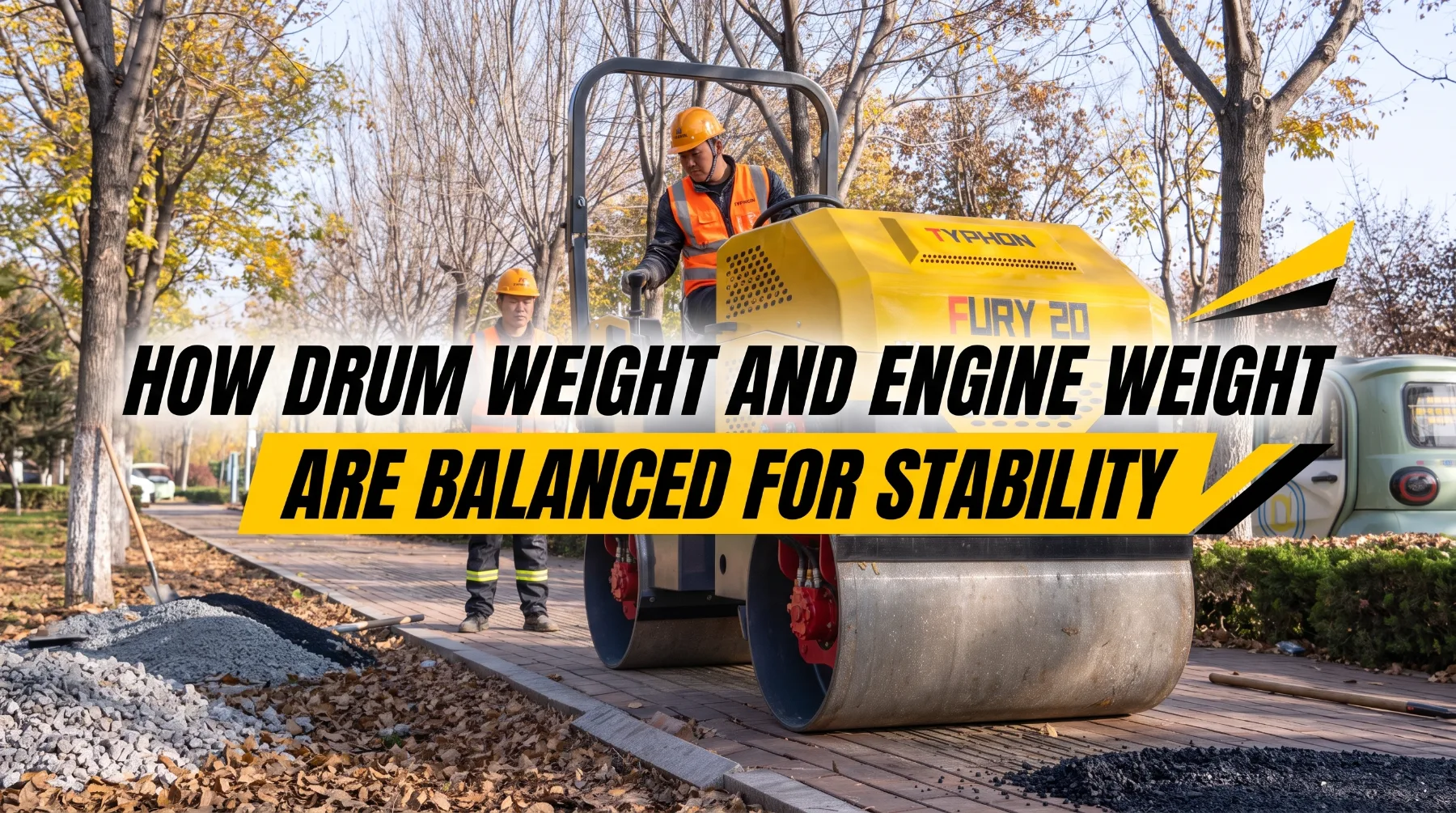
How Drum Weight and Engine Weight Are Balanced for Stability
A contractor standing beside two road rollers on a dealer lot might notice that both machines list the same drum weight on the spec sheet, yet one handles slopes with easy confidence while the other feels uncertain the moment the ground tilts. The difference rarely shows up in the numbers. It lives in the engineering decisions that determined where every kilogram of that machine sits and how the heaviest components relate to each other. Understanding those decisions separates a buyer who chooses well from one who discovers the problem on a job site.
Weight balance is the structural logic behind every well-built road roller, and getting it right requires more than adding a heavy drum to a frame and bolting on an engine.
Why Weight Distribution Matters on a Road Roller
Stability begins with where the mass sits, not just how much of it there is. A road roller has to accomplish two things at once: press the drum down with enough force to compact material, and stay steady enough for the operator to control it precisely. Those two demands pull in different directions, and the only way to meet both is through deliberate weight distribution across the entire machine.
Placing too much mass at the front produces a nose-heavy machine that tends to dig in or push material forward instead of pressing it flat. Placing too much mass at the rear lifts the drum slightly off the ideal contact plane, which reduces the compaction force exactly where it needs to be greatest. On uneven terrain or a grade, either imbalance becomes a safety issue because the center of gravity shifts as the ground tilts, and a machine that was manageable on flat ground starts resisting control. Manufacturers address this by mapping out every major component’s position and mass from the earliest design stage, then tuning the layout until the load lands where the job demands it.
How Drum Weight Shapes Compaction Force and Machine Balance
The drum does the visible work, and its mass is the starting point for every other balance decision the engineer makes. A heavier drum presses harder against the surface, which achieves greater density in asphalt, gravel, or soil, and that is why drum weight appears near the top of every buyer’s checklist. It is the most direct measure of how much static force the machine can put into the ground.
What drum weight also does, less visibly, is create a large concentrated load at one end of the machine. Because so much mass gathers in a single location, the drum has an outsized influence on the roller’s overall center of gravity. A machine built around a very heavy drum without accounting for it elsewhere on the frame will feel front-heavy and tiring to steer, particularly during turns and grade work. Engineers respond by treating the drum as a fixed anchor point and designing the rest of the weight distribution around it. Many modern rollers also incorporate vibration systems inside the drum to amplify compaction output without simply adding more static mass, which lets the machine hit its compaction targets while keeping the overall weight balance manageable for the operator.
How Engine Placement Counterbalances the Drum
The engine is rarely discussed as a balancing component, but in a well-designed road roller it functions as exactly that. Engine assemblies are among the heaviest single units on the machine, and manufacturers position them with the explicit goal of offsetting the drum’s concentrated load. Moving the engine toward the opposite end of the frame, or positioning it over a specific section of the chassis, shifts the center of gravity back toward a stable midpoint.
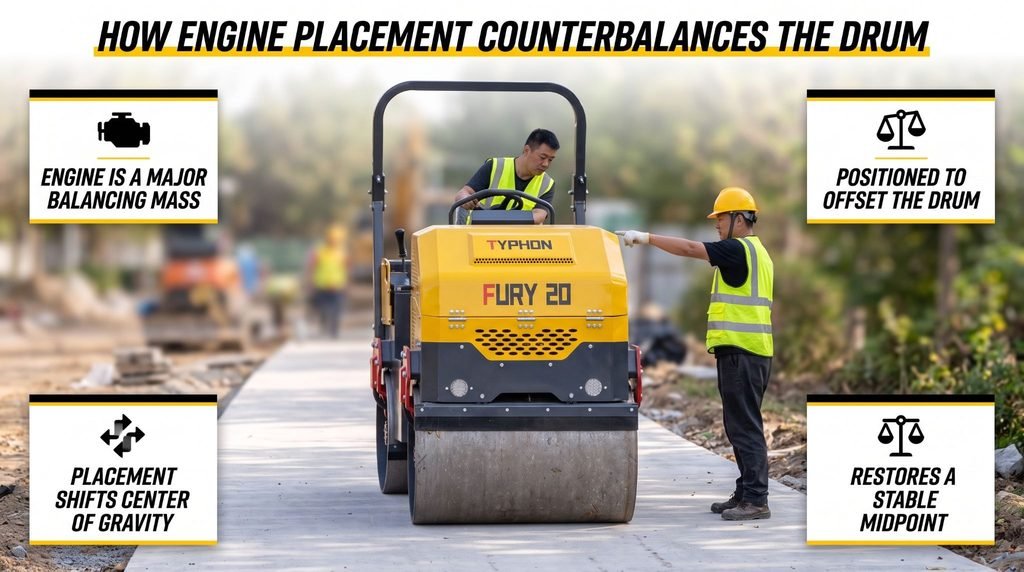
Visualizing the machine as a balance beam makes the logic clear. The drum anchors one side with its concentrated load, while the engine, transmission, fuel tank, and associated systems occupy the other side, their combined mass working to keep the whole frame level. The target is not a rigid fifty-fifty split, because different roller types are tuned for different priorities. A machine built for asphalt finishing may carry slightly more balance toward the drum to maximize compaction force on precise, finished surfaces. One built for soil compaction or general site prep may be weighted further rearward to improve traction and steering on rougher ground. Every placement choice reflects a deliberate trade-off, and the best designs land on the balance point that fits the machine’s intended use. Some manufacturers also build dedicated counterweights into the frame, but leaning on the engine’s own mass to do the balancing work is both efficient and proven across decades of roller design.
The Practical Impact on Operator Safety and Surface Quality
Engineering decisions made at the design stage show up as real consequences on the job site, and weight balance is no exception. A roller with a well-centered, low center of gravity resists tipping when the ground tilts, handles turns without leaning, and gives the operator a steady, predictable feel at the controls. That predictability matters because an operator who trusts the machine can concentrate entirely on the pass quality rather than managing the machine’s behavior.
Surface quality follows from the same source. When drum weight and engine weight are matched correctly, the compaction force stays uniform across every pass regardless of minor ground variations. That consistency is what produces the smooth, even, and durable surface a contractor is paid to deliver, whether the work is asphalt on a highway or subgrade preparation on a building site. An unbalanced machine leaves behind the fingerprints of its instability in the form of uneven density, surface marks, and weak spots that create rework. Good weight balance protects the finished product and the reputation of the crew responsible for it.
What This Means for Equipment Buyers
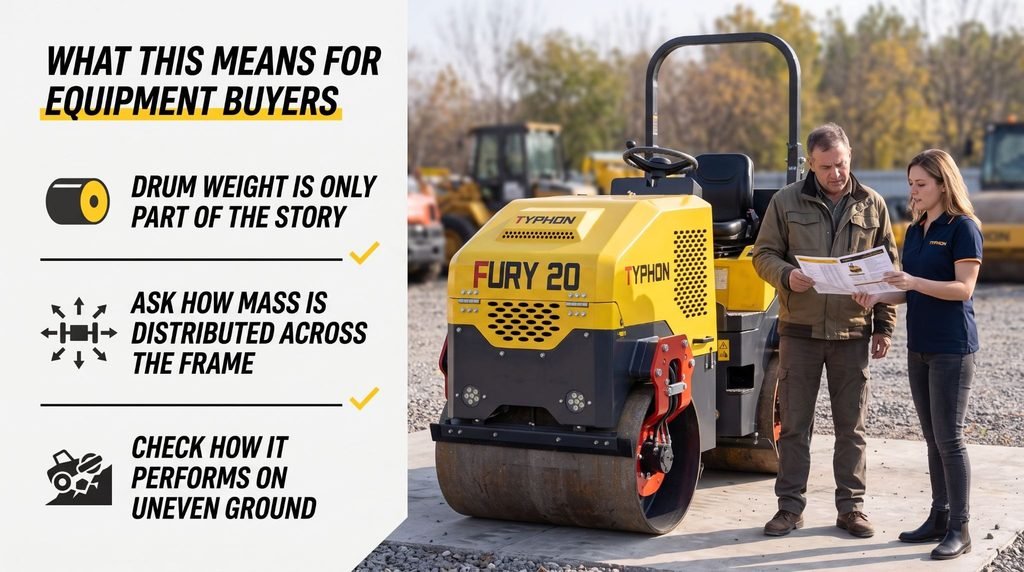
Buying a road roller well means asking a different set of questions than the spec sheet invites. Drum weight is easy to find and easy to compare, but it describes only one part of a system that only works when the whole is properly assembled. The smarter inquiry is about layout: how does this machine distribute its mass, where does the center of gravity sit at operating height, and how does the design perform when the ground stops being flat.
A machine engineered with thoughtful balance rewards the investment with steadier operation, more consistent compaction results, and a longer service life because the frame and drivetrain are not fighting unnecessary stresses. The balance between drum and engine weight is not a byproduct of choosing heavy components. It is the result of deliberate engineering aimed at giving the operator a machine that works with the job rather than against it.
How to Evaluate Stability-Related Design When Comparing Machines
Practical evaluation starts before the purchase is finalized. When comparing rollers, ask the supplier how weight is distributed between the front and rear axles, whether any additional counterweights are built into the frame, and how the machine performs on grades typical of the sites where it will work. A flat-lot demonstration rarely reveals balance issues that only appear when the ground tilts, so requesting an opportunity to run the machine on a slope is worth the effort.
Pay attention to how the roller handles tight turns as well. An unbalanced machine often reveals its center-of-gravity problem during turns, where the heavier end pulls the steering and the frame leans more than it should. Also consider how the drum’s vibration system is tuned relative to the machine’s static weight balance. A vibration system that amplifies force without shifting the mass distribution in a destabilizing direction is a sign of considered engineering. Buyers who ask these questions consistently end up with a roller that handles predictably across varied terrain rather than one that performs well in the yard and struggles the moment real job-site conditions arrive.
Conclusion
A road roller’s performance depends on more than its total weight. The drum creates the compaction force, the engine provides the power and counterbalance, and the frame keeps the machine stable as these components work together. When the weight is distributed properly, the roller can maintain steady contact with the surface, respond predictably to steering inputs, and produce more uniform compaction across each pass. This balance becomes especially important when working on different ground conditions, where poor weight distribution can affect control and compaction quality.
For buyers, understanding this relationship makes it easier to look beyond individual numbers on a specification sheet. Instead of choosing a machine based only on operating weight or engine power, they can consider how the entire design supports the type of work they need to complete. A well-balanced road roller can deliver smoother operation, more consistent results, and fewer areas that require additional passes. Choosing the right balance of weight, power, and machine design ultimately helps create better finished surfaces while improving efficiency throughout the job.
Frequently Asked Questions
How should buyers evaluate stability-related design when comparing road rollers?
Look beyond drum weight and check the machine’s overall balance. A low, centered center of gravity, proper weight distribution, and stable performance on slopes all improve control. If possible, test the roller on a grade and during tight turns before buying.
Why does a road roller feel harder to control on slopes, and how does weight balance factor in?
Slopes shift the machine’s center of gravity downhill, making poor weight balance more noticeable. A well-designed roller keeps its center of gravity low and centered, improving steering, drum contact, and stability on grades.
Does drum weight alone determine how well a road roller compacts a surface?
No. Drum weight affects static compaction force, but balance, vibration, and weight distribution also matter. A properly balanced roller delivers consistent compaction while remaining easier to control.