
Kubota vs. Yanmar Diesel: How Torque Delivery Differs in Compact Skid Steers
A site supervisor lines up two compact skid steers from different manufacturers, both rated at similar horsepower, both fitted with the same bucket, both ready for the same pile of compacted fill. The operator climbs into the first machine, loads up, and notes how it responds. Then he tries the second. The power figures on paper are nearly identical, but the machines feel nothing alike. One leans into the load with quiet confidence; the other snaps awake the moment he applies throttle. The difference is not horsepower. It is torque delivery, and understanding it is what separates a well-matched purchase from an expensive mismatch. This post explains how Kubota and Yanmar diesel engines shape torque differently, and what that means for every crew putting a compact skid steer to work.
Torque delivery shapes how a compact skid steer actually performs on a job site, yet most spec sheets bury it beneath the horsepower headline. Knowing how each engine builds and holds its torque, how each responds under real load, and how each fits different working styles gives buyers a far more useful comparison than raw power figures alone.
How the Two Manufacturers Tune Their Engines
Kubota and Yanmar both produce proven, durable diesels used throughout the compact equipment industry, but the engineering decisions behind each engine reflect genuinely different priorities. Neither philosophy is wrong. They are simply tuned for different kinds of work, and recognizing the difference is the starting point for a smart selection.
Kubota diesels are built around a broad, flat torque curve. Rather than climbing steeply toward a high peak, a typical Kubota engine reaches a strong level of torque early and sustains it across a wide range of engine speeds. The result is a machine that feels composed and predictable regardless of whether the engine is loafing or working hard. Operators do not need to chase a narrow sweet spot or manage throttle carefully to stay in a productive range. The power is accessible without effort, which makes Kubota-powered machines particularly forgiving in the hands of operators with varying experience levels.
Yanmar takes a different approach, building engines with crisp, alert throttle response and a strong pulling character that rewards an active operating style. Yanmar has long been recognized for producing compact engines that deliver impressive output relative to their displacement, and that design philosophy shows in how the engine answers the controls. Apply throttle and the machine responds immediately, with a lively quality that experienced operators often describe as engaged and eager. This character is tuned for high-tempo work where quick cycles matter and where the operator’s pace drives productivity.
Why Torque Delivery Shapes Every Shift
Horsepower occupies the top of most spec sheets, but it is torque that tells the real story of how a compact skid steer performs under load. Torque is the rotational force an engine generates, and on a skid steer it drives everything: the tracks fighting through mud, the hydraulics raising a heavy bucket, the machine holding its line on a sloped surface. Horsepower is the product of torque multiplied by engine speed, so two engines carrying the same rated output can feel nothing alike depending on when and where they generate that force.
The torque curve reveals what horsepower numbers hide. An engine that builds strong torque early in the rev range gives the operator immediate, confident response without needing to work the throttle hard. An engine that climbs toward its torque peak at higher speeds may feel hesitant at lower loads before coming alive under heavier demand. For skid steer operators cycling through dozens of lifts, reversals, and directional changes every hour, that character is felt in every single movement. Comparing torque delivery between Kubota and Yanmar tells a buyer far more than comparing power ratings on a sheet.
Torque at the Low End and Through the Mid-Range
The working life of a compact skid steer divides broadly into two types of demand: initial engagement with a load, and sustained effort through a task. Both Kubota and Yanmar handle these phases capably, but each has a natural strength that stands out when the conditions suit it.
At the low end of the rev range, Kubota’s early torque availability means the machine leans into resistance from the moment the operator commits. Whether breaking into a compacted pile, starting a dozing pass, or engaging a heavy attachment from standstill, the engine delivers force before the throttle climbs. This characteristic makes the machine gentle to operate and reduces the demands on the operator to manage power delivery. For crews who run mixed attachments, work variable materials, or include less experienced operators, this low-end composure is a genuine asset.
Yanmar’s low-end character is equally capable, but shaped differently. The engine responds quickly rather than pushing steadily, making initial engagement feel energetic and sharp. For operators who prefer a reactive machine and work in tight cycles where fast engagement matters more than gradual pressure, that snap is a useful quality. Moving into the mid-range, Kubota continues to hold its torque steadily, resisting the fade that can appear in engines tuned for a narrow peak. Yanmar’s mid-range is strong and spirited, with the engine staying eager through demanding cycles provided the operator keeps it loaded and in motion.
Performance When the Work Gets Real
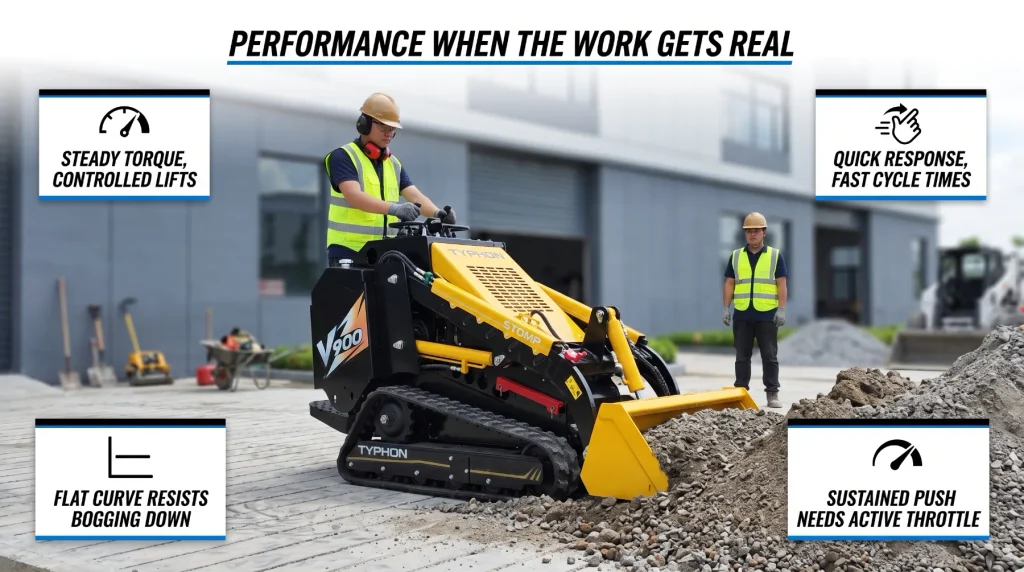
Real job-site conditions test an engine’s character in ways no specification captures. Three working situations reveal the practical difference between these two torque profiles most clearly.
Lifting places simultaneous demand on both the hydraulics and the engine. Kubota’s steady torque produces controlled, confident lifts where the engine holds its speed as hydraulic demand rises. Operators placing loads precisely in tight conditions benefit from this composure, since the machine does not lurch or surge as the arms extend. Yanmar responds to lift commands briskly, with hydraulic action that matches the engine’s alert personality. For operations focused on rapid, repetitive loading where cycle speed matters above all else, Yanmar’s quick response keeps the pace moving efficiently.
Pushing material is among the hardest sustained demands a compact skid steer faces. Whether dozing a berm, backfilling a trench, or clearing a pad, the engine must hold steady force over a prolonged effort as resistance builds and the machine slows into the material. Kubota’s flat torque curve earns its keep here, resisting the tendency to bog down by maintaining drive even as load increases. Yanmar performs this work capably too, and its energetic response helps the machine surge into the pile at the start of a pass, though sustaining that push over a long run asks the operator to keep the throttle active.
Climbing under load combines grade resistance, travel load, and hydraulic demand into a single test. Kubota climbs steadily, delivering power to the tracks without wavering as the slope steepens or the bucket load shifts. Yanmar responds to grade demands with a willing, responsive pull that gives the machine a confident feel on the way up. In both cases, keeping the engine in its effective torque band determines whether the machine holds its momentum or struggles.
Choosing the Right Engine for Your Work
Selecting between these two engines starts with an honest assessment of the work your crew does and how they run the machine. Both Kubota and Yanmar have long-established reputations for reliability, global parts availability, and long service intervals, so durability should not drive the decision. What should drive it is matching the engine’s torque character to the daily demands of your operation.
Kubota suits operations built around sustained, heavy work. Grading, dozing, and extended loading cycles on variable terrain are where the flat torque curve delivers its clearest advantage. A mixed crew working a range of attachments on shifting material conditions will also benefit from the engine’s forgiving, low-maintenance power delivery. Regular maintenance, including timely oil and filter changes, cooling-system checks, and routine inspections, helps keep that dependable performance consistent over long duty cycles. If your job sites feature grades, soft ground, or long duty cycles, Kubota’s composure and straightforward maintenance requirements are well matched to those demands.
Yanmar suits operations where speed and responsiveness drive output. High-tempo loading, fast lift-and-carry cycles, and work where quick hydraulic response cuts cycle times all play to Yanmar’s strengths. Experienced operators who keep the engine loaded and working in its active range will extract strong productivity from its eager character. For specialized applications requiring precise, quick attachment control, that alert response is a meaningful advantage. The most reliable way to confirm the match is to operate both machines on your own material and with your own crew before committing.
Looking Past the Torque Curve
Torque delivery is the clearest differentiator between these engines, but it is not the only factor that shapes a skid steer’s long-term value. Transmission design determines how efficiently engine torque reaches the tracks and the hydraulics. A well-matched drive system transfers power smoothly under load, while a poorly matched one wastes the engine’s output regardless of how well the torque curve is shaped. Buyers should evaluate how each machine delivers power at the wheels, not just how the engine produces it.
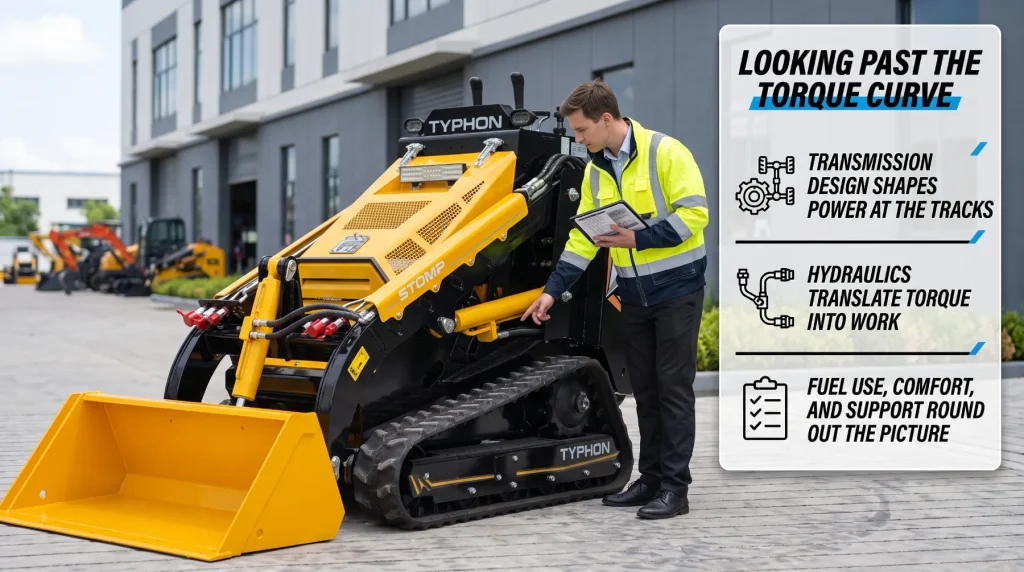
Hydraulic system capacity and flow rate also matter, because the hydraulics are what translate engine torque into productive attachment work. A machine whose hydraulics are calibrated to complement the engine’s torque profile will feel more capable in real use than one where the two systems pull against each other. Fuel consumption, operator environment, and dealer support in your market complete the picture. A torque curve tells you how the engine is tuned. Everything else tells you whether the machine will serve your operation reliably for years.
Conclusion
Horsepower may sell the machine, but torque delivery is what your operators feel every hour of every shift. Kubota builds its reputation on a broad, flat torque curve that delivers steady, composed, fade-resistant power, ideal for sustained, heavy work. Yanmar counters with crisp, responsive pull that rewards fast cycles and an active operating style. Both are dependable, well-engineered diesels, so the smart move is to match the engine’s character to the demands of your job site and the habits of your crew. Get that match right, and you will have a compact skid steer that works with you, load after load. When you are ready to put a reliably matched machine to work on your next project, reach out to a trusted equipment specialist who can help you match the right engine to the results your operation depends on.
Frequently Asked Questions
Is one engine easier to maintain than the other in a compact skid steer?
Both Kubota and Yanmar engines are reliable and well-supported. The biggest factor is local dealer and parts availability. Choose the engine with stronger support near your job site for easier maintenance.
Does fuel efficiency differ between Kubota and Yanmar diesels in compact skid steers?
Both can be fuel-efficient when properly matched to the machine. Real-world fuel use depends heavily on the workload, operating speed, and operator habits. The right engine working within its intended range will generally use less fuel.
Can you tell which engine a skid steer has just by how it feels?
Experienced operators may notice differences. Kubota engines often feel smooth and steady, while Yanmar engines can feel more responsive. However, checking the engine specification is the most reliable way to identify the engine.