
What Skid Steer Maintenance Points Need Attention Before Daily Work
Before the first bucket load, a skid steer operator has a short window to catch problems that could otherwise interrupt the entire workday. A machine arriving at a landscaping site may look ready to go, yet a quick walkaround can reveal a low fluid level, hydraulic seepage, damaged tire, unlocked coupler, or grass and debris packed around the cooling system. These issues are often simple to address before work begins and far more disruptive once the machine is operating under load. Spending a few minutes on the inspection can prevent a small defect from becoming unexpected downtime.
Daily checks serve a practical purpose beyond simply following a maintenance routine. Engine oil, coolant, hydraulic fluid, hoses, fittings, tires or tracks, and attachment connections all affect how the machine performs once work starts. The operator also needs to confirm that controls, warning devices, and safety equipment respond as expected before entering a busy work area. Finding an abnormal condition early gives the crew time to correct it before the machine is placed under demanding operating conditions.
Once the skid steer starts working, many components face repeated loads, vibration, dust, and temperature changes. A consistent inspection routine creates a clear starting point for every shift and makes unusual conditions easier to notice over time. Checking the cooling system and air intake can help prevent overheating, while examining the attachment area and coupler helps confirm that the working tool is properly secured. These simple habits support reliable operation and help keep the machine productive from the first cycle to the last.
Engine Oil and Fluid Levels
Fluids are the lifeblood of a skid steer, and checking them is the natural place to start a daily inspection. Engine oil, hydraulic fluid, coolant, and fuel should all be verified against the manufacturer’s maintenance schedule before the machine goes to work. These levels tell you whether the engine is protected, whether the hydraulics have what they need to perform, and whether the cooling system can keep temperatures in check through a demanding shift.
Each fluid does a specific job, so a shortfall in any one creates its own trouble. Low engine oil accelerates wear and can lead to serious engine damage, low hydraulic fluid starves the system that powers every loader function, and low coolant invites overheating on a hot, hard-working day. Checking fuel is simple but easy to skip, and running out mid-task wastes time and can draw air into the fuel system. A quick look at each level, ideally with the machine on level ground, confirms the skid steer is ready to run reliably rather than nursing a hidden deficit from the first bucket onward.
Key takeaway: Check engine oil, hydraulic fluid, coolant, and fuel against the manufacturer’s schedule before every shift, since correct fluid levels protect the engine, power the hydraulics, and keep temperatures under control.
Tires or Tracks
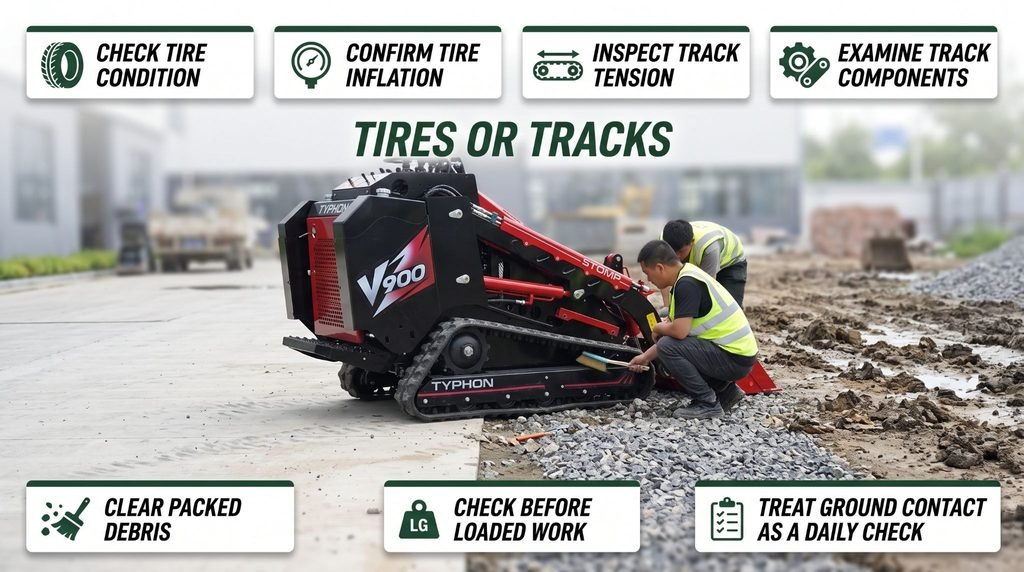
A skid steer’s contact with the ground affects traction, stability, and control, so tires or tracks deserve a careful inspection before daily work begins. Wheeled machines need attention to tire condition and inflation, while tracked models require checks of track tension, pads, rollers, and undercarriage debris. Finding problems early helps prevent damage from becoming more serious once the machine starts pushing, carrying, and working under load.
- Check tire condition: Inspect tires for cuts, punctures, embedded debris, sidewall damage, and excessive or uneven wear that could affect daily operation.
- Confirm tire inflation: When applicable, check tire pressure against the manufacturer’s recommended level. Low or uneven inflation can affect traction, stability, and machine control.
- Inspect track tension: Track-equipped skid steers should have track tension checked according to the manufacturer’s specification. Excessively loose tracks can increase derailment risk, while excessive tension can accelerate component wear.
- Examine track components: Look over the track pads, rollers, and other undercarriage components for visible damage, unusual wear, or missing parts.
- Clear packed debris: Remove mud, rocks, soil, and other material trapped around the tracks and undercarriage. Built-up debris can interfere with movement and contribute to component wear.
- Check before loaded work: A tire or track problem that seems minor during an unloaded inspection can become more noticeable when the skid steer is carrying a load or pushing against a pile.
- Treat ground contact as a daily check: Whether the machine uses tires or tracks, maintaining the components that connect it to the ground supports reliable traction, stability, and productive operation.
Key takeaway: Inspect tires for damage, wear, and inflation, or check tracks for correct tension, damaged components, and packed debris, since sound footing underpins stability and traction.
Attachment and Coupler Areas
A skid steer is only as useful as the attachment on the front, and that attachment must be securely connected before any work begins. The coupler area is where safety and productivity meet, because an attachment that is not fully engaged can shift or come loose during lifting, digging, grading, or material handling. Before the first task, confirm the attachment is properly seated and locked onto the machine.
A thorough check covers the whole coupling system. Inspect the quick coupler and its locking mechanism to confirm both locking pins are fully engaged, not partway, since a coupler that looks connected but has not locked completely is a serious hazard. Check the pins for wear or damage, look over any hydraulic hoses running to the attachment for leaks or loose fittings, and examine the attachment mounting points for cracks or deformation. A common and effective habit is to engage the coupler, then curl the empty attachment back and press it down against the ground to confirm it is locked before lifting a load. This simple test catches a poorly engaged coupler while the attachment is still safely low.
Key takeaway: Confirm the attachment is fully locked before work by checking the quick coupler, locking mechanism, pins, hoses, and mounting points for full engagement and damage.
Cooling System and Air Intake
Skid steers work in some of the dirtiest conditions on any jobsite, and that environment takes a toll on the cooling system. Dust, grass clippings, mud, and debris collect around the radiator, oil coolers, and air intake areas during operation, especially in landscaping and agricultural work where fine material is constantly airborne. Left to build up, this debris blocks airflow and drives engine and hydraulic temperatures upward, which can lead to overheating and reduced performance right when the machine is working hardest.
Cleaning these areas as needed keeps air moving freely through the coolers and protects the machine from heat-related trouble. Before work, look over the radiator and cooler fins, the air intake, and the surrounding compartment for accumulated material, and clear it out according to the manufacturer’s guidance. How often this is needed depends entirely on the conditions, since a dusty demolition site or a grass-heavy landscaping job clogs a cooling system far faster than clean, hard-surface work. Keeping airflow clear is one of the simplest ways to prevent overheating and the downtime that comes with it, and it costs only a few minutes of attention.
Key takeaway: Clear dust, grass, and mud from the radiator, coolers, and air intake as conditions require, since blocked airflow drives up temperatures and risks overheating during hard work.
Controls and Safety Equipment
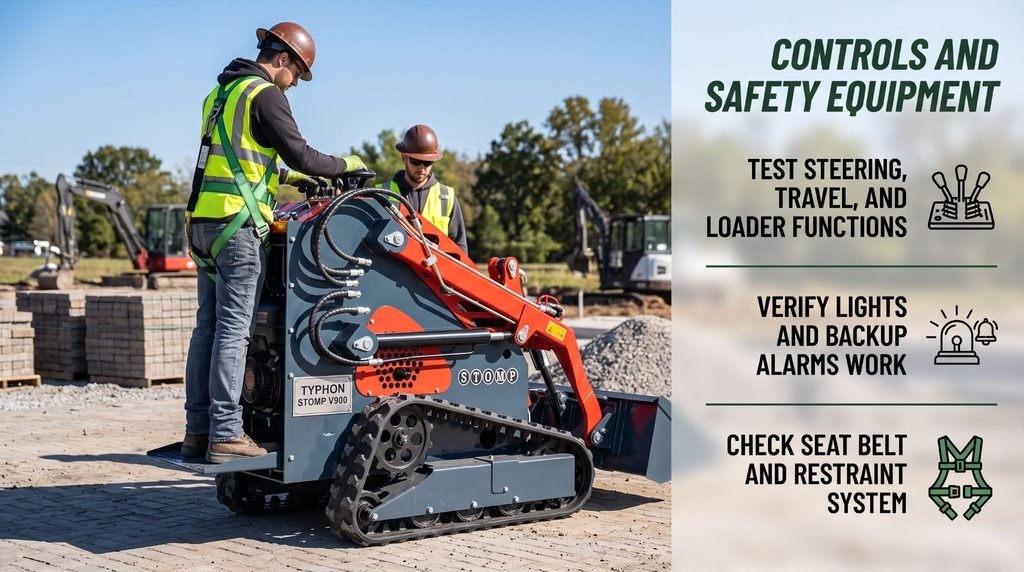
The final check before moving the machine confirms that everything the operator relies on to work safely is functioning. Test the steering and travel controls, run the loader functions through their range, and verify the parking brake holds. Confirm that lights, backup alarms, and any other required safety systems work as they should, since these are what protect the operator and everyone else on a busy site. A control that responds sluggishly or an alarm that stays silent is a problem to solve before work, not a quirk to work around.
Operator protection deserves the same attention as the machine’s functions. Check the seat belt and the operator restraint system to confirm they are present, undamaged, and working correctly, because a skid steer’s safety systems are designed around the operator staying properly secured in the seat. These restraints are often tied to the machine’s interlocks that prevent operation unless the operator is seated and buckled, so a fault here affects both safety and function. Running through the controls and safety equipment takes only a moment, and it confirms the machine will respond and protect as expected once real work begins.
Key takeaway: Test steering, travel controls, loader functions, the parking brake, lights, and alarms, and confirm the seat belt and restraint system work, before moving the machine.
Conclusion
Daily skid steer maintenance requires a consistent pre-operation inspection of the engine, hydraulic system, undercarriage, attachment, cooling system, and controls because these components are exposed to high loads, contamination, and wear during routine operation. Engine oil, hydraulic fluid, coolant, and fuel levels should be checked according to the manufacturer’s procedures, while hydraulic hoses, fittings, loader-arm circuits, and auxiliary lines should be inspected for leaks, abrasion, and damage. Tire condition, tread wear, inflation, or track tension and component condition should also be verified, with packed soil and debris removed from the undercarriage. Attachments should be checked for secure coupling, damaged pins, hoses, mounting points, and proper locking before operation. Radiators, hydraulic coolers, and air-intake areas should be cleaned of dust, grass, mud, and other debris to maintain adequate airflow and temperature control. Steering, travel controls, brakes, lights, alarms, seat belts, and operator restraints should also be tested before work begins. Inspection frequency should be increased in dusty, muddy, high-load, or high-temperature conditions because contamination and component stress can accelerate wear. A structured daily inspection helps identify leaks, loose components, overheating risks, and other developing faults before they affect machine availability or create more extensive repairs.
Frequently Asked Questions
What should be checked first on a skid steer?
Start with a visual walkaround for leaks, damage, and debris around the machine, tracks, tires, and cooling areas. Then check engine oil, hydraulic fluid, coolant, and fuel; inspect tires or tracks, hydraulic hoses, and fittings; confirm the attachment and coupler are fully engaged; and test the controls and safety systems. Following the same inspection sequence each day helps catch problems early.
How often should skid steer hydraulic hoses be inspected?
Inspect hydraulic hoses during every pre-operation check. Look for leaks, abrasion, cracking, bulging, and damage, especially around loader arms and auxiliary hydraulic connections where hoses experience frequent movement. Replace damaged hoses before operation to reduce the risk of high-pressure failures and costly repairs.
Why inspect the quick coupler daily?
The quick coupler secures the attachment, so a daily check helps prevent an attachment from shifting or coming loose during work. Inspect the locking mechanism, pins, and mounting points for proper engagement, wear, or damage. After connecting, pressing the empty attachment against the ground can help confirm the coupler is securely locked while it remains safely low.
Should the skid steer cooling system be cleaned daily?
Cleaning frequency depends on the work environment. Dusty, muddy, grassy, or debris-heavy jobsites may require daily or more frequent cleaning, while clean hard-surface work may need less. Inspect the radiator, coolers, and air intake every day and remove debris when airflow is restricted to help prevent overheating.