
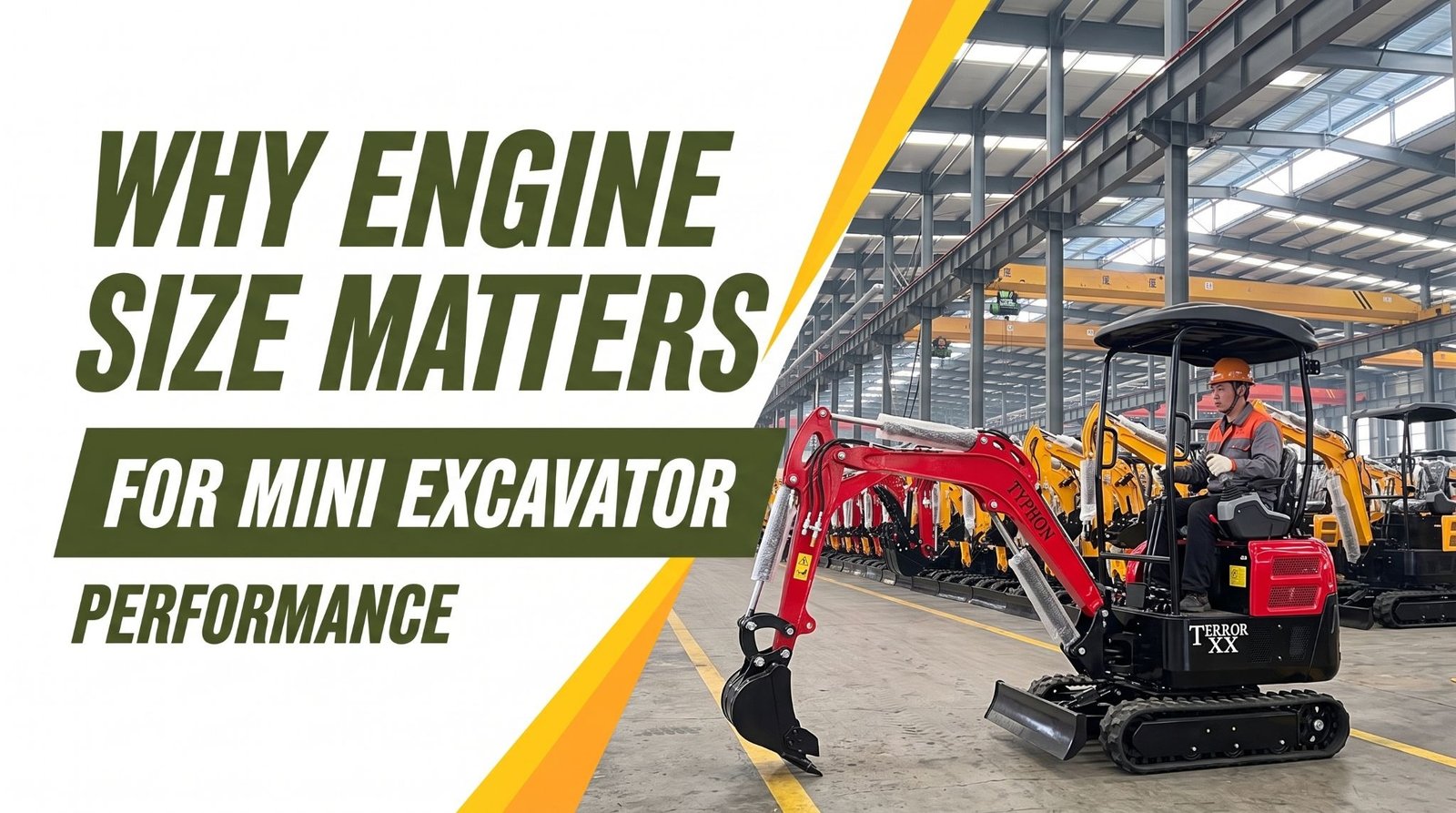
Why Engine Size Matters for Mini Excavator Performance
Engine displacement is an important factor in determining how effectively a mini excavator can convert fuel into mechanical power for digging, lifting, traveling, and hydraulic operation. Although buyers often focus on operating weight, dig depth, and bucket capacity, displacement influences the engine’s ability to produce torque across its operating range and supply consistent power to the hydraulic pump. A larger displacement engine can generally produce stronger low-speed torque and provide greater power reserves under sustained load, while an undersized engine may operate closer to its maximum output, causing higher engine load, slower hydraulic response, and reduced performance when digging dense material or lifting heavy loads.
The relationship between displacement and machine performance must be evaluated alongside engine rated power, hydraulic pump capacity, system pressure, operating weight, and the excavator’s intended application. The engine must provide enough output to maintain hydraulic flow and pressure while the machine is simultaneously digging, swinging, lifting, or traveling. Properly matched displacement allows the powertrain to handle these combined demands without excessive loading, while an oversized engine can add unnecessary weight, fuel demand, and cost. For mini excavators, the objective is not simply to select the largest engine, but to match displacement and power output to the hydraulic system and operating demands of the machine.
What Engine Displacement Actually Means
Engine displacement is the total volume swept by all the pistons inside the engine’s cylinders as they move through a full stroke, measured in liters or cubic centimeters. Picture each cylinder as a chamber that draws in air and fuel, compresses it, and burns it to drive the piston down. Add up the volume of all those chambers, and you have the engine’s displacement. A larger figure means the engine moves more air and fuel with every cycle, and that capacity to burn more fuel per stroke is what ultimately sets the ceiling on the power the engine can produce.
For a mini excavator, displacement usually falls in a modest range, often between one and two and a half liters across the common weight classes. That may sound small next to a highway truck, but in a compact machine every fraction of a liter counts. The displacement figure tells you how much combustion capacity the engine has to draw on, and from that single number flows the machine’s torque, its horsepower, and its ability to keep the hydraulics fed under load.
Key takeaway: Displacement is the combustion capacity of the engine, and it sets the upper limit on the power a mini excavator can bring to the job.
How Displacement Drives Torque and Horsepower
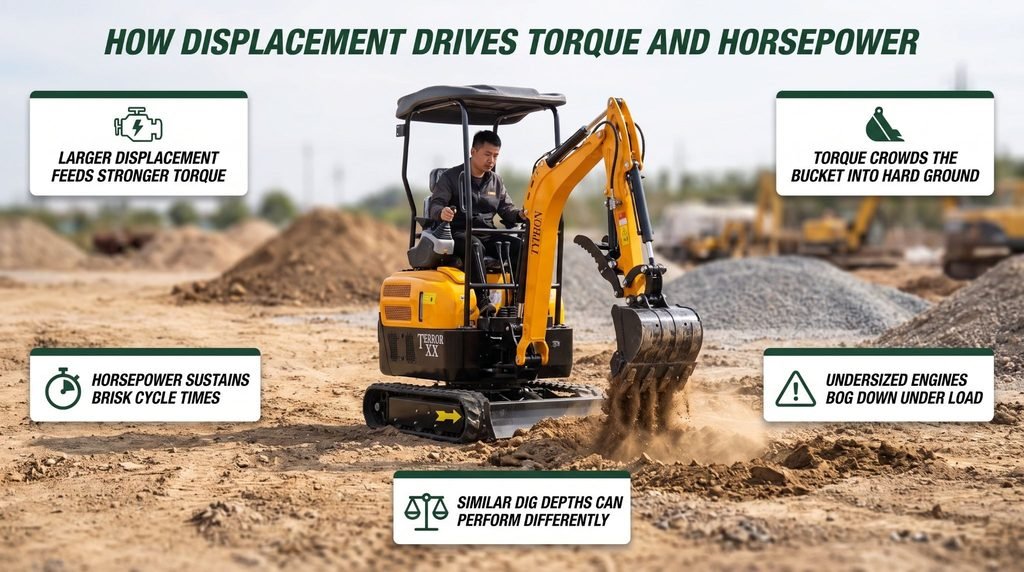
Torque is the twisting force the engine produces, and it’s the quality that matters most in digging work. Displacement feeds torque directly, because a larger swept volume burns more fuel and air per stroke, generating more force to turn the crankshaft. That force is what lets a mini excavator crowd its bucket into hard-packed soil, break through compacted fill, and hold steady under resistance instead of stalling. When you feel a machine digging with authority rather than bogging down at the first sign of tough ground, you’re feeling the torque that displacement makes possible.
Horsepower follows from torque and engine speed together, describing the rate at which the engine can do work. A larger-displacement engine generally delivers both stronger torque and higher horsepower, so it sustains digging force while also keeping cycle times brisk. The practical upshot is straightforward: an engine with ample displacement holds its output when the work gets demanding, while a smaller one has to spin harder and still may run short of force. Two machines with similar dig depths can perform very differently in the cut, and displacement is often the reason one powers through while the other labors.
Key takeaway: More displacement produces more torque and horsepower, which is what gives a mini excavator the sustained force to dig hard ground without stalling.
How Engine Size Feeds Hydraulic Performance
A mini excavator does none of its real work mechanically through the engine alone. Instead, the engine drives a hydraulic pump, and that pump pressurizes the fluid that powers the boom, arm, bucket, swing, and travel functions. Every dig, lift, and rotation begins as engine power converted into hydraulic energy, which means the engine is a constant load whenever the machine is working. The displacement of that engine determines how much power it can supply to the pump, and therefore how much hydraulic flow and pressure the machine can sustain under real demand.
This connection is where displacement earns its keep, because hydraulic flow sets how fast the functions move and hydraulic pressure sets how much force they exert. An engine with generous displacement keeps the pump fed even when several functions run at once, so an operator can curl the bucket while swinging and still hold speed and force. A smaller engine can run short of power when demand stacks up, and the result is a machine that slows or hesitates when you need it to perform. Attachment capability depends on the same relationship. Power-hungry tools like hydraulic breakers, augers, and compactors draw heavy, continuous flow, and only an engine with enough displacement to feed that draw will run them at full effectiveness rather than starving them mid-task.
Key takeaway: Displacement determines how much power the engine can hand to the hydraulic pump, which sets the flow, pressure, and attachment capability the machine can actually deliver.
The Trade-Off Between Power and Efficiency
Bigger displacement brings more power, but it never comes free. A larger engine burns more fuel to produce its greater output, takes up more room in the chassis, and adds weight and cost to the machine. In a class of equipment defined by its compactness, those penalties matter. A smaller-displacement engine sips less fuel, fits neatly into a tight machine, and keeps the excavator light and nimble, which is exactly what many operators want for confined, surface-sensitive work. The catch is that a smaller engine has less power in reserve, so it can feel strained when the work turns heavy.
The right balance depends entirely on how you use the machine. An operator doing light residential digging, landscaping, and utility work in tight quarters may never call on the full output of a large engine, so the fuel savings and compact size of a modest displacement serve them better every day. A contractor running full production in hard material, leaning on demanding attachments shift after shift, needs the power a larger engine supplies and will happily accept the higher fuel burn to get it. Neither choice is universally correct. The point is to match displacement to the real work, buying the power you need without paying in fuel and size for capability you’ll never use.
Key takeaway: Larger displacement buys power at the cost of fuel, size, and weight, so the smart choice matches engine capacity to the demands of your actual work.
Matching Displacement to Weight Class and Job Demands
Manufacturers don’t pair engines with machines at random. Displacement scales with weight class because a heavier excavator carries larger hydraulic components, moves more mass, and tackles bigger tasks, all of which demand more engine power to perform at spec. A one-ton mini excavator runs a small engine suited to its light frame and modest hydraulics, while a machine in the eight-ton range carries considerably more displacement to drive its heavier boom, stronger breakout forces, and higher-capacity pump. This scaling is deliberate, and it means the displacement figure should feel proportionate to the size and ambition of the machine you’re considering.
The lesson for buyers is to weigh displacement against the job, not in isolation. A machine whose engine is well matched to its weight class will dig, lift, and run attachments the way its other specs promise, holding output through a full, demanding day. Trouble appears when the pairing is off, or when a machine is asked to work well beyond what its class was built for. Push a light, small-displacement excavator into heavy production digging in rock or clay, and it will strain, lose hydraulic performance, run hot, and wear faster than its hour meter suggests. Choose a machine whose displacement and weight class genuinely fit the work in front of you, and the excavator performs comfortably within its design rather than fighting to keep up.
Key takeaway: Displacement scales with weight class by design, so matching both to your job demands ensures the machine delivers the performance its specs promise.
What Buyers Should Evaluate
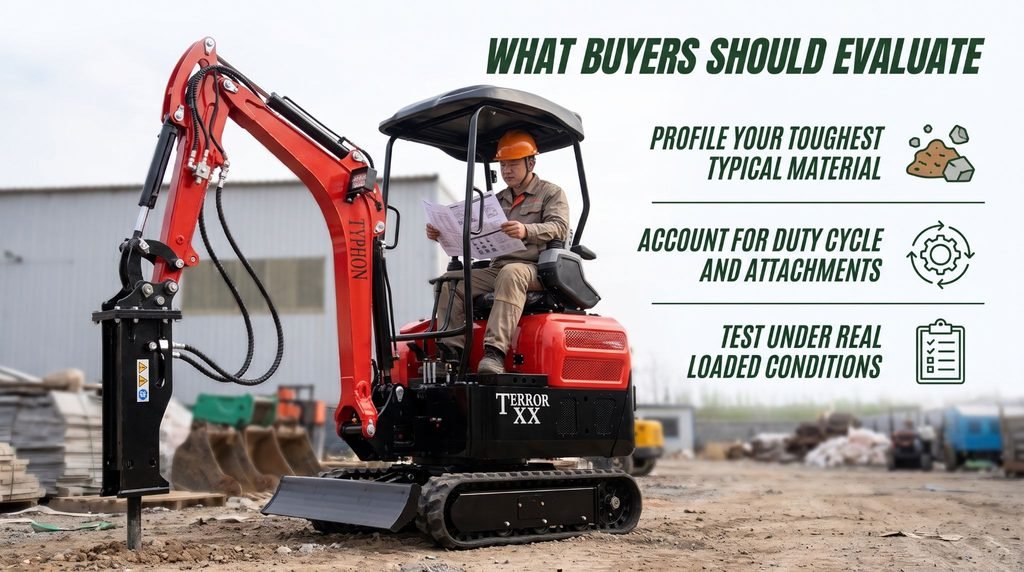
Sound selection starts with an honest profile of the heaviest work the machine will regularly face, not the lightest afternoon on the schedule. Begin with your typical material, since hard clay, compacted fill, and rock demand far more torque and hydraulic force than loose soil, and that demand points toward more displacement. Factor in your duty cycle next, because continuous production digging draws sustained power in a way that intermittent, light work never does. Then account for your attachments, as running a breaker, auger, or compactor for much of the shift raises the hydraulic draw sharply and calls for an engine with the displacement to feed it without faltering.
Weigh those demands against the practical realities of the job site and your budget. If your work happens in tight, surface-sensitive spaces and leans toward lighter tasks, a smaller-displacement machine rewards you with better fuel economy, a more compact footprint, and easier transport. If you run hard production in demanding material, invest in the displacement that carries that load with reserve to spare, and treat the higher fuel burn as the cost of dependable performance. The surest confirmation is a practical one: put the machine on your real material, at your real depth, running your real attachments, and watch whether it holds its digging force and hydraulic speed under that combined load. An excavator that stays strong through your hardest task is one whose displacement genuinely fits your work.
Key takeaway: Evaluate displacement against your material, duty cycle, and attachments, then confirm the fit on your real work rather than trusting the spec sheet alone.
Conclusion
Engine displacement establishes the cylinder volume available for combustion and therefore influences the torque and power an engine can produce across its operating range, making it a fundamental parameter in mini excavator sizing. The available engine output must supply mechanical power to the hydraulic pump while also covering cooling, electrical, and auxiliary loads, with sufficient torque reserve to maintain rated engine speed when digging resistance and hydraulic demand increase. Higher displacement can provide greater low-speed torque and sustained power capacity, but displacement alone does not determine hydraulic performance because pump displacement, system pressure, flow rate, engine speed, and hydraulic efficiency govern the power delivered to the cylinders and attachments. A machine with insufficient engine output may experience engine-speed droop when the boom, arm, bucket, travel motors, and auxiliary circuit are heavily loaded, reducing hydraulic flow and slowing cycle times. Excessively large displacement, meanwhile, can increase engine mass, fuel demand, packaging requirements, and operating cost without providing useful performance gains if the hydraulic system cannot utilize the additional output. Engine selection should therefore consider operating weight, rated power and torque, pump flow, maximum hydraulic pressure, auxiliary flow requirements, digging force, travel demand, attachment duty cycle, and expected material resistance, with adequate power reserve for simultaneous functions. Matching these parameters allows the engine to maintain stable speed and hydraulic output under sustained load while avoiding unnecessary fuel consumption and mechanical stress.
Frequently Asked Questions
Does a bigger engine displacement always mean a better mini excavator?
Not necessarily. Larger displacement can provide more torque, horsepower, and hydraulic capability for heavy digging and demanding attachments. However, it can also increase fuel use, weight, and machine size. For light residential, landscaping, or utility work, a smaller engine may be more efficient and easier to maneuver. The best choice is displacement matched to your actual workload.
How does engine displacement affect a mini excavator’s digging power?
A larger displacement generally produces more torque, giving the engine greater ability to drive the hydraulic system under load. This helps maintain digging force when working in hard soil or handling demanding attachments. However, digging performance also depends on hydraulic flow, pressure, pump design, and machine weight, so displacement is only one part of the equation.
How do I know if a machine’s displacement suits my work?
Consider your typical material, digging depth, workload, and attachments. Hard clay, rock, breakers, and augers require more sustained power than light soil or landscaping work. Match these demands to the engine and machine size, then make sure it can maintain digging force and hydraulic performance during your heaviest regular tasks.